venerdì 5 agosto 2011

32MP 1Ds Mark IV Soon, No Canon 5D Mark III Until 2012


Canon-5D
This seems to be the most consistent rumor on the Canon side of the coin for some time now.  That is, we get a new 1Ds camera in 2011, while the 5D Mark III is pushed off until next year.
Canon Rumors received a spec list outlining the following specs for a 1Ds Mark IV (or it could be a 1D Mark V) camera to be announced later this month.

Canon 1Ds Mark IV Rumored Spec List

  • 32mp CMOS (Full Frame)
  • Evolved 45 point AF system (current 1D4)
  • Dual DIGIC 5
  • CF & SD Slots
  • New Battery
  • 3,7,9 fps
  • ISO Range 50-102,400
  • Ergonomic Changes
  • 100% VF
  • 3.2″ LCD (Highest Resolution Ever)
  • Improved AF in LiveView
  • Unknown Movie Mode and specifications
  • Unknown if there will be a wireless flash commander
  • In camera software feature upgrades
The 32MP-ish resolution range has bee thrown around a lot for the next 1Ds camera, as well as the 5D Mark III; however, these are all still rumors.  That said, the above spec list seems like a reasonable expectation and rather evolutionary, which has been the custom for the 1Ds line.
As for the 5D Mark III being pushed off until next year . . . that rumor also comes from a “known source” via Canon Rumors.  The only specifics mentioned cite a first quarter 2012 launch date.
I wouldn’t think we’d see a 5D Mark III launched around CES.  It may be a launch independent of any trade show, as Canon has not really shown any love for trade shows since it infamously declined to attend PMA a couple of years ago.  While Canon will certainly be at CES 2012, I don’t really expect any new products aside from some simple point and shoot cameras and maybe some camcorders.
If the camera hasn’t made it to store shelves by then, the first closeup look at the 5D Mark III may come at the NAB Show in April next year.  This would likely be a fitting debut for the camera due to the 5D Mark II’s Hollywood aspirations.
What do you think about a 32MP 1Ds Mark IV?  Are you still waiting for the 5D Mark III?

Nikon mirrorless maggio lanciare il mese prossimo con tre lenti


Thom Hogan ha qualche notizia da fonti attendibili in merito all'annuncio imminente mirrorless Nikon:
Sono abbastanza certo del 1 "(~ 2,7 x) Sensore a questo punto, e dato che non riesco a trovare nessun altro la produzione di una che abbia senso per la fotocamera, continuo a chiedermi se questo sarà un altro sensore Nikon progettato. Che certamente sarebbe un interessante sviluppo. Come ho già notato la scorsa settimana, non c'è bisogno di andare molto lontano in avanti dal sensore D3100 per ottenere qualcosa che potrebbero essere 10-12MP e altamente credibile a 2,7 x.
Sono stato detto da tre diverse fonti che lancerà prima CES, probabilmente a fine settembre, e sarà il lancio con tre lenti (grandangolare primo, kit zoom, teleobiettivo zoom). Le lenti sono riferito "molto piccolo" nella natura, lungo le linee di grasso C-mount lenti.
Mi chiedo se la fotocamera si adatterebbe perfettamente in una tasca con un obiettivo montato.

Thom Hogan has some news from reliable sources regarding Nikon’s upcoming mirrorless announcement:
I’m pretty certain of the 1″ (~2.7x) sensor at this point, and since I can’t find anyone else making one that makes sense for the camera, I continue to wonder if this will be another Nikon designed sensor. That certainly would be an interesting development. As I noted last week, you don’t have to get very far forward from the D3100 sensor to get something that could be 10-12mp and highly credible at 2.7x.
I’ve now been told by three different sources it will launch before CES, probably in late September, and it’ll launch with three lenses (wide angle prime, kit zoom, telephoto zoom). The lenses are reportedly “quite small” in nature, along the lines of fat C-mount lenses.
I wonder if the camera would fit nicely in a pocket with a lens attached.

Tenba Expands Discovery and Vector Collections

News image
Responding to popular demand, Tenba has added a Photo/Laptop Daypack and Photo/Tablet Daypack to their Discovery collection, and a Photo/Laptop Daypack and Photo Sling Bag to their Vector collection. The Discovery Mini Daypack has a front, padded photo compartment that fits a DSLR camera body with 2-3 lenses and accessories, plus a rear sleeve that fits an iPad or similar tablet up to 10 inches. The Large size Daypack will fit a laptop up to 15 inches and fits an expanded camera system of 1-2 DSLR camera bodies and 4-6 lenses. The Vector Photo Sling Bag combines the ease-of-use and accessibility of a camera shoulder bag with the all-day carrying comfort of a backpack. Finally, the Vector Photo/Laptop Daypack (pictured) fits a laptop up to 15 inches, plus 1-2 DSLR camera bodies as well as 3-4 lenses. The new Discovery and Vector bags are available now at SRPs ranging from $79.95 to $139.95.
Tenba Press Release
Tenba Expands Discovery and Vector Collections

New Photo/Tablet and Photo/Laptop Daypacks, plus a lightweight sling bag, now available
Elmsford NY – August 4, 2011 – Leading the way in carrying solutions for over 30 years, Tenba announces an expansion of their Discovery and Vector collections. Responding to popular demand, Tenba has added a Photo/Laptop Daypack and Photo/Tablet Daypack to their Discovery collection, and a Photo/Laptop Daypack and Photo Sling Bag to their Vector collection. These bags round out two already very popular collections of lightweight, versatile photo carry gear that Tenba introduced earlier this year.
“The response to the Discovery and Vector collection has been extremely positive,” said Jan Lederman, President of MAC Group. “The addition of these four new bags to the Discovery and Vector collections came from requests from our customers for functional photo bags that also safely accommodate their computer laptops and tablets.”
The Discovery Mini Daypack has a front, padded photo compartment that fits a DSLR camera body with 2-3 lenses and accessories, plus a rear sleeve that fits an iPad or similar tablet up to 10 inches. It also accommodates the 11-inch MacBook Air. The Large size Daypack will fit a laptop up to 15 inches and fits an expanded camera system of 1-2 DSLR camera bodies and 4-6 lenses. Each bag is made with rugged, water-repellant nylon and has an expedition-grade shoulder harness.
The Vector Photo Sling Bag combines the ease-of-use and accessibility of a camera shoulder bag with the all-day carrying comfort of a backpack. It can also be converted to a long lens bag for a 300mm f/2.8 attached to a camera body. The Vector Photo/Laptop Daypack fits a laptop up to 15 inches, plus 1-2 DSLR camera bodies as well as 3-4 lenses. Each bag is available in the three popular Vector trend colors — Oxygen Blue, Krypton Green and Cadmium Red — plus Carbon Black.
All Tenba Discovery and Vector camera bags include Tenba’s exclusive WeatherWrap™ fast-deploying all-weather cover.
The new Discovery and Vector bags are available now at suggested retail prices ranging from $79.95 to $139.95. To find more information about these bags, and to see a full video demonstration of all Tenba products, visit http://www.tenba.com.
About Tenba
Tenba provides innovative carrying case solutions to passionate and professional photographers, and their full equipment arsenal. Tenba introduced the world to soft-sided, professional camera bags in 1977, and has been an innovation and quality leader in the decades since. With so many years of experience in bag development and construction, along with a unique level of closeness and – literally – daily connection to the professional imaging community, Tenba is truly dialed-in to both the real-world needs of its customers and the latest in design trends, materials and manufacturing. With its own, U.S.-based, dedicated “bag lab” product development center and manufacturing facilities, both domestic and abroad, Tenba’s resources and capabilities allow the company to create unique and exceptional carrying and transport solutions for serious shooters.
Tenba products are designed and marketed exclusively by MAC Group (http://www.MACGroupUS.com) in the USA, and sold by distributors around the world.

Ricoh GXR A12 Leica M-mount

News image
The Ricoh GXR A12 is a new GXR system lens mount unit that accepts Leica M lenses. Featuring an an APS-C size CMOS sensor, the GXR A12 is compatible with both the Leica M mount and many more types of mounts if a conversion adapter is used. The A12 also offers a newly developed focal plane shutter as well as an electronic shutter, a number of lens correction functions to accommodate the different lenses, and a focus-assist function to improve the accuracy of manual focusing. The Ricoh GXR A12 will be available in September, priced at $649.
Ricoh Press Release
 
Ricoh announces GXR MOUNT A12
A GXR lens mount unit featuring an APS-C size CMOS sensor
Tokyo, Japan, August 5, 2011—Ricoh Co., Ltd. (president and CEO: Shiro Kondo) today announced the development and planned September 9, 2011 release of the new product GXR MOUNT A12, a lens mount unit exclusively for the GXR interchangeable unit camera system. The body colour will be black only, and the planned monthly production volume is 3,000 units.
Introduced in December 2009, the GXR is a revolutionary interchangeable unit camera system in which lenses can be changed by mounting camera units that integrate lens, image sensor, and image processing engine into a single unit. In addition, utilizing its unique ability to accommodate interchangeable units other than camera units, the system can be expanded to include a variety of other devices.
The new GXR MOUNT A12 is a lens mount unit made especially for the GXR. Featuring an APS-C size CMOS sensor and a newly developed focal plane shutter, this unit makes it possible to mount lenses such as Leica M lenses, and it provides various types of compensation and correction functions.
<Main features of GXR MOUNT A12>
1. The newly adopted APS-C size CMOS sensor expands possibilities for high resolution and imaging power.
・The adoption of a CMOS sensor with an optimized micro lens layout makes it possible to secure sufficient brightness levels even in the peripheral areas of the image.
・The CMOS sensor used is 23.6mm × 15.7mm (APS-C size). It enables the shooting of high-quality images with smooth tone gradations as well as high definition and low noise.
2.Compatibility with a wide variety of lenses, including Leica M mount lenses.
・Compatible with the Leica M mount, GXR MOUNT A12 can, of course, handle M-mount lenses, and if a conversion adapter is used many more types of mounts can also be accommodated.
・A checking device is included for use in confirming whether or not your lenses are physically compatible.
3.Diverse new functions maximize the potential of the lens itself
・In order to accommodate the photographer’s own preferences by adjusting for the distinctive characteristics of many different lenses, GXR MOUNT A12 can independently correct colouring at the corners. Colour shading correction is possible in a -4 to +4 range for both R and B.
・Peripheral illumination correction is possible in a -3 to +3 range.
・A distortion correction function is provided to correct for the distortion that tends to occur in the lens periphery. The photographer can select barrel and pincushion distortion and specify “strong,” “medium,” or “weak” for each.
・A glass optical filter was adopted and made as thin as possible. It increases periphery image quality and suppresses field curvature.
4.High-precision focusing
・A focus-assist function has been included in an effort to raise the accuracy of manual focusing. The photographer can select from two modes and check the focus by strengthening outlines and contrast.
・Magnifying the screen image while shooting is an effective technique for focusing. The magnification can be done not only in the center but throughout the image. In addition, the image quality for 4x and 8x magnification has been further enhanced. The area to be magnified can be moved using the directional pad.
5.Two shutter methods are featured: newly developed focal plane shutter and electronic shutter
  ・With the focal plane shutter, settings of 1/4000 sec. to 180 sec. are possible.
  ・With the electronic shutter, settings of 1/8000 sec. to 1 sec. are possible, and the photographer can shoot without worrying about shutter noise and vibration.
6.The wide range of functionality that characterizes the GXR series
・My Settings enables a wide range of shooting functions to be specified in an instant. For the setting information storage, six patterns can now be stored in the body’s My Settings Box and six patterns can be stored in the SD card. This, along with the ability to change shooting conditions, further expands the photographer’s world of photo expression.
・In manual exposure mode, the shutter speeds B (bulb) and T (time) can be selected. With B, the exposure continues while the shutter release button is pressed, and with T, the shutter release button is pressed to start and end the exposure. For both B and T, the exposure is automatically ended when 180 seconds have elapsed.
・Information on the lens used can be put in the EXIF information. In the editing of My Settings information, lens name, focal length, and F value can be entered.
・New scene mode options have been added for the easy enjoyment of a wide range of photo expression. The five new options are soft focus, cross process, toy camera, miniaturize, and high contrast B&W. The photographer can create a unique image by just pressing the shutter release button.
・An electronic level utilizing an acceleration sensor.
・An image flag function to enable the quick display of specific images from among those in the camera. Up to 20 images can be flagged.
・For the exterior, we utilized die cast magnesium, which has a strong track record in the GR series, and we covered the surface with a corrosion-resistant “pear-skin” coating. The end result is a body with durability, light weight, and a superior feel in hand.
・It is possible to shoot 1280 × 720 pixel HD movies.
* Note: When shooting movies of 1280×720 size, the use of an SD/SDHC memory card with an SD speed class of Class 6 or higher is recommended.
7.New options added
・ We have created the new soft cases SC-75B and SC-75T, which are easy to open and close. With SC-75B, it is possible to shoot with the case attached to the GXR body.
<GR MOUNT A12 options>
Product Model
Soft Case B (lower portion and strap) SC-75B
Soft Case T (upper portion only) SC-75T
*All of the focal lengths in this release are converted to the equivalent values for a 35 mm film camera.
*SC-75T cannot be used as a case by itself. It must be used together with SC-75B.
*SC-75B and SC-75T are new options being introduced at this time.
*Functions when the GXR body is attached.
<GXR MOUNT A12 Major Specifications>
Effective pixels:
Approximately 12.30 million
Image sensor:
23.6 mm × 15.7 mm CMOS sensor (total pixels: approx. 12.90 million pixels)
Zoom:
Digital zoom: 4.0x (3.6x for movies)
Auto resize zoom: Approx. 5.9x (VGA)
Focus Mode:
Manual focus
Shutter speed:
Photographs: 1/4000 - 180 s, bulb, time (upper and lower limits vary according to shooting and flash modes)
Maximum flash sync shutter speed: 1/180 s
Movies: 1/2000 - 1/30 s
Exposure control:
Metering: TTL metering in multi (256-segment), center-weighted, and spot metering (TTL metering with auto exposure lock)
Mode: Aperture priority AE, manual exposure
Exposure compensation: Manual (+4.0 to -4.0 EV in increments of 1/3 EV or 1/2 EV), auto bracketing (-2 EV to +2 EV in increments of 1/3 EV or 1/2 EV)
Exposure range (auto mode, center-weighted metering):
Using standard lens (F2.5): 1.2 EV to 13.2 EV
(Exposure range for auto ISO calculated using values for ISO 100.)
ISO sensitivity (standard output sensitivity):
Auto, Auto-Hi, ISO-Lo, ISO 200, ISO 250, ISO 320, ISO 400, ISO 500, ISO 640, ISO 800, ISO 1000, ISO 1250, ISO 1600, ISO 2000, ISO 2500, ISO 3200
White balance:
Auto / Multi-P AUTO / Outdoors / Cloudy / Incandescent Lamp 1 / Incandescent Lamp 2 / Fluorescent Lamp / Manual Settings / Detail; white balance bracketing
Flash:
Method: TTL, manual, external auto (external flash GF-1 function)
Flash mode: Auto, Anti Red-eye, Flash On, Flash Synchro, Manual, Flash Off
Guide number: 9.6 (ISO 200 equivalent), 6.8 (ISO 100 equivalent)
Illumination angle: 24 mm (35 mm film camera equivalent)
Firing timing: 1st/2nd curtain sync
Other: External flash GF-1 compatibility
Shooting mode:
Auto / Program Shift / Aperture Priority / Shutter Priority / Manual / Scene (Movie, Portrait, Sports, Landscape, Nightscape, Skew Correction, Miniaturize, High Contrast B&W, Soft Focus, Cross Process, Toy Camera, Electronic Shutter) / My Settings
Continuous mode:
Number of pictures shot in Continuous (Picture Size: RAW):
Noise Reduction on weak or off: 4 pictures
Noise Reduction on strong: 3 pictures
Noise Reduction on MAX: 3 pictures
Number of pictures shot in M-Cont Plus (1 set):
HI (1280 × 856): 30 pictures (24 frames/sec.)
LO (4288 × 2848): 15 pictures (2.2 frames/sec.)
Compression ratio *1:
FINE, NORMAL, RAW (DNG) *2
Image size (pixels):
Photographs:
16:9 4288×2416, 3456×1944
4:3 3776×2832, 3072×2304, 2592×1944, 2048×1536, 1280×960, 640×480
3:2 4288×2848, 3456×2304
1:1 2848×2848, 2304×2304
Movies:
1280×720, 640×480, 320×240
File size (approx.):
RAW:
16:9 NORMAL: 17,800 KB/frame, FINE: 19,515 KB/frame, VGA: 15,587 KB/frame
4:3 NORMAL: 18,387 KB/frame, FINE: 20,157 KB/frame, VGA: 16,124 KB/frame
3:2 NORMAL: 20,946 KB/frame, FINE: 22,967 KB/frame, VGA: 18,337 KB/frame
1:1 NORMAL: 13,991 KB/frame, FINE: 15,333 KB/frame, VGA: 12,273 KB/frame

L:
16:9 NORMAL: 2,222 KB/frame, FINE: 3,816 KB/frame
4:3 NORMAL: 2,315 KB/frame, FINE: 3,960 KB/frame
3:2 NORMAL: 2,615 KB/frame, FINE: 4,493 KB/frame
1:1 NORMAL: 1,761 KB/frame, FINE: 3,009 KB/frame
M:
16:9 NORMAL: 1,475 KB/frame, FINE: 2,509 KB/frame
4:3 NORMAL: 1,574 KB/frame, FINE: 2,662 KB/frame
3:2 NORMAL: 1,744 KB/frame, FINE: 2,968 KB/frame
1:1 NORMAL: 1,186 KB/frame, FINE: 2,003 KB/frame
5M:
4:3 FINE: 2,287 KB/frame
3M:
4:3 FINE: 1,474 KB/frame
1M:
4:3 FINE: 812 KB/frame
VGA:
4:3 FINE: 197 KB/frame
Battery life:
Based on CIPA standard DB-90: approx. 330 shots*3
Dimensions (W × H × D):
Lens mount unit only: 79.1 mm × 60.9 mm × 40.5 mm
(according to CIPA guidelines)
When mounted on the GXR body: 120.0 mm × 70.2 mm × 45.7 mm
(according to CIPA guidelines)
Flange back: 27.8 mm
Weight (approx.):
Lens mount unit only: Approx. 170 g
When mounted on camera body: Approx. 370 g (battery and SD memory card included)
Operating temperature:
0 °C to 40 °C
Operating humidity:
90% or less
Storage temperature:
–20 °C to 60 °C
*1 The compression ratios which can be set vary depending on the image size.
*2 A JPEG file is also recorded (the JPEG file may be a FINE- or NORMAL-quality file with the same dimensions as the RAW file or a VGA file 640 × 480 pixels in size). RAW files use the standard DNG format promoted by Adobe Systems Incorporated.
*3 For reference only; actual number of shots varies greatly according to how camera is used. We recommend that you carry spare batteries when in use for extended periods.

Leica S2 / S2-P Firmware 1.0.1.8

News image
Leica has issued a firmware update for the Leica S2 and Leica S2-P digital SLR cameras. Version 1.0.1.8 changes the auto-bracketing procedure in that it is now enough to press the shutter release once for the full bracketing sequence Additionally, the new firmware update brings customisability to the menu-control button. New S2 and S2-P cameras will be supplied with the latest firmware, while existing owners can download the update from the website below.
Website: Leica Owners’ Area

New Service for the Leica M9

News image Leica M9 owners who like the discreet look of the new Leica M9-P but are not willing to fork out $7,995 for a new camera can take advantage of a new service announced by Leica. Through the North American Headquarters in Allendale, NJ, Leica will be offering a “Sapphire Glass” upgrade package ($1,295) and a “Top Cover and Sapphire Glass” upgrade package ($1,995). The first package offers the replacement of the M9 monitor cover with the M9-P’s scratch-resistant, sapphire crystal cover, while the second includes the replacement of the monitor glass and the replacement of the top deck and base plate. Interested customers are encouraged to schedule appointments starting 8 August 2011 for upgrades from 3 October 2011 through Leica Camera. All upgrades will be performed by specifically trained technicians and will be a part of Leica’s regular repair service. Customers taking advantage of either service will also receive a one-year warranty extension.
Leica Press Release
New Service for the Leica M9
With product features of the Leica M9-P
08/03/2011
Leica Camera announces a new service for Leica M9 owners to incorporate the product features of the Leica M9-P into their existing M-System camera, resulting in an alternative, even more discreet and resilient design. Owners taking advantage of the service will also receive a one-year warranty extension. Through the North American Headquarters in Allendale, NJ, Leica will be offering a “Sapphire Glass” upgrade package and a “Top Cover and Sapphire Glass” upgrade package. Interested customers are encouraged to schedule appointments starting August 8, 2011 for upgrades from October 3, 2011 through Leica Camera, Inc.
The “Sapphire Glass” upgrade package offers the replacement of the M9 monitor cover with the M9-P’s scratch-resistant, sapphire crystal cover, a choice between vulcanite and smooth MP-style leatherette trim and a one-year warranty extension. The package will be available for $1,295. The second option, “Top Cover and Sapphire Glass”, includes the replacement of the monitor glass with sapphire crystal cover and the replacement of the top deck and base plate with silver chrome or black paint. The package also includes the choice of vulcanite or smooth MP-style leatherette trim and a one-year warranty extension. The package will be available for $1,995.
All upgrades will be performed by specifically trained technicians and will be a part of Leica’s regular repair service. Reservations are on a first come first serve basis and upgrade time is dependent upon demand. M9 owners can schedule upgrades beginning August 8, 2011 by calling 1-800-222-0118 x 9930.

Leica Comunicato Stampa
Nuovo servizio per la Leica M9
Con caratteristiche di prodotto della Leica M9-P
2011/08/03
Leica Camera annuncia un nuovo servizio per i proprietari Leica M9 per incorporare le caratteristiche del prodotto della Leica M9-P nelle loro attuali M-System telecamera, con conseguente alternativa, ancora più discreto e design resistente. Proprietari sfruttando il servizio riceverà anche un proroga di un anno di garanzia. Attraverso la sede centrale del Nord America a Allendale, New Jersey, Leica offrirà un "vetro zaffiro" pacchetto di aggiornamento ed un "coperchio superiore e vetro zaffiro" pacchetto di aggiornamento. Clienti interessati sono invitati a pianificare gli appuntamenti di partenza 8 agosto 2011 per gli aggiornamenti da 3 Ottobre 2011 attraverso Leica Camera, Inc.
Il "vetro zaffiro" pacchetto di aggiornamento offre la sostituzione della copertura M9 monitor con la M9-P è resistente ai graffi, copertura in cristallo zaffiro, una scelta tra vulcanite e liscia MP stile finiture in similpelle e una proroga di un anno di garanzia. Il pacchetto sarà disponibile per 1.295 dollari. La seconda opzione, "coperchio superiore e vetro zaffiro", include la sostituzione del vetro del monitor con coperchio vetro zaffiro e la sostituzione del ponte superiore e piastra di base in argento cromato o vernice nera. Il pacchetto comprende anche la scelta di vulcanite o liscia MP stile finiture in similpelle e una proroga di un anno di garanzia. Il pacchetto sarà disponibile per 1.995 dollari.
Tutti gli aggiornamenti saranno eseguiti da tecnici appositamente addestrati e sarà una parte del servizio di riparazione regolare Leica. Le prenotazioni sono su un primo arrivato, primo servire base e il tempo di aggiornamento dipende dalla domanda. Proprietari M9 possibile pianificare gli aggiornamenti inizio 8 Agosto 2011 chiamando il numero 1-800-222-0118 x 9930.

giovedì 4 agosto 2011

Canon 16-35 f/2.8 DO Patent

Canon 16-35 f/2.8 DO Patent
More lens patents
This is an interesting DO patent from Canon. There seems to be a lot of them showing up, but no new DO products in a long while.
I’ve been told the lack of an A+ filterable wide angle from Canon for a full frame camera will be addressed sooner than later. Yes, there’s Zeiss, but most want AF.
Patent Publication No. 2011-145518
  • Release Date 2011.7.28
  • Filing date 2010.1.15
Example 1
  • Focal length f = 16.48 – 24.00 – 33.95 mm
  • Fno = 2.91
  • Half angle of 52.70 – 42.04 – 32.51 °
  • 4 aspherical surfaces
  • Zoom Ratio 2.06
  • Four-group zoom lens plus a negative sign
  • Second lens focusing is performed by Inner Focus
  • Solve various problems using the diffractive optical element
  • The astigmatism of the telephoto kept in order, to increase the refractive index of the positive lens
  • A high refractive index, chromatic aberration occurs
  • Aberration and astigmatism in the center of the telephoto image has a correlation, it is difficult to simultaneously correct
  • Made achromatic diffractive optical element, a positive lens astigmatism correcting high refractive index

Dieci domande da farsi prima di comprare corpo macchina, ottiche e attrezzatura

Corpo macchina, ottiche, flash. E poi filtri, treppiedi, zaini. E ancora memory card, programmi per il fotoritocco… per tacere delle attrezzature per allestire uno studio. Insomma, quando si va in negozio o si compra attrezzatura fotografica online c’è solo l’imbarazzo della scelta: vorremmo il portafoglio di Zio Paperone per comprare tutto, ma più spesso ci troviamo le tasche vuote come Paperino. Ma soprattutto dovremmo chiederci: ci serve davvero quello che stiamo per comprare?
Virtual Photography Studio ha raccolto in un post dieci domande da farsi prima di mettere mano al portafoglio, vediamole insieme: 1) Perché ho bisogno di questa nuova apparecchiatura? Domanda tutt’altro che oziosa, cui segue 2) In che modo questa apparecchiatura cambierà il mio modo di fotografare? Pensate per esempio alla differenza tra l’illuminazione di un flash e quella che può offrirvi anche solo un piccolo studio domestico.
Poi, arriva la domanda successiva: 3) Quanto spesso la userò? Per quel che mi riguarda, molto valida per alcune ottiche belle, ma che alla fine si usano poco: il classico esempio è il fisheye. Terzo interrogativo che ci porta al punto 4) Un domani, la vorrò ancora? Rifletteteci: visto in negozio, oppure in fiera, sembra tutto bellissimo e irrinunciabile. Ma serve davvero?

Produzione Diretta dal 94

www.bronzeitalia.it Acquista direttamente in fabbrica, scelta conveniente e sicura chiama!

Materiale Fotografico

www.tuttofoto.com vendita online Ottimi prezzi e servizio.
Perché se esiste magari c’è il modo di spenderci meno… e arriviamo alla 5) Esiste qualcosa che raggiunga lo stesso risultato, ma che costi meno?. Molte volte c’è. A quel punto, prima di “pagare moneta”, proviamo il cammello. 6) Posso provarlo o farmelo prestare prima di acquistarlo? Valido soprattutto se la spesa è impegnativa - per le ottiche ad esempio.
A quel punto, fate un giro sul web: 7) Che cosa dicono gli altri di quella apparecchiatura? Magari anche non solo su Clickblog, ma su uno degli innumerevoli siti, blog e forum specializzati. Lì potreste fare la scoperta: quel corpo macchina che vi piace tanto sta per diventare obsoleto, domandatevi quindi 8) Sta per uscirne una nuova versione?
Perché in quel caso potete scegliere: aspettare che esca il nuovo e far scendere il prezzo del vecchio, oppure prendere subito il nuovo e garantirvi qualche mese di salvezza dall’obsolescenza dei prodotti industriali. Ok: avete deciso che vi serve e non potete farne a meno. Controllate l’estratto conto e vi chiedete 9) Da dove prendo i soldi per acquistarla? È uno sfizio perché vi avanza del denaro?
Oppure se prendete quel flash poi dovete rinunciare alle vacanze? Insomma: fate un rapporto costi benefici e siate onesti con voi stessi. Infine, se siete fotografi di professione, pensate 10) Questa apparecchiatura mi aiuterà a migliorare il mio business? Se la risposta in questo caso è un sì, vuol dire che l’acquisto può essere una buona idea.
Via | VPS

mercoledì 3 agosto 2011

1Ds Mark IV/1D Mark V Spec List [CR1]

1Ds Mark IV/1D Mark V Spec List [CR1]
Numeri!
Liste specifiche sono stati pochi e lontani tra loro per qualsiasi reflex digitale prossimo, questo è il primo che ho visto in un istante. Il commentatore non sapeva se questo sarebbe stato 1D marca o 1Ds.
Specifiche tecniche:
  • 32mp CMOS (Full Frame)
  • Evoluto sistema di 45 punti AF (1d4 corrente)
  • Doppio processore DIGIC 5
  • CF e SD Slot
  • Nuova batteria
  • 3,7,9 fps
  • Sensibilità ISO 50-102,400
  • Modifiche ergonomico
  • 100% VF
  • 3.2 "LCD (più alta risoluzione mai)
  • AF migliorato in LiveView
  • Modalità Filmato sconosciuto e specifiche
  • Sa se ci sarà un comandante flash wireless
  • Aggiornamenti del software della fotocamera in funzione di
Mi aspetto che molti di questi nel prossimo mese o giù di lì.
Data annuncio?
Ho sentito due diverse date fino ad ora. Mi aspetto di più date annunci per EOS e PowerShot.
18 agosto, 2011. Non ricordo l'ultimo annuncio di Canon per accadere in una Giovedi. La maggior parte, se non tutti sono su un Lunedi / Martedì a seconda di dove siete sul pianeta.
30 Agosto 2011. Questo vuol venire dietro annunci di Nikon.
Non vedo 6 SET 2011 come una possibilità a causa del lungo fine settimana di settembre.

Numbers!
Spec lists have been few and far between for any upcoming DSLR, this is the first one I’ve seen in a while. The commenter didn’t know if this was going to be branded 1D or 1Ds.
Specifications:
  • 32mp CMOS (Full Frame)
  • Evolved 45 point AF system (current 1D4)
  • Dual DIGIC 5
  • CF & SD Slots
  • New Battery
  • 3,7,9 fps
  • ISO Range 50-102,400
  • Ergonomic Changes
  • 100% VF
  • 3.2″ LCD (Highest Resolution Ever)
  • Improved AF in LiveView
  • Unknown Movie Mode and specifications
  • Unknown if there will be a wireless flash commander
  • In camera software feature upgrades
I expect a lot of these in the next month or so.
Announcement Date?
I’ve heard 2 different dates so far. I do expect multiple announcements dates for PowerShot and EOS.
August 18, 2011. I don’t recall the last Canon announcement to happen on a Thursday. Most, if not all are on a Monday/Tuesday depending on where you are on the planet.
August 30, 2011. This would come after Nikon’s announcements.

SoftColor Launches Color Correction Engine V4

News image
Joensuu, Finland-based SofColor has released Color Correction Engine V4, a smart and customizable colour correction solution to fix white balance, exposure and contrast issues in digital photographs automatically. Color Correction Engine V4 comes with a completely rewritten error detection algorithm, a totally redesigned colour correction workflow and the option to enable or disable automatic white balance, exposure and contrast corrections separately. The program is available immediately as part of SoftColor’s Automata, Server Automata, PhotoEQ, Toolbox applications. Version 4 is a free upgrade to existing customers.
Website: Color Correction Engine
Softcolor Press Release
SoftColor Color Correction Engine V4
SoftColor Color Correction Engine V4 - Smart and Customizable Color Correction Automation Technology
JOENSUU, Finland (August 03, 2011) - SoftColor Oy today announced the immediate availability of Color Correction Engine V4: a smart and customizable color correction solution to fix white balance, exposure and contrast problems from digital images automatically.
“Automatic color correction is a true challenge, because we all have the opinion about right colors”, said Petri Piirainen Co-Founder of SoftColor Oy. “Our solution is a nondestructive, parametrized and layer-based automatic color correction engine.”
SoftColor’s Color Correction Engine V4 is layer-based and it fixes white balance, exposure and contrast problems automatically in single step. Automatic correction is parametrized which gives to end-user a full control to fine tune automatic correction intensity and other color correction adjustments. Scientific basement of SoftColor’s automatic solution is to use color physics and optics theory together with computer graphics techniques.
Color Correction Engine V4 brings three key features:
* Smarter Automatic Color Correction
Color Correction Engine V4 comes with completely rewritten error detection algorithm. New error detection algorithm can detect automatically if there is no need to automatic white balance, exposure or contrast corrections. This improves image workflow automation when images comes from multiple sources.
* New Agile Tools for Customization
Color Correction Engine V4 has more separate layers for color correction adjustments.  In V4 end-user can enable or disable automatic white balance, exposure and contrast correction individually.
* 100% Parametrized Color Correction
Color Correction Engine V4 has totally redesigned automatic color corrections workflow. All automatic adjustments from error detection to white balance, exposure and contrast adjustments uses same input parameters than end-user can manually setup.
Pricing and Availability:
SoftColor Color Correction Engine V4 is available immediately as part of SoftColor’s Automata, Server Automata, PhotoEQ, Toolbox applications. This is a free upgrade to existing customers.
More information can be found online
http://www.softcolor.fi/automaticcolorcorrection/

Joensuu, Finlandia-based SofColor ha rilasciato la correzione del motore V4 colore, un elegante e personalizzabile soluzione di correzione del colore per correggere il bilanciamento del bianco, esposizione e contrasto in questioni di fotografie digitali automaticamente. Correzione del colore del motore V4 è dotato di un algoritmo di rilevamento degli errori completamente riscritto, un flusso di lavoro totalmente ridisegnato la correzione del colore e l'opzione per abilitare o disabilitare automatica del bilanciamento del bianco, esposizione e correzioni contrasto separatamente. Il programma è disponibile immediatamente come parte di Automi SoftColor, il Automata Server, PhotoEQ, applicazioni Toolbox. La versione 4 è un aggiornamento gratuito per i clienti esistenti.
Sito web: Correzione del colore del motore
SoftColor Comunicato Stampa
SoftColor Correzione del colore del motore V4
Motore di correzione del colore SoftColor V4 - Smart e personalizzabili Correzione colore Automation Technology
Joensuu, Finlandia (3 agosto 2011) - SoftColor Oy ha annunciato oggi la disponibilità immediata del motore V4 di correzione del colore: un elegante e personalizzabile soluzione di correzione del colore per risolvere problemi di bilanciamento del bianco, esposizione e il contrasto di immagini digitali automaticamente.
"Correzione automatica del colore è una vera sfida, perché tutti abbiamo il parere sui colori destra", ha dichiarato Petri Piirainen co-fondatore di SoftColor Oy. "La nostra soluzione è un non distruttivo, parametrizzata e strato a base di automatica motore correzione del colore."
Correzione SoftColor del motore V4 colore è basata sul livello e corregge problemi di bilanciamento del bianco, esposizione e il contrasto automaticamente in unico passaggio. Correzione automatica è parametrizzato che dà degli utenti finali un controllo completo per mettere intensità correzione sintonia automatica e altre rettifiche correzione del colore. Scantinato scientifica di soluzione automatica SoftColor è quello di utilizzare la fisica del colore e la teoria ottica con tecniche di computer grafica.
Correzione del colore del motore V4 offre tre caratteristiche principali:
* Correzione colore automatica intelligente
Correzione del colore del motore V4 è dotato di algoritmo di rilevamento degli errori completamente riscritto. Nuovo algoritmo di rilevamento degli errori in grado di rilevare automaticamente se non vi è alcuna necessità di bilanciamento del bianco automatico, esposizione o correzioni di contrasto. Questo migliora il flusso di lavoro di automazione immagini quando le immagini provengono da fonti multiple.
* Nuovi strumenti agili per la personalizzazione
Correzione del colore del motore V4 ha gli strati più regolazioni separate per la correzione del colore. In V4 utente finale può abilitare o disabilitare bilanciamento automatico del bianco, l'esposizione e la correzione del contrasto.
* Correzione del colore del 100% Parametrized
Correzione del colore del motore V4 ha completamente ridisegnato automatica del flusso di lavoro del colore correzioni. Tutte le regolazioni automatiche di rilevamento degli errori di regolazione del bilanciamento del bianco, esposizione e il contrasto utilizza parametri di input stesso di utente finale può configurare manualmente.
Prezzi e disponibilità:
Motore di correzione del colore SoftColor V4 è disponibile immediatamente come parte di Automi SoftColor, il Automata Server, PhotoEQ, applicazioni Toolbox. Questo è un aggiornamento gratuito per i clienti esistenti.
Maggiori informazioni si possono trovare online
http://www.softcolor.fi/automaticcolorcorrection/

More Nikon D4 and D800 Rumors Support Aug. 24 Unveiling


Nikon D4
While we have yet to see any real proof that a new pair of Nikon full frame shooters are coming this month, rumors continue to trickle out, suggesting the announcement of Nikon D3s and D700 successors.
The latest word over at Nikon Rumors reiterates the unveiling of two full frame shooters on August 24.  Sources are claiming the D800 has a 24MP image sensor, while the D4 features an 18MP sensor (presumably allowing the D4 to be more of a high ISO, sports-shooting king).
As far as availability, the Nikon D800 should be available in the Fall, while the D4 would be available to buy in early-2012.  The tipster also claims that the cameras are being manufactured in Malaysia as opposed to Japan, a fact that Thom Hogan calls into question.
Nonetheless, these are interesting rumors, for which we will have certain answers in three short weeks.
Stick around to find out the answers and subscribe to Photography Bay’s feed so you don’t miss a beat.

Mentre abbiamo ancora visto alcuna prova reale che una nuova coppia di tiratori telaio Nikon completa arrivano questo mese, le voci continuano a scorrere, suggerendo l'annuncio della D3s Nikon D700 e successori.
L'ultima parola oltre a Nikon Rumors ribadisce l'inaugurazione di due tiratori full frame il 24 agosto. Le fonti affermano il D800 ha un sensore 24MP immagine, mentre la D4 è dotato di un sensore da 18MP (presumibilmente permettendo D4 di essere più di una alta sensibilità ISO, sport di tiro-re).
Per quanto riguarda la disponibilità, la Nikon D800 dovrebbe essere disponibile in autunno, mentre la D4 sarà disponibile per l'acquisto nei primi mesi del 2012. L'informatore sostiene inoltre che le telecamere sono state fabbricate in Malesia rispetto al Giappone, un fatto che Thom Hogan mette in discussione.
Tuttavia, queste sono voci interessanti, per i quali avremo risposte certe in tre brevi settimane.
Stick in giro per trovare le risposte e sottoscrivere alimentare Fotografia Bay in modo da non perde un colpo.

Sample images from the Samsung 60mm f/2.8 Macro ED OIS SSA lens

Samsung published some sample images taken with the Samsung 60mm f/2.8 Macro ED OIS SSA lens:
samsung 60mm macro lens samples 590x396 Sample images from the Samsung 60mm f/2.8 Macro ED OIS SSA lens
Samsung NX10, 1/40s, f22, 60mm, ISO 100
 Sample images from the Samsung 60mm f/2.8 Macro ED OIS SSA lens
100% crop of the above image
Some more samples can be found on the SLRclub forum.

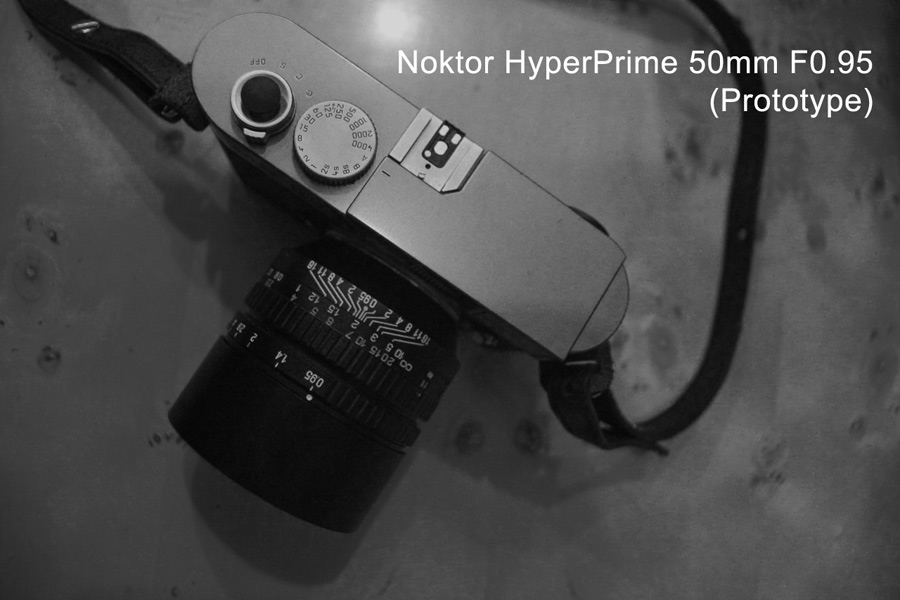
The full frame Noktor HyperPrime 50mm f/0.95 lens will be for Leica M mount

SLRMagic confirmed to Photorumors that the full frame Noktor HyperPrime 50mm f/0.95 lens will come with a Leica M mount. Here is a picture of the actual prototype on a M9 body:
 The full frame Noktor HyperPrime 50mm f/0.95 lens will be for Leica M mount

ThinkTankPhoto Modular and Skin belt systems sale (20% off)

ThinkTankPhoto rarely has any sales on their products. Currently you can get 20% off on their Modular and Skin belt systems:
Modular Set 590x323 ThinkTankPhoto Modular and Skin belt systems sale (20% off)
ThinkTankPhoto Modular set
Skin Set 590x311 ThinkTankPhoto Modular and Skin belt systems sale (20% off)
ThinkTankPhoto Skin set

The making of LockCircle body cap

LockCircle - The Making of - Canon 5d - Canon 7d from LockCircle on Vimeo.


The Making of LockCircle, the original camera body cap for EF-Mount.
66 cnc machining steps, 8 chemical hardener treatments, 5 handmade steps.
Inspired by cinematographers using hdslr cameras on feature/commercial tough productions.
Professional locking and sealing features.

Leica offre di trasformare qualsiasi M9 in un M9-P


Se tu avessi dei dubbi che la nuova Leica M9-P è semplicemente la M9 riceverà una nuova veste estetica, senti questa: Leica offre l'aggiornamento della fotocamera M9 ogni cliente in una M9-P. Per il basso Leica-esque prezzo di 1.995 dollari, l'azienda darà la macchina fotografica "vetro zaffiro" per il vostro schermo LCD ed un nuovo coperchio superiore, senza la famosa Leica red dot. Se solo l'aggiornamento alle ultime reflex digitali sono state così facile!
(Via PDN )

martedì 2 agosto 2011

Canon 5D Mark II Used to Capture Action Sequences in New Feature Film

News image
Canon has announced that a number of action sequences in the highly anticipated feature film, Captain America: The First Avenger were captured with its EOS 5D Mark II digital SLR camera. Action scenes shot with the DSLR include a car chase and crash, and a high-speed motorcycle pursuit. The comparatively small size of the camera enabled the crew to mount it on the interiors and exteriors of moving vehicles to capture dramatic action shots. The camera’s size also ensured that it was “invisible” to the film cameras shooting the same scene from a distance. Previously, the Canon EOS 5D Mark II cameras and EF lenses were used for action shots in the blockbuster hit “Iron Man 2”.
Canon Press Release
“CAPTAIN AMERICA: THE FIRST AVENGER” ACTION SHOTS
CAPTURED WITH CANON EOS 5D MARK II DIGITAL SLR CAMERAS
Full 1080P HD Capture, 24p Frame Rate and Canon EF Lenses Provide Compatibility and Creative Options for Movie Production
LAKE SUCCESS, N.Y., August 1, 2011 – Canon U.S.A., a leader in digital imaging, announced today that the highly anticipated feature film, “Captain America: The First Avenger”, used Canon EOS 5D Mark II Digital SLR cameras to capture many of the movie’s action shots.  Throughout the super hero action picture, the 5D Mark II was used to shoot motion sequences that were seamlessly integrated with the production’s 35mm film footage.
More compact and lightweight than traditional motion-picture cameras, the 5D Mark II offers creative advantages such as compatibility with Canon’s wide range of high-performance EF lenses, user-selectable frame rates, including 24p (23.976 fps), the standard for motion-picture cinematography, and full 1920 x 1080 HD imagery captured by the camera’s high-resolution 21.1-megapixel (36mm by 24mm) Canon CMOS sensor. According to Jonathan Taylor, second unit director/director of photography on “Captain America: The First Avenger”, these features made the 5D Mark II an excellent choice for the capture of dramatic POV (point-of-view) action shots.
“The challenge with a lot of action photography is getting the camera in the right position,” Taylor noted. “I’m always looking to get the camera into impossible to reach places because those kinds of shots make action sequences much more exciting. Most 35mm motion-picture cameras and even the leading digital cinematography cameras are just too big to get into interesting positions.”
Action scenes in “Captain America: The First Avenger” in which Taylor used 5D Mark II cameras for POV shots include a car chase and crash, and a high-speed motorcycle pursuit. The small size of the camera enabled Taylor to mount it on the interiors and exteriors of moving vehicles to capture dramatic action shots. The camera’s size also ensured that it was “invisible” to the film cameras shooting the same scene from a distance.
“The thing with action is that the more angles you can shoot, the faster the cuts you can use, and the more energy you get into a sequence,” Taylor added.
Previously, the Canon EOS 5D Mark II cameras and EF lenses were used for action shots in the blockbuster hit “Iron Man 2”.
About Canon U.S.A., Inc.
Canon U.S.A., Inc., is a leading provider of consumer, business-to-business, and industrial digital imaging solutions. Its parent company, Canon Inc. (NYSE:CAJ), a top patent holder of technology, ranked fourth overall in the U.S. in 2010†, with global revenues of more than US $45 billion and is listed as number five in the computer industry on Fortune Magazine’s World’s Most Admired Companies 2011 list.  Canon U.S.A. is committed to the highest levels of customer satisfaction and loyalty, providing 100 percent U.S.-based consumer service and support for all of the products it distributes. At Canon, we care because caring is essential to living together in harmony. Founded upon a corporate philosophy of Kyosei – “all people, regardless of race, religion or culture, harmoniously living and working together into the future” – Canon U.S.A. supports a number of social, youth, educational and other programs, including environmental and recycling initiatives. Additional information about these programs can be found at http://www.usa.canon.com/kyosei. To keep apprised of the latest news from Canon U.S.A., sign up for the Company’s RSS news feed by visiting http://www.usa.canon.com/rss.

Stealth Gear Square Filter System

News image
Stealth Gear has launched a new line of high-quality square filters. Made of lightweight organic glass and packed in soft bags for protection, the Stealth Gear filters fit the Cokin P-system. There are 10 filters available, including 3 neutral density filters, 3 graduated filters (neutral grey, blue and brown), a circular polariser, a sunset filter and 2 star filters. A modular lens hood, filter holder, wide-angle filter holder, filter box and adapter rings complete the system. For more information, head to the website below.
Website: Stealth Gear
Press Release
Stealth-Gear launches High Quality Square Filter System
Compatible with the Cokin P-system.
Reading, UK, 2nd August 2011, Alpha Distribution Services, a value added distributor of imaging related products and Stealth Gear leading provider of outdoor photography clothing and wildlife watching supplies, announce the Stealth Gear Filter System.
Stealth Gear introduces a new line of high quality filters. The filters are made of high quality organic glass. This system allows you to make special effect pictures. The universal system consists of 3 components; with this 3 components you then have the choice of 10 filters. For all users of the Cokin P system filters this is a welcome line up as the Stealth Gear filters fit the Cokin P-system.
Stealth-Gear pack the filters in in a soft bag for the best protection. Adapter rings - modular lens hood - filterbox - filter holder and wide angle filter holder are also now available.
Stealth Gear is the leading provider of outdoor photography clothing, photography hides and wildlife watching supplies. The company carefully designs clothes that are not only purpose specific but also hardwearing and affordable. From the first to the last employee, Stealth Gear are all photographers. Extensive market research has been carried out to establish what gear the outdoor photographer really needs. Stealth Gear products are thoroughly tested in the most demanding conditions by professional photographers.
About Alpha Digital Services:
Founded in 2005, Alpha Digital Services are a value added distributor of imaging related products. Based in Reading, UK, Alpha Digital Services are the UK and Ireland distributor for Ricoh digital camera, Braun, Proline, DXO software and Kowa.
http://www.alphadigitalservices.co.uk
About Stealth Gear:
If you are looking for professional outdoor photography clothing, photography hides or wildlife watching supplies that can match your experiences as a photographer or outdoor enthusiast then look no further.
Here at Stealth Gear, our products are carefully designed by photographers for photographers, ensuring that our designs are not only purpose specific, but they are hardwearing and affordable.
Through extensive research, Stealth-Gear have realised that in the current marketplace, there is a shortage of outdoor photography clothing and accessories.  As a result, we endeavour to design a wide range of high quality affordable products to meet our customers’ needs.
By listening to customer feedback and their view, we are constantly coming up with new products to make life as an outdoor photographer even easier.
Stealth Gear is totally committed to delivering quality and will cut no corners to achieve our goal.  We achieve this by working with the best suppliers, with the most outstanding materials and by having our products challenged and tested under the most demanding conditions by professional photographers. With all of this in mind, we are confident we are able to achieve the very highest standards in fit, functionality and durability. http://www.stealth-gear.com/home.html

Kindston USB 3.0 Media Reader

News image
Kingston Europe has announced the launch of a USB 3.0 SuperSpeed compliant memory card reader/writer. The Kingston USB 3.0 Media Reader supports multiple card formats including the newer high-capacity SDXC. Other formats supported inlclude CompactFlash Type I & II (up to UDMA 6), microSD(HC/XC) and MemoryStick PRO, Duo, PRO Duo and M2. The device comes with a three-foot USB 3.0 cable and is also backwards compatible with USB 2.0. The Kingston USB 3.0 Media Reader has a manufacturer’s suggested retail price of £17.77+VAT.
Kingston Press Release
USB 3.0 Interface Provides Up to 5.0Gb/s Data Transfer Speed
Perfect Device for Quick Downloads from High-Capacity Flash Memory Cards
1st- August , 2011—Kingston Digital Europe Ltd, an affiliate of Kingston Technology Company Inc., the independent world leader in memory products, today announced the launch of the Kingston® USB 3.0 Media Reader. The reader takes advantage of performance benefits offered by USB 3.0 technology, allowing for faster data transfer times.
The Kingston USB 3.0 Media Reader supports multiple card formats including the newer high-capacity SDXC. With its quick and easy plug-and-play design, it delivers up to 5.0Gb/s data transfer speed for high-resolution images, large data files and more making it ideal for serious enthusiasts who need a fast and reliable data transfer device. It is also backwards compatible with USB 2.0.
“The Kingston USB 3.0 Media Reader’s ability to handle multiple card formats combined with its small form factor makes it perfect for use at home, on the road or in the office,” said Krystian Jaroszynski EMEA Product marketing manager for Flash at Kingston Technology. “It is the essential device for reading higher-speed cards currently offered in the market and a convenient way to move photos, music, data and more between multiple platforms.”
The Kingston USB 3.0 Media Reader comes with a three-foot USB 3.0 cable. It is backed by a two-year warranty, 24/7 tech support and legendary Kingston reliability. For more information visit http://www.kingston.com/europe
Kingston USB 3.0 Media Reader Features and Specifications:
Portable: convenient small size
Versatile: works with the following Flash card formats:
CompactFlash
– CF Type I (UDMA 0-6)
– CF Type II (UDMA 0-6)
Secure Digital
– SD
– SDHC
– SDHC UHS-I
– SDXC
– SDXC UHS-I
microSD
– microSD
– microSDHC
– microSDXC
Memory Stick®/M2**
– Memory Stick®
– Memory Stick® PRO
– Memory Stick® Duo™
– Memory Stick® PRO Duo™
– Memory Stick® M2
Requirements: system with USB 3.0 port
Backwards Compatible: with USB 2.0
Dimensions: 3.66” x 2.07” x 0.63” (93.17mm x 52.68mm x 16.00mm)
Speed Rating*: USB 3.0, up to 5.0Gb/s data transfer speed
Operating Temperature: 32º to 140ºF / 0º to 60ºC
Storage Temperature: -4º to 185ºF / -20º to 85ºC
Operating System Compatibility: Windows® 7, Windows Vista® (SP1, SP2), Windows XP (SP3)
Guaranteed: two-year warranty
* Speed may vary due to host and device configuration.
** All brand and product names mentioned herein are for identification purposes only. Memory Stick and Memory Stick PRO Duo are trademarks of Sony Corporation. Kingston is not affiliated with Sony Corporation. Other product names are trademarks or registered trademarks of their respective holders.

-Kenko Tokina Inserisci variabile densità neutra Filtro più di $ 700

Variabile NDXÈ il nuovo filtro a densità neutra variabile che la società ha-Kenko Tokina, disponibile in 77 millimetri e 82 millimetri fili, offre una vasta ND2.5 - ND1000, che disciplinano l'ingresso della luce fino a 10 fasi (0,3 - 3,0 o 1,3 - 10EV), che si ottiene semplicemente ruotando la parte anteriore. Sarà disponibile a partire 26 agostoA ¥55,000 (77 millimetri) e ¥65,000 (82 millimetri) o $707 | €491 e $835 | €580 cambiamento. E ', a mia conoscenza, il filtro a densità neutra più costoso rispetto alla situazione esistente, ma la sua buona garanzia tecnica qualità, è in definitiva come avere dieci filtri in uno.


Kenko Tokina- via Guarda DC

Modo economico di avere un flip "schermo" su qualsiasi digitale


FlipBac ha offerto una protezione per le fotocamere digitali monitor da 2,5 "e 3", che funge da paravento, grazie allo specchio che si estende per 180 gradi in verticale e in orizzontale. E 'molto sottile, pesa 20 grammi, il cerchio è in acciaio inox, è l'adesivo 3M, disponibile in bianco e nero e può essere acquistato per $ 20 più spese di spedizione $ 3, con consegna in tutto il mondo.


La storia di Reflexs Canon raccontata in video

Per celebrare il 50 ° anniversario della reflexs Canon è stato rilasciato il video che riassume la sua carriera, dal 1959 al Flex Canon 5D Mark II nel 2008. Canon Australia, appeso in data 11 marzo e, onestamente, non avevo mai visto prima, ma l'editing dovrebbe corrispondere alla fine del 2008 o all'inizio del 2009, ricorda che la divisione della società di compleanno Nippon riflesso il 6 gennaio di ogni anno .

Can You Figure Out the Secret Technique Used in this Timelapse?

T-RECS Timelapse Showreel 2011 #1 from T-Recs (Timelapse Recordings) on Vimeo.


Ordinarily if there’s movement in a timelapse video, it’s constrained to a small area because a dolly or crane system was used to change the position of the camera small distances between shots. The folks at T-RECS came up with a special way to introduce large distance movements into timelapse shots, but are keeping mum on how they did it. Check out the showreel above and see if you can figure out their secret technique.

(via Fstoppers)

lunedì 1 agosto 2011

Win Cyberlink PhotoDirector 2011

News image
Photography Blog and Cyberlink are giving away FIVE copies of Cyberlink PhotoDirector 2011, each worth £79.99!
CyberLink’s PhotoDirector 2011 is designed to smooth the flow from the time an image is imported to the PC to its final output by delivering powerful management and editing tools.
PhotoDirector 2011 features a wide array of dynamic adjustment tools that can be applied in a non-destructive editing environment, leaving your original images unaltered. Offering native rendering of RAW files from Canon and Nikon cameras provides photographers with a great feature to maintain the immaculate quality of each image. PhotoDirector 2011 is also the first photo software that lets users easily share their own presets and download an unlimited number of presets defined by others, directly from the application, through CyberLink’s online community DirectorZone.com.
Just answer this simple question to enter the competition.
The contest closes at 11.55PM GMT on Wednesday 31st August 2011.
Key Features in PhotoDirector 2011
- Fast, Intuitive Workflow: PhotoDirector’s fast, intuitive workflow is designed to bring unparalleled efficiency by smoothing the flow from import, manage, enhance to final output.
- Non-destructive Editing Environment: Since original images are safely unaltered, creative experimentation is encouraged in PhotoDirector’s non-destructive editing environment.
- State of the Art Adjustment Tools: PhotoDirector delivers all cutting edge tools to perfect photos, including adjustment brushes, levels, white balance and noise reduction.
- Native RAW Support: Native rendering of RAW files from Canon and Nikon cameras delivers absolutely stunning colour. PhotoDirector also delivers support for a broad range of RAW file formats from the world’s leading digital cameras.
- Exchange Unlimited Presets: Share and download unlimited adjustment presets directly from PhotoDirector with the DirectorZone.com community.
Terms and Conditions
This competition closes on 31/08/2011.
By entering this competition you will also be opting in to Photography Blog’s weekly e-newsletter, but you have the option to unsubscribe at any time.
One entry per person only.
No entries accepted from employees of Photography Blog or Cyberlink.
Winners will be announced on the Photography Blog site following the closing date and contacted via email only, so a valid email address is required.

Epson Underwater Photo Grand Prix

News image
Inspired by the Epson Red Sea Competition that takes price each November in Eilat, the first Epson Underwater Photo Grand Prix, designed to highlight the Earth’s vast marine biodiversity, seeks to showcase the talent and skill of underwater photographers from all continents. Throughout this month, around 500 professional and amateur photographers will be shooting hidden aquatic treasures for a chance to win one of numerous prizes. All categories winners and nominees will be announced on 19 November 2011, as part of this year’s Epson Red Sea Eilat Competition.
Website: Epson Underwater Photo Grand Prix
Epson Press Release
Underwater photographers from across the world to provide unique glimpse into secrets of the deep
Launch of Epson Underwater Photo Grand Prix – The first simultaneous global underwater photographic contest
August 2011- Underwater photographers from around the world will, in the first contest of its kind, compete to capture the secrets of the most stunning natural water resources to be found across the globe. From oceans to lakes and rivers, around 500 professional and amateur photographers will be shooting hidden aquatic treasures throughout the whole month of August 2011, as a part of the first Epson Underwater Photo Grand Prix.
This ambitious project, designed to highlight the Earth’s vast marine biodiversity, will showcase the talent and skill of underwater photographers from all continents. With entrants not permitted to edit or enhance images, it is a unique opportunity to learn more about the challenges of underwater photography, from the use of specialised equipment and techniques to the harmonious management of contrast, light and colour.
Protecting biodiversity
The inclusion of the Underwater Environmental Conservation category is one of the main drivers of the competition. By capturing the wonders of the underwater world, its colours, details and atmosphere, it is hoped that people will be more conscious of its fragility and will strive to protect it.
All categories winners and nominees will be announced on 19 November 2011, as part of the Epson Red Sea Eilat Competition. Prizes are worth a total $80,000 USD.
On the heels of the Epson Red Sea Competition
The Epson Underwater Photo Grand Prix was inspired by the Epson Red Sea Competition which takes place annually in November at Eilat (Israel), one of the world’s most popular diving destinations. David Pilosof, producer of both competitions, summarises the essence of the Epson Underwater Photo Grand Prix: “Images will range from Siberia to Guadeloupe, Papua New Guinea, Cocos Island, the Maldives and even the Dead Sea. The most iconic dive destinations will be in the spotlight during the eight-day competition resulting in a wide panorama of creative pictures.”
Both the Epson Underwater Photo Grand Prix and the Epson Red Sea competition, are supported by Epson, the global leader in imaging technologies. Kristin Saus-Opuszynski, from Epson Europe highlights: “We are excited to be at the centre of this new adventure. This competition will allow the world’s best photographers as well as intrepid amateurs to capture the underwater world. As part of its extensive environmental and CSR programmes, Epson is committed to supporting projects that celebrate and promote biodiversity and conservation.”

Nik Viveza 2 Price Reduction

News image
Nik Software has halved the price of Viveza 2. Formerly retailing for €199.95, the plug-in is now available for €99.95. Viveza 1 users may upgrade for €49.95. The software, which allows you to easily and selectively adjust the colour and tonality of your digital images, can be installed as a 32-bit- or 64-bit-plug-in for Adobe Photoshop CS3 through CS5, Photoshop Elements 6 through 9, Lightroom 2.3 (or later) or Apple Aperture 2.1 (or later).
Website: Viveza
Nik Press Release

Nik Software now offers Viveza 2 world-wide for €99,95

As of August 1, 2011, Nik Software lowers the SRP for Viveza 2 worldwide to €99,95 incl. VAT from formerly €199,95.
For the upgrade, owners of Viveza 1 now pay €49,95. As of August 1, 2011, the academic version also costs €49,95.
Viveza 2 is the most precise tool available to selectively control color and light in digital images. U Point powered controls allow you to precisely control where enhancements are applied without the need for complicated selections or layer masks. Simple-to-use sliders let you quickly adjust brightness, contrast, saturation, structure, shadows, group control points, and the intelligent controls allow professional editing and optimization. Viveza 2 can be installed as 32-bit- or 64-bit-plug-in for Adobe Photoshop CS3 through CS5, Photoshop Elements 6 through 9, Lightroom 2.3 (or later) or Apple Aperture 2.1 (or later). The program is compatible for Windows as well as for Macintosh and available in German, English, French, Italian, and Spanish. http://www.niksoftware.com/viveza
Nik Software offers regularly free online-trainings for Viveza 2. Dates and additional info can be found here: http://www.niksoftware.com/trainings.

PhotographyBB Online Magazine Issue #42

News image
The 42nd edition of the free PhotographyBB magazine is now available to download. This issue features photography techniques for shooting outdoors during the challenging lighting conditions associated with bright, mid-day sunlight, a special Q&A section on memory cards and a Photoshop tutorial for increasing mid-tone contrast in landscapes. “This month we look at techniques for learning to see with fresh eyes, along with the power of leveraging creativity by shooting with a friend,” says PhotographyBB’s Editor in Chief, David Seeram. You can download the magazine from the website below (requires free registration).
Website: PhotographyBB Online Magazine
PhotographyBB Press Release
PhotographyBB Releases 42nd FREE Magazine
July 31st, 2011 – VANCOUVER, CANADA: PhotographyBB announced today, the release of the 42nd edition of the downloadable PhotographyBB Online Magazine. PhotographyBB Magazine is a free, downloadable monthly publication with the goal of educating beginner to intermediate level photographers, and has become a leading resource in the future of free information distribution. PhotographyBB Magazine offers readers: Digital Photography tips and techniques, DSLR camera function training, discussions on issues surrounding the photo community, and image post processing tutorials in Adobe® Photoshop, and RAW processing in Photoshop Lightroom.
This month’s edition features photography techniques for shooting outdoors during the challenging lighting conditions associated with bright, mid-day sunlight. Additionally, readers will learn how to make their landscape photos jump right off the page/screen in this month’s Photoshop tutorial for increasing midtone contrast in landscapes.
Editor in Chief, Dave Seeram had these comments regarding this recent release:
Last month’s edition was clearly our most popular to date, so this month we’ve set the bar even higher. We took the reader-submitted questions from last month’s call to the readers, and answered them in this edition with a special Q&A feature on memory cards. There’s a lot to be learned in the realm of photography, so we ask our readers to continue to submit their questions.
Photography is a craft who’s success lies directly in the creativity of the photographer. How can we break through creative boundaries? This month we look at techniques for learning to see with fresh eyes, along with the power of leveraging creativity by shooting with a friend.
By way of download in PDF format, PhotographyBB continues its trend through the future of free downloadable magazine distribution. Each edition contains informative and educational tutorials for amateur and intermediate level photographers. In addition, the PhotographyBB Online Magazine also features useful and practical tutorials on how to use image processing tools such as Photoshop and Lightroom to build on digital photography post-processing skills.
PhotographyBB Online Magazine is available for free download through the PhotographyBB Website at: http://www.photographyBB.com/magazine
PhotographyBB was founded in Oct, 2006, and is a division of PowerButton Central (2004).
For more information, visit the PhotographyBB website at: http://www.photographybb.com
Twitter: http://www.twitter.com/photographybb
Facebook: http://www.facebook.com/photographybb

Landscape Photography Magazine Issue #6

News image
The sixth edition of the online Landscape Photography Magazine is now available. Promoting landscape imagery by photographers worldwide, the magazine is also showcasing some spectacular locations from around the globe, complete with map links. In this issue, you will find an article by Fran Halsall on Integrity and Inspiration in landscape photography, a discussion of Intimate Landscapes by Julian Barkway, a beginners’ guide to ISO sensitivity by Mike Bell, and more.
Website: Landscape Photography Magazine
Landscape Photography Magazine Press Release
Issue 6 of landscape photography magazine is out now.
A great variety of new articles and tutorials are included in this issue. They will be of help not only to intermediate and advanced photographers but also all those who are in those early stages.
We are promoting imagery from landscape photographers worldwide. We are also showcasing some spectacular landscape locations in great detail with map links for all to visit.
No matter if you are using a large format or a compact camera, the magazine welcomes everyone the same way. We are here to help each other improve and make sure that Landscape Photography will be here for ever and remain one of the best and most inspirational genres in photography.
Fran Halsall expresses her thoughts on Integrity and Inspiration in landscape photography. Julian Barkway showcases his views on Intimate Landscapes. David Hay talks about the Working Landscape. Mike Bell explains ISO in our beginners guide. Kathy Thomson takes us on a tour down under, visiting Lake Albert. Dimitri Vasiliou talks about the weather affects on landscape photography. Elizabeth Restall takes us away on the Greek Island of Mykonos. And of course, some exceptional landscape photography sent in by our readers, including the amazing work of Badlands, Utah by Cecil Whitt. These are just some of the subjects we are analysing in depth.
A magazine full of inspiration.
http://landscapephotographymagazine.com/

Nikon D800 e Nikon D4 24 agosto

Per vedere chi ha ragione, secondo il guru Thom Hogan contatore pagine, questa 24 agosto sostituzioni potrebbe essere annunciato il D700 e D3s, che potrebbe essere chiamato D800 e D4, entrambi con un sensore di immagine full-frame, o Full Frame. Il mirrorless prima Nikon vengono con il modello della stesse qualità che prepara il suo rivale Canon, durante il CES di Las Vegas diffusa nel mese di gennaio, cioè dobbiamo aspettare fino al 2012. Il D400 - il cambiamento della D300s - sarebbe stato annunciato nel febbraio 2012 con disponibilità quasi immediata. D3X entrambi gli strumenti rimangono in vigore fino alla fine del prossimo anno, quando potrebbero ottenere una sostituzione. Questo è conto proprio di Thom.

Reflexs LED fotocamere digitali impilabili


Con l'evoluzione e la popolarità dei film di registrazione digitale reflexs non sorprende che gli accessori per questi compiti diventano sempre più sofisticati in Giappone ha firmato ieri Boling annunciato la sua nuova serie di luci a LED che corrispondono al nome BL-HD80 , la cui caratteristica è che permette di impilare fino a sei unità per la slitta flash, creando una capacità complessiva compresa tra 250 e 300W equivalenti. Ogni LED ha una potenza di 5W, ma leggero come una lampada alogena da 50W, è alimentato da 4 batterie AA che offrono una gamma di 60 minuti, pesa 100 grammi senza batterie, l'angolo del fascio luminoso può essere regolata tra 40 e 100 ° e costerà ¥ 9240 o poco più di $ 112 per cambiare. Non ancora fissato la data di disponibilità, ma si spera che un distributore di prestigio in eBay, essere incoraggiati a commercializzarlo.


SankeiPhoto via dslcamera

Why You Should Shoot Photos in RAW


Shooting in JPG mode is convenient because you instantly have a file you can throw onto the Internet, but if you’re serious about photography, you might want to think about shooting in RAW if you aren’t already. The reason is that only shooting JPG is the equivalent of letting the camera make a print for you and then tossing the negative — something film photographers would never do. Here’s a simple diagram by Haje Jan Kamps and Reddit user jannne to help you understand the differences.

Shooting a Big-Budget Hollywood Film with Canon DSLR Gear

Behind the Scenes on Lucasfilm's Red Tails with the Canon DSLRs from Philip Bloom on Vimeo.


Filmmaker Philip Bloom recently helped Lucasfilm shoot parts of their upcoming film Red Tails. The behind-the-scenes video above gives an interesting glimpse into what it looks like when pretty ordinary DSLR gear meets the big budget world of Hollywood filmmaking. The cameras are hooked up to some pretty serious equipment.

You can check out a trailer for the movie here — Blooms says that a number of his shots can be seen in it, but is keeping mum about which ones.

The “Scary-sounding” Contracts of Social Media Sites


There has been a lot of discussion regarding social media sites and their scary-sounding terms of services that always sound like rights-grabs. Here’s what Photoshop guru Scott Kelby had to say after trying out Google+:
Of course, when it comes to posting photos on any social media site, the discussion always turns to copyright issues, and honestly I don’t personally have any problems with Google+’s terms. I don’t think Google is going to steal all my photos and use them for their own evil purposes (in fact, I’ve never read a single story about some big photo-sharing site misappropriating a photographer’s photos, or anything along those lines, so I just don’t sweat it. I know, I know….I’m totally naive—the big corporations are actually secretly out to get…..[wait for it...wait for it]…free photography).
Here’s what I do know: any time lawyers get involved in stuff like this, you’re going to have a lengthy legalese document that makes it sound like Google+ (or Facebook, or Twitter) is going to grab all your rights for now and eternity, when all they’re actually trying to do is keep their client (Google+ in this case) from getting sued.
Scott also writes that the magazine he publishes (Photoshop User) has similar scary-sounding terms that his lawyers tell him are needed to avoid “getting sued into oblivion”.
I’m Kind of Digging Google+ [Scott Kelby's Photoshop Insider]

How NASA Modifies the Nikon D2Xs DSLR for Space


Ever wonder what the bulky white coverings NASA uses on its DSLRs is for? Popular Photography sent the agency some questions regarding its use of the Nikon D2Xs, and found out some interesting details about astronaut photo gear:
The equipment under the thermal blanket is a Nikon SB-800 flash in a custom housing that is used during a spacewalk (EVA). The flash needed a special housing because it will not work properly in the vacuum of space. The housing holds air pressure so that the flash will function properly. There is also a bracket on the bottom (covered with a white thermal blanket) that the camera and flash mount to.
[...] The D2Xs used for flight has the same firmware modifications and a lubricant modification. Other than that it is the same as buying it from the store.
They also state that because of the damage inflicted on the camera sensors by the radiation in space, sometimes the cameras are only used on one mission before too many pixels are destroyed for them to be used again.
How Does NASA Get a Nikon D2Xs DSLR Ready to Go to Space? [PopPhoto]

How to Secure a DSLR When Shooting from Great Heights


When we shared the practice of “rooftopping” (climbing to the tops of skyscrapers and taking pictures from the edge) a couple days ago, some commenters pointed out that accidentally dropping your camera could kill someone on the ground. Well, Reuters photographer Mark Blinch had a “rooftopping” adventure of his own recently at the CN Tower in Toronto, which just launched an attraction called “EdgeWalk” that lets you walk hands free 356m (1,168ft) off the ground. Blinch describes how the crew secured his gear:
The morning started when the tower’s safety personnel attached all manner of clips and cables to my cameras so they could fasten them securely to the bright red jumpsuit they gave us to wear. I brought up a Canon 5d Mark II with a 16-35 wide zoom, and a Nikon D3s with a 24-70. The memory card slots, eyepiece, and battery doors of both cameras were all taped down to make sure nothing fell off. I have dropped a camera maybe once or twice in my life, and I knew this wouldn’t be the time to have an accident.
If you’re planning on doing any kind of photography where butterfingers could kill more than your camera, you might want to try this method of tape, clips, and cables.

Researchers Come Up With Quick Way of Generating Realistic Lens Flare

Artificial lens flare is an important part of making certain computer generated scenes look realistic, but up to this point creating realistic lens flare has been a task that requires a good deal of processing power. Now, researchers have come up with a way to simulating lens flare quickly and accurately, taking into account a large number of physical factors that cause the phenomenon:

The underlying model covers many components that are important for realism, such as imperfections, chromatic and geometric lens aberrations, and antireflective lens coatings.

The video above discusses how the technology works, and also touches on the science behind lens flares. The method is patent-pending, and will be presented later this year at SIGGRAPH 2011.


Physically-Based Real-Time Lens Flare Rendering (SIGGRAPH 2011 Paper) from Matthias Hullin on Vimeo.