When Canon announced they were releasing a 40mm “pancake” lens I saw a
lot of people raise cheers of joy and excitement. “Finally!” or
“Perfect street lens!” were not uncommon sights online. But I was
nonplussed. I get that it’s ultra small and portable, but this isn’t
being made for a like-portable micro 4/3rds camera system. The
full-frame compatible lens could be used on a 1DX if you wanted but,
why would you want to? Therein lay my curiosity; what, if anything, makes this $150-200 lens worthwhile for a shooter?
Incredibly low profile (pancake lens because it’s nearly flat – get
it?) negligible weight, and a relatively fast f/2.8 aperture are all
working in this lens’ favour. But an in-between focal length – 35mm
& 50mm being “accepted standards –- including a higher price and
smaller aperture disparity with Canon’s 50mm f/1.8 make me wonder,
specifically, why the 40 over the 50?
Build
It’s pretty small, so what build there is, is a very sturdy plastic
resin shell, and a teeny tiny front optic (not even an inch across). The
most obvious aesthetic feature of note is its appearance; it is truly
diminutive, especially for a Canon lens. The lens runs about 1 ¼ inches
long, put on a rear lens cap and you’ve increased it’s size by another
half. You could drop it in your pocket, for sure, and I wouldn’t worry
about it breaking (though if you didn’t have the caps on I would worry
about scratching the glass). There is a front focus ring that I found
surprisingly smooth, but without an indicator as to how far that focus
is, it’s useless until you’re actually looking through the viewfinder.
AF speed is quick and silent, though, which is what I think you’d want,
with a “stealthy” lens like this.

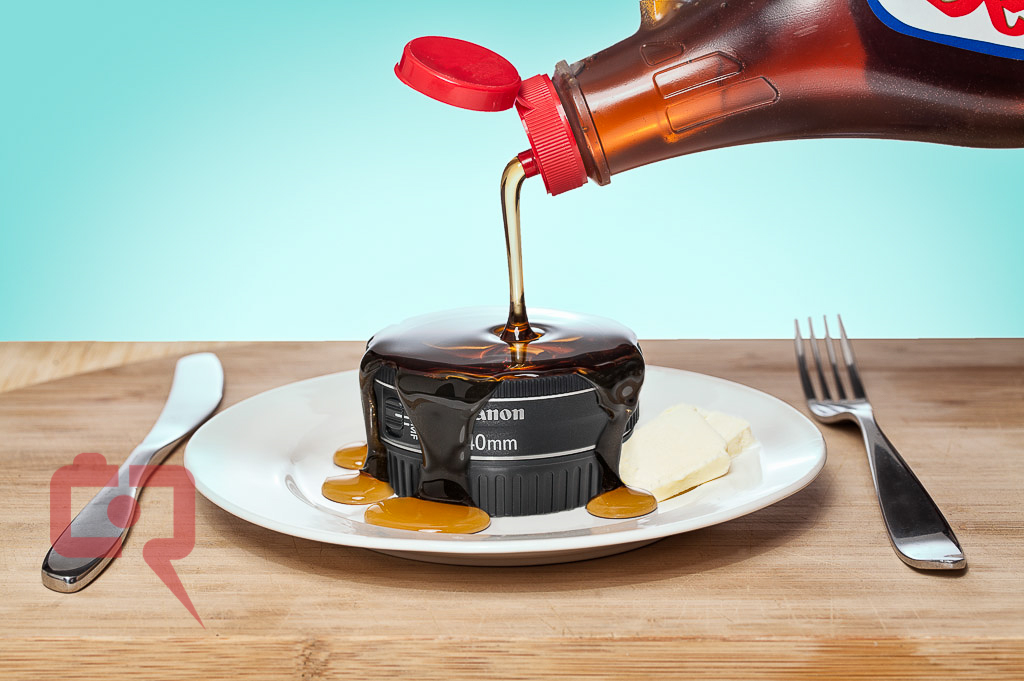
Drink up! | Canon EF 40 f/2.8 STM
Optics
Surprisingly sharp. Why am I surprised? I don’t really know – I guess I
kind of have it out for this lens – but yeah, shooting wide-open yielded
pleasing results. Heavily vignetted, but that’s the case with many
primes. Contrast and colour seem well retained for such an inexpensive
lens too. Shooting directly into some light sources didn’t seem to
diminish the optical quality either. Very well suited for shooting in
pretty much any situation.
Use
I think more than the technical details, which I covered briefly above,
this lens adds value from a usage standpoint. Where you can bring it,
how you use it, and in what situations it fits best.
Street photography is obviously the first thing that comes to mind.
While many shooters like to keep their distance, I often find a closer
approach appealing. Wide-angles get you close, but will distort your
subjects, and a 50mm is great for portraits, but you might miss your
focus if shooting from the hip. 40mm hits a sweet spot for this, there’s
enough compression that if you choose to shoot a portrait you can, but
it’s also wide enough to take in enough of a scene if you wanted to
guess the shot.
In fact any sort of casual shoot benefits from a discrete lens. Sure,
my 24-70 f/2.8 L gets me a lot of zoom, it’s also heavy and large
enough to be intimidating to someone not used to having a lens mashed in
their face. The 40mm may call attention to itself to other
photographers, but potential subjects have no idea what the potential is
behind such a tiny piece of glass. And once you’ve decided on stripping
away the weight and bulk of the lens why stop there? Yes, I prefer
using my 5DMK3 with it’s grip, but it just felt silly with such a small
lens. Take the grip off; now I’ve got a pretty portable rig. Perfect for
long outings with the family or going out casually with friends. Drop
on an even lighter camera frame like a Canon Rebel and I’m a step away
from a compact.
I mentioned the vignetting present in the lens, a great way to
eliminate the worries of the edges of a lens is to drop it onto a crop
sensor camera. 40mm on a crop sensor camera give an apparent focal
length of 64mm, which is absolutely a sweet spot for portraits. I could
easily see this, maybe the new 24mm f/2.8 IS, and the 85mm f/1.8 in an
incredibly versatile, affordable, and light photography kit with a
rebel, 60D, or 7D.
Who’s it for?
Small, unobtrusive, simple, these are prime traits for a portrait artist
and photojournalist. While many of the pro’s may only be able to work
with the more durable and higher build of L glass, entry level photo J’s
have to start somewhere. You could fit the pancake lens easily in any
sized bag (or your pockets) retrofit it with a few other primes, a
telephoto zoom if you want, and you’re ready to take on any assignment.

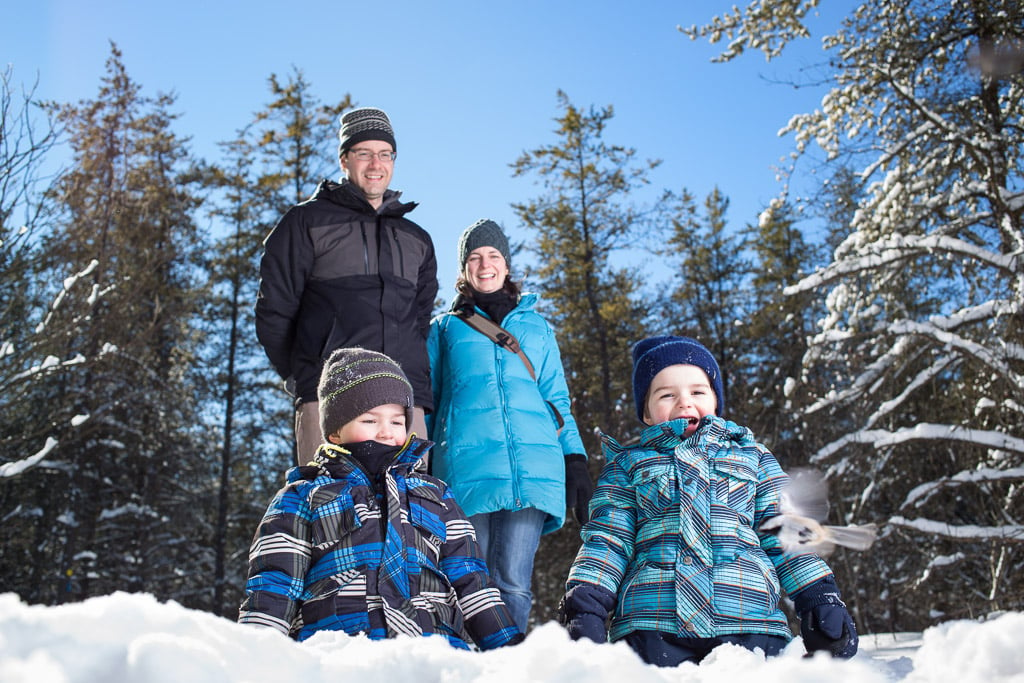
A cold Canadian family and holy smokes, there’s a bird | Canon EF 40 f/2.8 STM
Photographers getting started in wedding work would be better off
buying a few of these lower end primes than blowing their entire budget
on one high-end zoom. Keeping you on your feet at a wedding with an
aperture that is fast enough for most situations. Without the imposing
size that could draw attention to you when trying to capture a more
sincere, intimate moment. This is also an excellent portrait lens, a bit
wide for my personal tastes, but back up a bit and there’s no reason
you can’t take a solid image of a person or group.
As a backup, or even a fixed lens the 40mm could fit without much
notice in the bag of a landscape photographer. It may not be a preferred
focal length, but weight matters when hiking, and a need may arise for a
lens with a f/2.8 aperture or just having any lens available should
your primary landscape lens fail you. The lens also has some sort of
“macro” mode that lets you focus just shy of 1 foot away, this isn’t
take-a-picture of a bug macro, but it could do well for flowers and
other things of that size – f/2.8 will also help blur out a lot of the
background that close.
There’s a huge consumer market out there and, let’s be honest, it’s
bigger than the working pro market; many consumers want something light,
that works, and takes great photos. I ended up using the 40mm lens
mostly at home, at my kids’ birthday party, during a trip to the Museum,
or just walking down the street, and it was really nice casually using
such a small lens and camera combo.
Let me also make a point about primes, I find they force a certain
level of creativity. If you’re shooting with a fixed focal length, you
have two choices to change your composition: change the position, or the
lens. It’s pretty easy to move around and explore alternate angles,
taking chances and finding images that you may have otherwise missed.
Professionally I do shoot with a lot of zooms, but personally I truly
enjoy the feel I get from working with a prime lens.

The birthday party | Canon EF 40 f/2.8 STM
Conclusion
Will a pro shooter get something out of this lens that they don’t on any
of their other pieces of kit? Meh, probably not. But that’s missing the
point, this lens isn’t FOR them. It’s for people who want a light kit,
it’s for people who don’t have over a thousand dollars for a zoom lens.
It’s for people who who just want to get started or to explore image
making with something cheap, or help grow the small kit they already
have. It’s for people who, already having pretty much everything, just
need something new and unobtrusive to take with them, to give them a
slightly different view and inspire some new work.
I think, if spending $150 is your thing, that money is better spent
first on a 50mm f/1.8 lens. It’s a more flattering portrait lens, will
get you over a stop extra of light gathering ability, and produce
stronger bokeh, – the blurred backgrounds so many new shooters miss out
on with their kit lenses.
I’ve had this lens since it came out, and I haven’t really been able
to get a proper feel on it for my work. We all have different visions,
though, and this could absolutely be someone’s dream focal length. I
wrote extensively about who this lens could suit, and again, I
personally don’t find it very appealing but that’s me and my bias. It’s
not a bad lens, not at all, so if it interests you go for it: this is a
lens for you there are far worse things in photography you can spend
your money on.
Pro’s
- Very sharp
- Incredibly small and light
- Inexpensive
- fast 2.8 aperture
Cons
- I sometimes question its existence
- The 50mm 1.8 probably gets you more, for less
- Potential for inadequate phallic object jokes
Discuss the Canon EF 40 f/2.8 STM on the Canon Rumors Forum