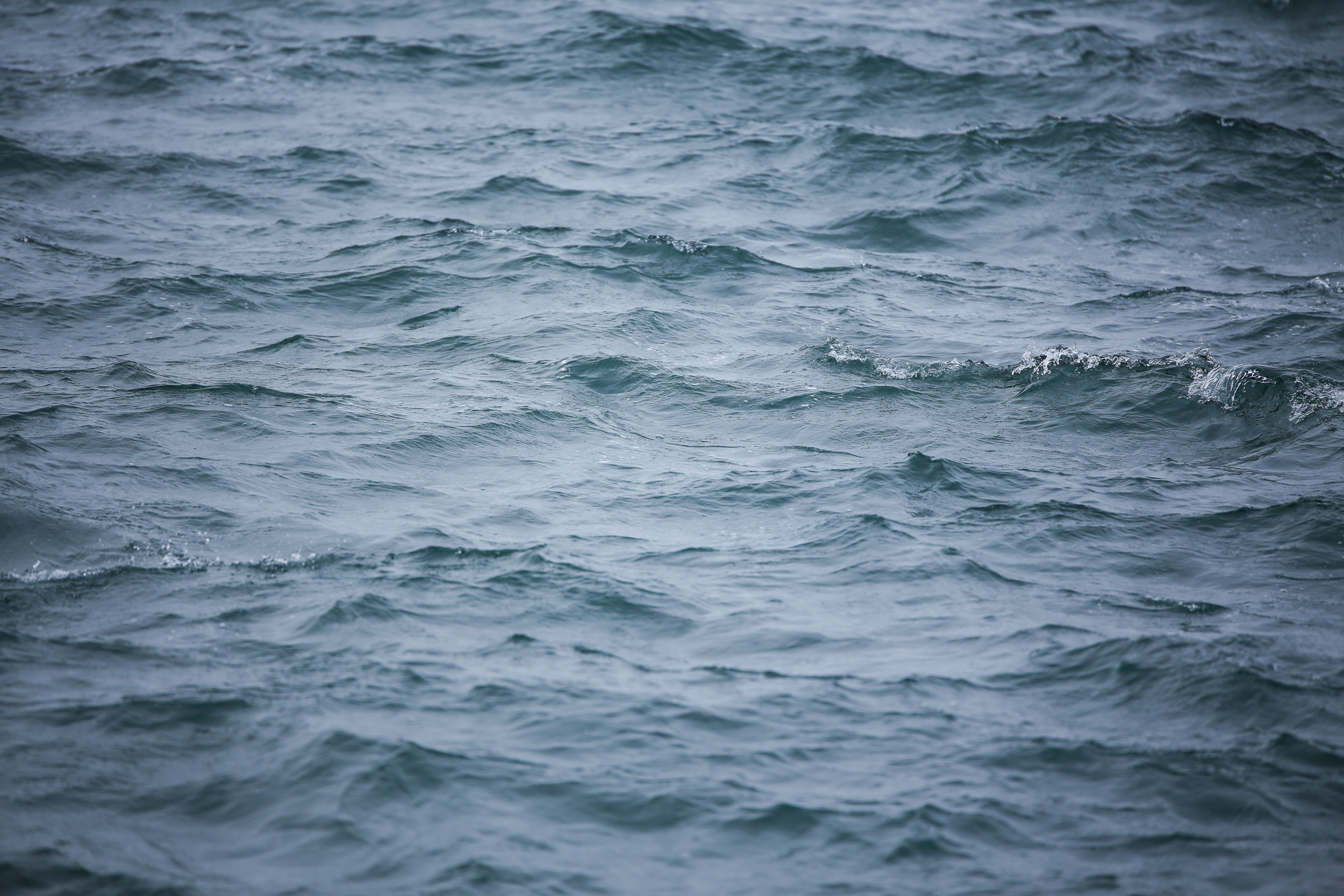
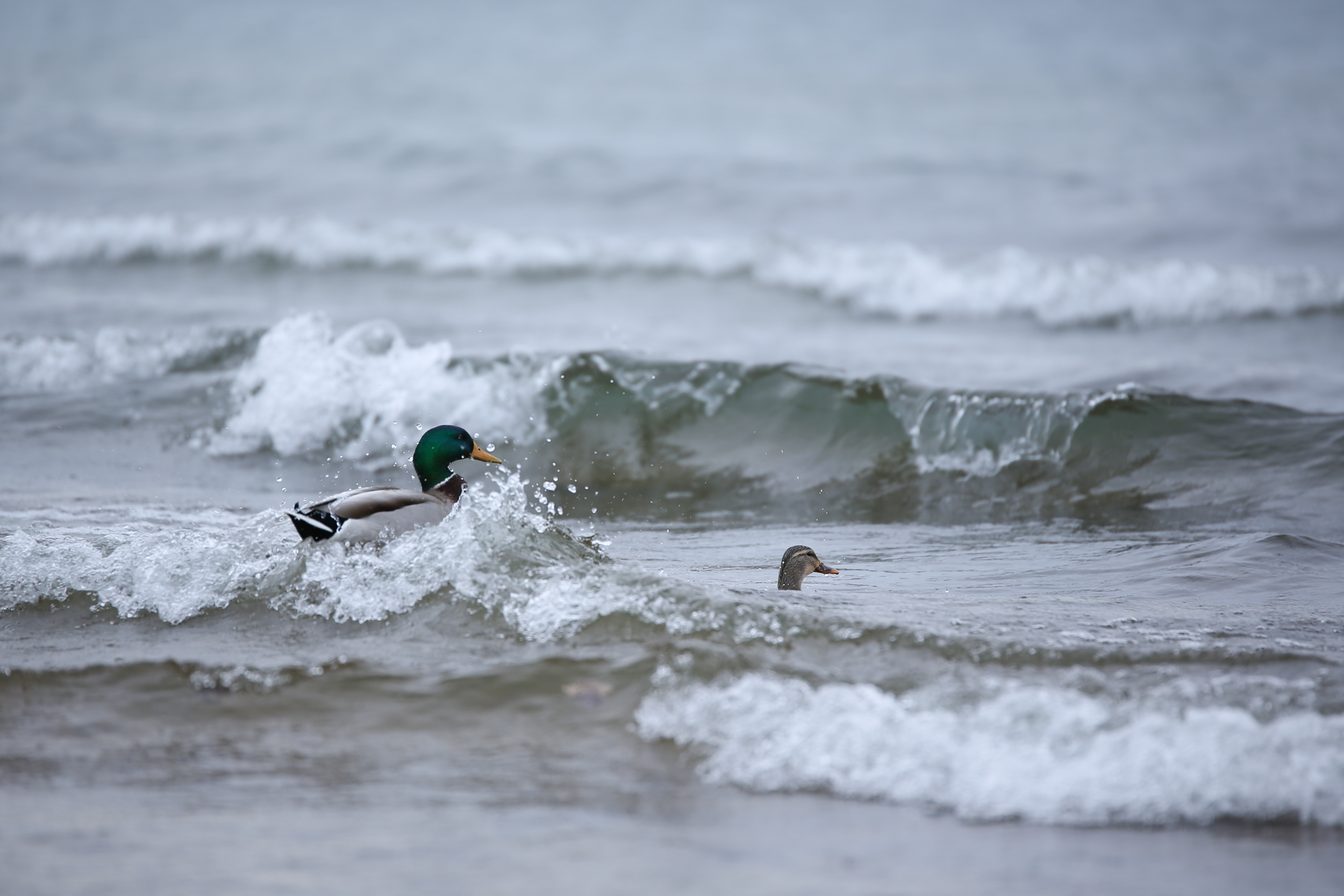
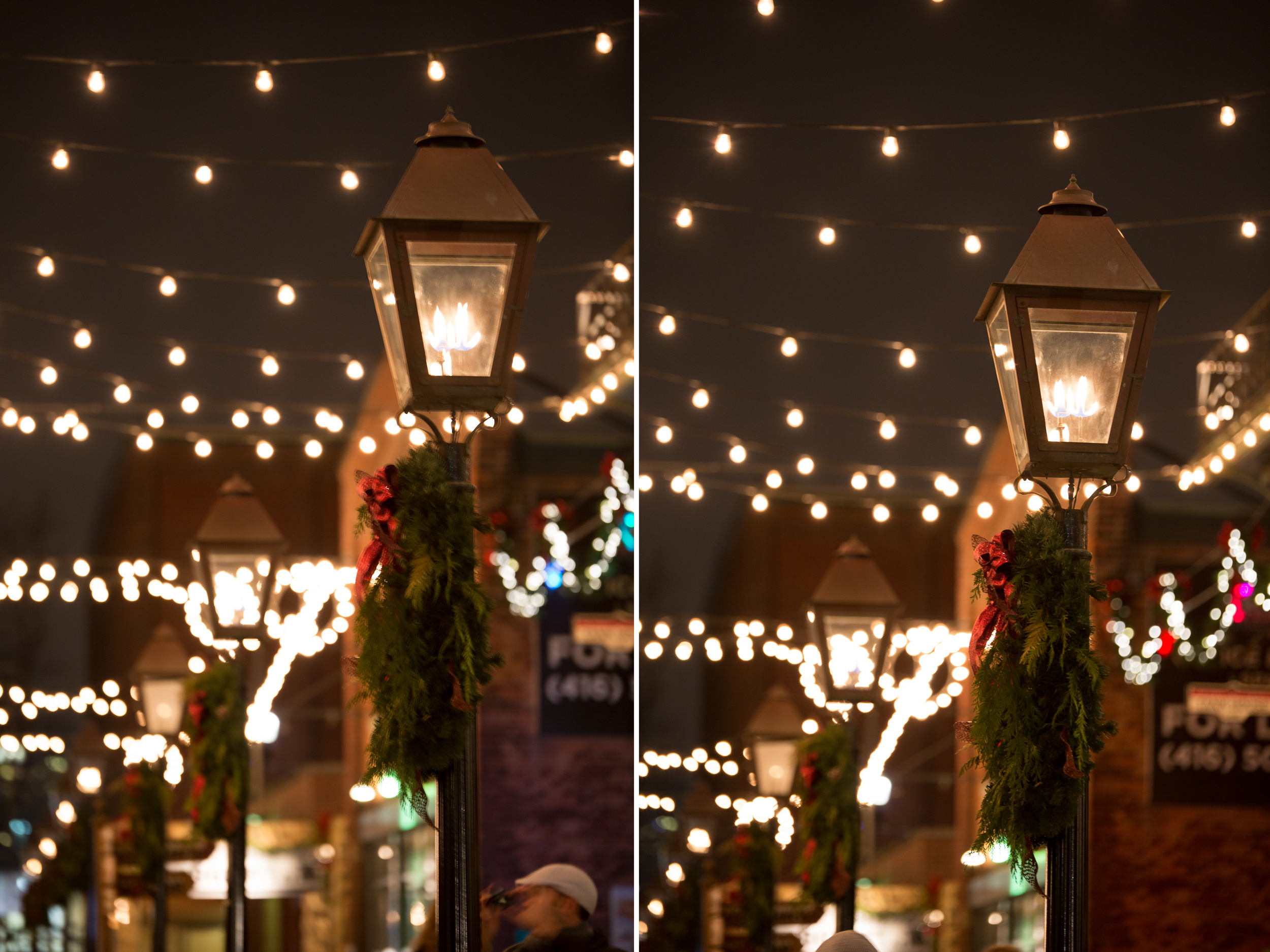
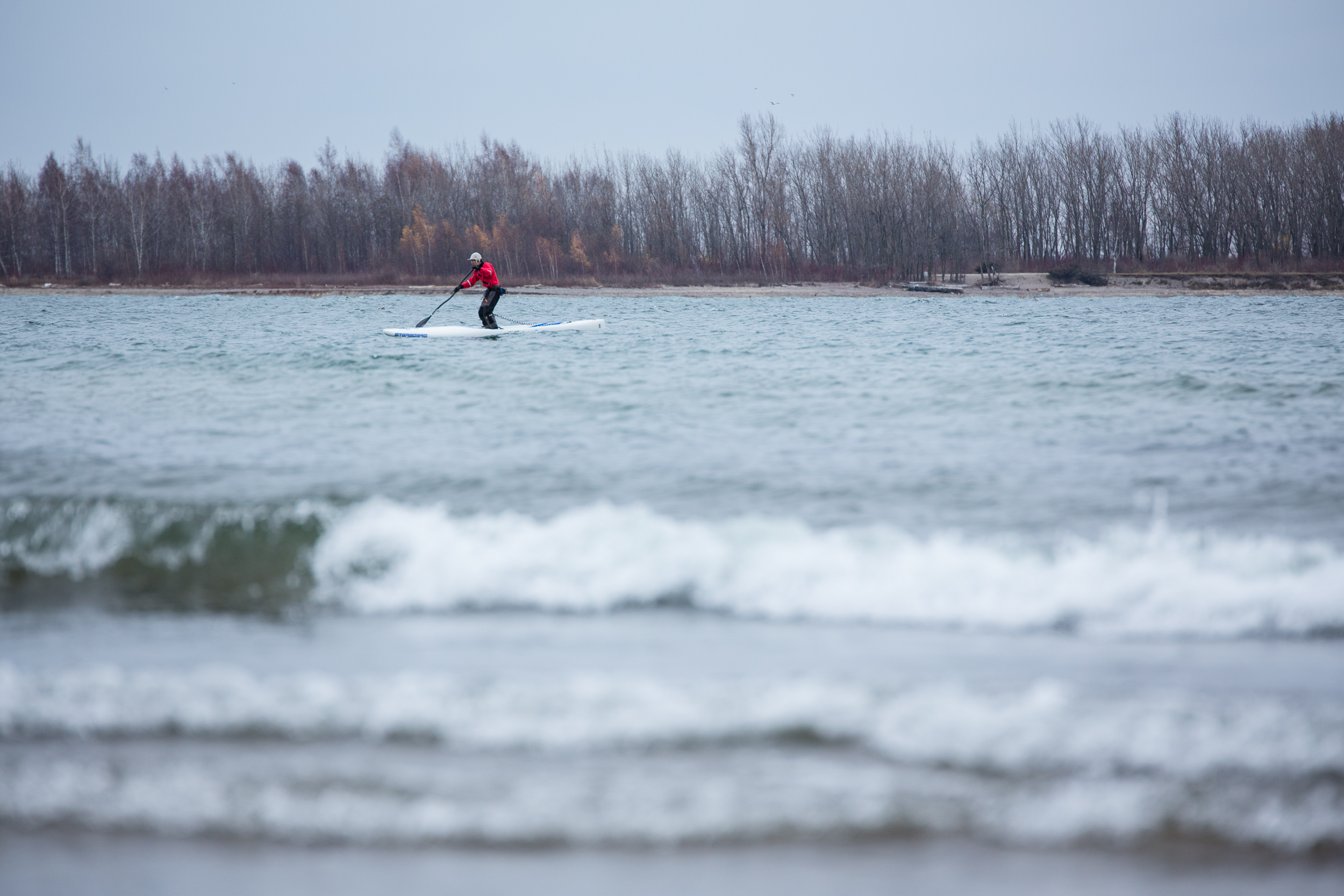
We just took the latest Tamron 70-200mm F/2.8 Di VC USD for a test
drive on our Canon 5D Mark III at the beach in the middle of November.
The 70-200mm F/2.8 is a staple lens in the bag of any working
professional photographer. From sports to portraits, the reach and
shallow depth of field of this lens design combine for a great image
with plenty of flexibility, even in low light scenarios. This lens
features 23 elements in 17 groups, reaches minimum focus at 51.2 inches,
and has 9 rounded aperture blades. The lens also features four LD
(low-dispersion) elements to combat chromatic aberration. It’s got a
host of other features, but let’s see what it looks like.

Build:
The build quality is very similar to Tamron’s recent 24-70mm F/2.8 Di
VC USD. A nice black matte finish across the entirely lens is very at
home for Nikon shooters. It features weather-sealing around the rear
bayonet and an internal focus scale window displaying distances in
meters and feet. The zoom ring is on the distant ring of the lens with a
nice 1.5 inch grip. This movement of the zoom element will cause a few
missed shots for Canon and Nikon shooters as they adjust to the new
layout, as the zoom has always been closer to the camera body. While it
might be uncomfortable at first, theoretically it makes more sense to be
holding the lens further away from the body for additional stability.
Manual focus is closer to the camera on a much smaller ring. Just like
the 24-70mm, those planning to shoot video will have to be cautious of
their follow focus rings being on the narrow path, but it was certainly
possible. Movement is just the right amount of stiffness on both rings
to prevent zoom creep, but allow for a smooth zoom/focus rack. The focus
ring travels from near to far after ~120 degrees, while the zoom
movement range is rather limited around 75 degrees.
The Tamron 70-200mm F/2.8 VC ships with a solid plastic HA001 bayonet
style pedal hood that clicks into place snugly, with no worry of it
getting bumped off in the field. It is the same model as Tamron’s
previous 70-200mm.
Similar to the other manufacturers, the lens features a 77mm front filter diameter.
One point of contention is the tripod foot. It is the same design as
Tamron’s previous 70-200mm F/2.8. I normally like to hold on to the
tripod foot while carrying these heavy lenses or pulling them out of
bags. The foot on the Tamron is so tight to the body that it interferes
with manually focusing, and I can’t get my finger between it and the
body of the lens. On the older 70-200mm, this was a much larger problem
as the zoom ring was towards the back of the lens, and your hands would
hit the foot, stopping your zoom motion. Now that the zoom and focus
rings have been reversed, it’s not as much of an issue. A nice touch is
the rugged knob that allows you to remove the entire collar from the
lens. There is only one 1/4-20 screw on the tripod foot. It would have
been nice to see an additional 3/8″ thread or an alignment pin for use
with gimbal or Arca-Swiss style plates.
Not that you’ll need it, but the Tamron comes with a 6 year Canadian warranty and 1 year international warranty.

Optical Performance:
We don’t tend to like focus charts here at PHOTONews. We’re all about
looking at the images these cameras and lenses produce in the real
world, and letting you be the judge. The previous Tamron 70-200mm F/2.8
was well known for it’s image quality, and even with the addition of
vibration compensation, Tamron was able to keep that high level of image
quality.
Vignetting
These images were shot from a tripod, VC off, at ISO 100 – F/2.8.
Straight out of the camera with no adjustments in Lightroom. We can see
about a 1/2 stop of vignetting, especially at the telephoto end, but
Lightroom had no trouble correcting this.
70mm
 100mm
100mm
 135mm
135mm
 200mm
200mm

Working on a darker scene and focusing closer (approximately 15 feet)
we see more pronounced vignetting, although it was cleared up around
F/4-4.5.
 Image Quality
We were certainly impressed using the latest Tamron when it comes to
straight image quality and sharpness. The lens features one XLD (Extra
Low Dispersion) element and four LD (Low Dispersion) for incredible
image quality. Vertical lines were rendered straight with no visible
distortion. Color and contrast were exceptional straight out of the
camera, much like Tamron’s previous 70-200mm F/2.8. We couldn’t find any
chromatic aberration in the trees of our test photos, even in the
extreme corners at F/2.8.

Bokeh / Shallow Depth of Field:
Simply put, the Tamron renders out of focus areas beautifully. The 9
rounded aperture blades combine to create soft, perfectly round bokeh.
Just click on the photos to view some large samples. We did notice some
of the ‘onion effect’ in the highlights of the bokeh on one shot below.
The slanted light is due to the shape of the Christmas lights.


Autofocus Speed
This was the number one complaint of the older Tamron 70-200mm F/2.8
Di lens. Acquiring focus and tracking birds in flight was just painful.
Tamron have really stepped it up with this version of the lens and it is
on-par with the Nikon and Canon equivalents that we’ve tested. All of
the images shot in this review were straight out of the box without any
micro-adjustment.
A great addition is the full-time manual focus override. Previously,
you had to slide the lens collar into manual focus to adjust the focus
manually if autofocus missed, or your wanted to fine tune. Now, the
focus ring can over ride autofocus whenever you need.
One feature the Tamron is still lacking is the focus limiter. When
shooting sports or wildlife, it is common to have a focus limiter so the
lens will not back focus under a certain distance (eg. it will only
focus on objects 10 ft away or greater). This way, if the lens is
hunting for focus, it won’t rack through the entire focus range and back
out to infinity while looking for something to lock on to.


Vibration Compensation:
Tamron claims that the new Tamron 70-200mm F/2.8 features 4-stops of
vibration compensation, similar to the VC system in their recently
introduced 24-70mm F/2.8. In our testing, we were seeing noticeable
improvement in handheld shooting between the VC On and Off. Not quite
sure that it was actually four stops, probably closer to three, but we
were able to get sharp photos at 1/60 in some 30+mph winds.
Both shots at 1/8 sec @ f/2.8. ISO 800. VC Off (L) and VC On (R)

Price Point:
Update: This lens is expected to hit store shelves at $1599.99.
Here’s the breakdown of other competing products in Canada (current street prices as of publication):
Sigma 70-200mm F/2.8 OS EX DG – $1249.99
Nikon 70-200mm F/2.8 AF-S VRII- $1999.99
Canon 70-200mm F2.8L IS II USM – $2349.99
Mounts and Availability:
This lens will be available in a Canon, Nikon and Sony mount for now.
No word on a Pentax mount unfortunately. The Canon mount is expected to
arrive in the first or second week of December, with Nikon to follow
and Sony after that. No specific dates have been given on their release.
The Sony model will not feature VC in the lens, as it is contained in
the body.
Silkypix:
We had never heard of
Silkypix
before, but it is a RAW processing software Tamron has included a
license to in the box. The software is similar to Lightroom in it’s
ability to catalog and edit RAW files. The included license gives the
lens owners a slightly slimmed down version of the Silkypix Developer
Studio 4. Tamron has said they will continue to support the Adobe
Lightroom and Camera Raw lens corrections, but no complaints about a
free alternative with a lens purchase.
Overall:
The Tamron 70-200mm F/2.8 Di VC USD brings Tamron’s legendary optical
performance into the 21st century with the addition of USD and VC. The
autofocus is fast with the addition of USD, the VC is effective , and
the image quality is what we’re used to from this legend. Tamron has
fixed a few quirks of the older version and we’d feel comfortable taking
this lens on any job or just a walk in the park. The deciding factor
for this lens will be the price point.
Additional Samples:


 1/8 sec @ f/3.5 – ISO 800 – VC Off – Tripod
 1/25 sec @ f/2.8 – ISO 1600 – VC On – Handheld
 1/20 sec @ f/2.8 – ISO 4000 – VC On – Handheld
 1/30 sec @ f/2.8 – ISO 2000 – 200mm – VC On – Handheld
 1/8 sec @ f/2.8 – ISO 800 – 135mm – VC On – Handheld


 Ed Note: PHOTONews Canada is owned by Amplis Foto Inc. Amplis
Foto Inc. is the distributor of Tamron lenses for Canada. The words are
our own based on the lens we were provided by Tamron Japan.
Via: http://www.photonews.ca/
Ed Note: PHOTONews Canada is owned by Amplis Foto Inc. Amplis
Foto Inc. is the distributor of Tamron lenses for Canada. The words are
our own based on the lens we were provided by Tamron Japan.
Via: http://www.photonews.ca/


![The Future Speedlites, Not Far Off Now? [CR2]](https://lh3.googleusercontent.com/blogger_img_proxy/AEn0k_vLgQigSnXjKt8fraXahl0HcS-LjN-zC6xqX3f5qOiSvIaOXRJk8Zjs76VzxNtvX4cCnmuiDOp5g4bJ7uZO_af0pa5p6SaFYQi_SdbLMLoCo2iXWebm9u_aZsS1eAvRdJUX9F-Jlr-rYFeSGhnK-g9zJRpUyrsXzRGP0GzSoy2tNcH2ZP-22uPrxNlQKCTAkueC2OQaytAQEs-A_-zdTQk8fTGBOW-vnYiE2Egc-91W_6A-bZ_kQdwJ6wO6udy5-qg5tttxfeSUfkT3G_h_xUYHUFvBCI1uAr9O=s0-d)