venerdì 17 maggio 2013

Review – Canon EF 300mm f/2.8L IS II

Review – Canon EF 300mm f/2.8L IS II
By: Justin VanLeeuwen | Twitter
Discuss the Canon EF 300 f/2.8L IS II

There’s a certain threshold you can pass in your lens acquisitions where usefulness, desire, and expanded needs meet. Perhaps in no place is this more true than when entering the super-telephoto range; extending 300mm and beyond. With the exception of a few choice zoom lenses, the Canon Super-Telephoto range enters a niche market of primes that serve a very specific purpose beyond what most photographers will encounter in a day (depending, of course, on what you do). I had always been curious about Canon’s 300mm f/2.8 L, and when the 300mm f/2.8 L II was released I was eager to give it a try. Not much longer in range than my Canon 70-200mm f/2.8 L IS II, I thought it could be *handy* to have in situations where a bit of extra reach was needed. But at a retail price in the multiple thousands, “handy” may not cut it as that kind of purchase needs to be justified beyond a desire to fill a focal range gap. The Canon 300mm f/2.8 L IS II is the first in a range of lenses that, in my opinion, serve the purpose to get you closer to your subjects when your movement is otherwise restricted.
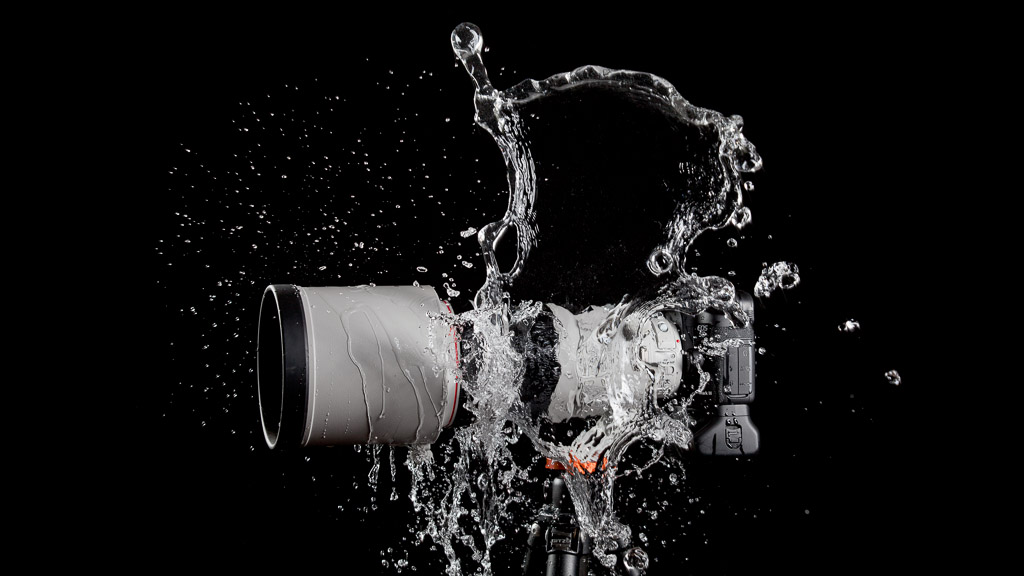
The Canon EF 300 f/2.8L IS II has very good weather sealing!
Build
We’re clearly looking at a more or less $6,500 “pro” lens here; there’s very little to fault in the sturdy metal construction of the body. While I found handholding it to be completely possible (especially with image stabilization engaged), I don’t recommend spending a full day trying to shoot it without some level of support as the weight will get to you. A sturdy tripod or monopod will go a long way to help you get the shots you want (many of the images I captured here were using a monopod). The large rubber focus ring is incredibly smooth and easy to move as, obviously, a larger lens will accommodate this design feature.
Weather sealing is a must, as many photographers using it will be in unshielded outdoor venues or even near water. As you can see from the image above, I tested its capabilities and I’m happy to report everything still works as it should.
The lens comes with a very large hood which, as always, I do recommend you use not just to protect the front element since there are no screw-on filters of this size, but also to prevent light from entering and flaring-out your images. It may significantly increase the length of the lens, but you’re not buying it to be discreet. The standard longer focal length switches adorn the side include a focus limiter, stabilization ON/OFF, stabilization mode 1/2/3, focus preset modes & the set button, and AF/PF/MF.
Boating in Canada | Canon EF 300 f/2.8L IS II & EOS 5D Mark III
A bit on Image Stabilization
“Optical Image Stabilizer technology makes hand-held photography more practical at slow shutter speeds*” (*Canon USA). IS helps free the camera and photographer from the tripod and gives you a bit more latitude to how and where you shoot. As a guide, it’s suggested that photographers’ shutter speeds should match the apparent focal length of the lens. So ideal shutter speeds on a full frame camera like the 1DX, 5DMKIII, or 6D, would be about 1/300th of a second at 300mm – of course this has no bearing on stopping motion or action. On a crop body like the Rebel series, 60D, or 7D you’d be looking to multiply that by the crop factor of the camera (1.6x) so 300mm would be 1/480th of a second, this make sense as the apparent focal length is magnified, so are any potential shakes. The IS advantage, then, is to allow yourself a bit more working room to achieve sharp images. The stabilization compensates for movement and shake, effectively correcting the slight changes the photographer introduces into the image through movement. 4 stops *technically* brings the 1/300th rating down to 1/50th of a second, though excellent technique is still recommended and, again, this won’t’ stop your subject from moving. Obvious advantages to this are people working indoors, where lighting is limited and you don’t need sports-level action stopping shutter speeds.
The mode switch allows for two types of stabilization: 1 is for “regular” use which corrects for vibrations in all direction, while 2 compensates for moving subjects or panning where there is a bit of fluidity and motion already being introduced to the lens to capture an image. Mode three “Corrects vibration only during exposure. During panning shots, corrects vibration during exposure only in one direction the same as MODE 2*.” [Canon USA].
There’s a focus preset button so you can set a specific focusing distance and return to it at any time by rotating the “Playback Ring” (a grooved metal ring between the focus ring and the front rubber grip). The front rubber grip also has four equally placed AF stop buttons which temporarily pause autofocus.
Rally | Canon EF 300 f/2.8L IS II & EOS 5D Mark III | ISO 1600 1/8000 f/2.8
Focus
The principal use of a long range telephoto is sports photography. Often you’ll be facing fast-moving subjects in dynamic environments. While your camera has a lot to do with AF performance and it will ultimately impact how well the lens works, the lens itself needs to be able to perform to high standards. I’m happy to report this lens meets and exceeds any expectations you may have of it. Focus was incredibly fast, quiet, and accurate to a point that any error was likely mine and/or a combination of the auto-focus settings I had enabled on the camera. New to this lens in version 2 is the “PF” focus mode:
“Helping moviemakers achieve smoother and more appealing focus shifts when filming on EOS DSLR cameras, Canon has included a new Power Focus (PF) mode on the company’s two new super telephoto lenses. This mode allows manual rack focusing to be operated smoothly by turning a playback ring that is normally used for the focus preset function. Both low and high speed focus shifting is available” [Canon USA].
Ugly shirt :-), nice portrait. | Canon EF 300 f/2.8L IS II & EOS 5D Mark III | ISO 400, 1/100th f/2.8
Image
When I first started using the Canon 300mm f/2.8 L IS II, someone I knew mentioned “It doesn’t suck, eh?” and were they right. Rarely did I stop down from f/2.8 – after-all, a fast wide-open aperture to create lovely out of focus backgrounds is part of the appeal – and rarely did I need to. The lens is sharp wide-open, from what I can tell corner to corner. It does vignette slightly, which improves as you stop down but I’m tired of writing about fast lenses and vignetting. THEY ALL VIGNETTE; this isn’t news. I often find the vignette pleasing as it helps to further focus the viewers’ eyes on the subject of your photograph.
I was hard pressed to find any noticeable flaws in the optics either. Chromatic Aberration and fringing were nearly non-existent. Since I used the lens’ hood whenever I was shooting I didn’t encounter any flare, and honestly forgot to shoot into the light to try and challenge the lens itself (also, I find the idea of a 300mm magnification of the sun slightly scary for my camera sensor). At 300mm f/2.8 you’re also looking at incredibly smooth and out of focus backgrounds, an interesting phenomenon is that at a close distance you can introduce minor obstructions like branches and fences and they won’t appear in your final image (though they will influence image quality as they’re just blurred out).
Compression is another great reason to use a telephoto lens, as it helps bring background elements “closer” in a two-dimensional image. Coupled with a particularly close minimum focus distance of 2 meters, there are some unique opportunities but I implore you, please do not use this knowledge for evil. Focusing closely at someone’s face at 300mm will “flatten” the perspective of their entire head, bringing their rear-most features like ears, and top/back of their head closer to the frame, a flattening but not a flattering look. A strange phenomenon I ran into was when the lens blurs out more detailed backgrounds, like shrubs without leaves. The pattern and lines left, while still very much out of focus, were still a bit distracting, though not as distracting as in-focus twigs.
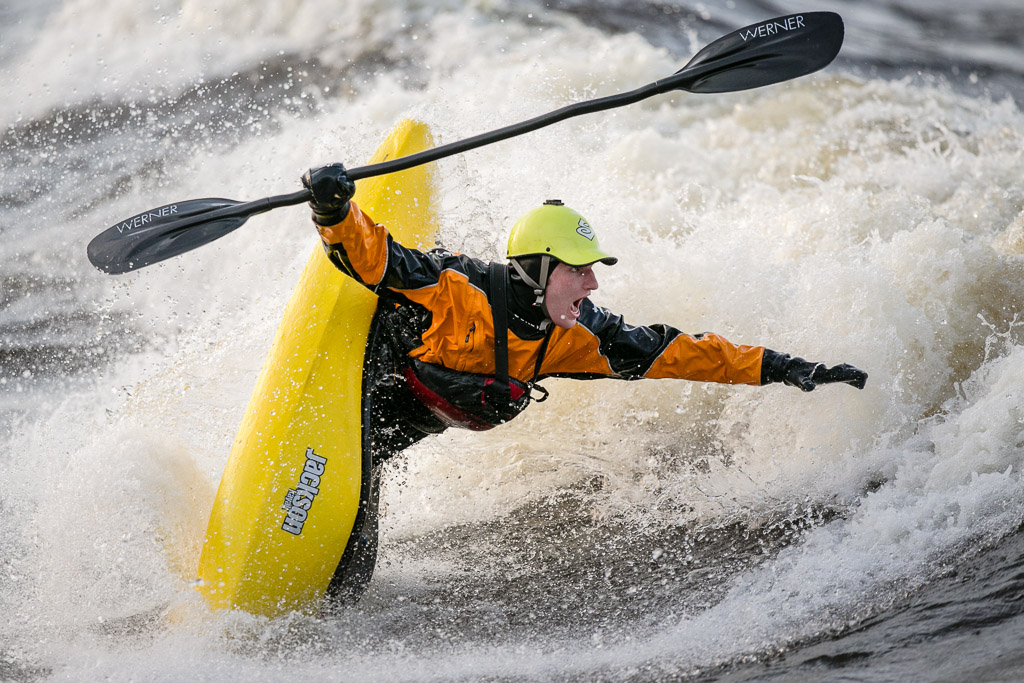
Kayaking | Canon EF 300 f/2.8L IS II & EOS 5D Mark III | ISO 1600, 1/3200 f/2.8
Who’s it for
Sports and events, as mentioned, are a clear use for the lens where a fast f/2.8 aperture will help frame full-body subjects with a wonderfully blurred out background. But don’t think you’ll be capturing subjects too far away, after all, this is only 300mm and you may find yourself wanting a bit more reach as I did photographing kayakers on the Ottawa River. Most of these shots were cropped down to better frame the subject. The Canon 300mm f/2.8 L IS II is fully compatible with Canon extenders, which will cost you a bit of your aperture speed as well as a notable degradation of image quality.
I imagine some wild-life photographers would be interested in this lens, but I found the lens too short to reach smaller creatures, I think the 300 is best suited for larger (non-violent) animals within a good 20 metre range. Horses, dogs and cattle come to mind, perhaps because they’re domesticated and you can get closer to them by their nature. I just don’t like the idea of approaching a grizzly bear with only 300mm… Maybe 400mm buys you some safe space. If you took this on Safari, I’d definitely suggest you invest in an extender.
I’m sure many people are interested in the lens for some unique portrait opportunities, but having used the slightly lighter Canon 200mm f/2.0 L IS I can’t see anyone using the 300mm over it. Again, if reach and range isn’t an issue you’ll get similar looking, if not better, images using something that gives you a bit of a tighter working distance. Of course, if range is a factor and you’re unable to get closer to your subjects, photojournalists working on a high-profile story may find the lens very useful, though its price may seem restrictive.
Hoops | Canon EF 300 f/2.8L IS II & EOS 5D Mark III | ISO 100, 1/1000th f/2.8
Conclusion
I’m thankful that I was able to use this lens as long as I did, since it made me realize how seldom I’d use it in my day-to-day work if I owned it. I’m not involved in sports, or wildlife, and many of my editorial assignments actually put me in a restrictive space. Rentals on this focal range are readily available and certainly an option for me otherwise. This wasn’t a lens I took out with me every day; I had to seek out events and situations to put it to. It abated my own curiosity, and helped confirm that one does not indeed need everything.
You’re not me, though, and you may find 300mm is exactly the range you require. The lens is superb, no doubt, and I don’t think anyone who already knew this was something they needed ever thought otherwise. That’s why I wrote this piece completely from my perspective, from the curious photographer, wondering if I need just a little more reach. More practical for my use, I think, will be getting a 1.4 extender, and dropping it onto my 70-200 f/2.8 L IS II to get 280mm f/4. Sure, it’s not as nice as 300mm f/2.8 but it’s a lot lighter and more practical for my use.
Of course none of the images I shot above would have been achieved without the 300 f/2.8, though I think many of them would have been possible with a 400mm f/2.8… And while my curiosity was piqued, I think for the more specialized super-telephoto focal lengths, I should step aside and let someone else handle those reviews.
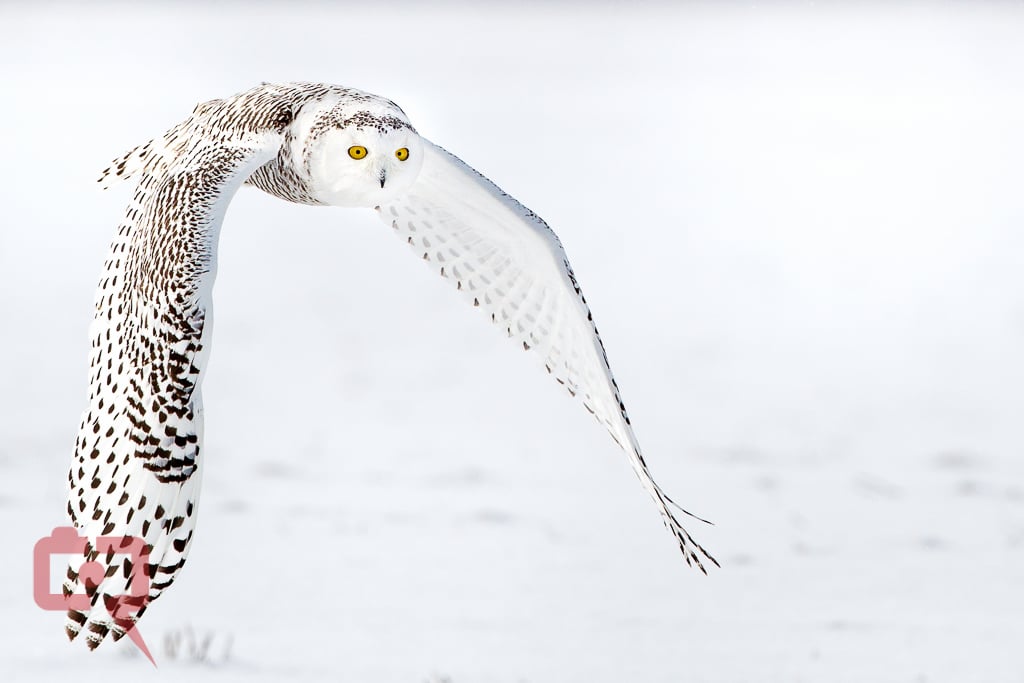
Snowy Owl | Canon EF 300 f/2.8L IS II & EOS-1D Mark IV | ISO 400 f/5.6 1/8000
CR’s Take
I’ve used the EF 300 f/2.8L IS II a few times and found it to be a delight to use. It’s actually a lot more versatile of a focal length than people tend to realize. I’ve found myself using it for wildlife, portraits, landscape and anything else where I want compression, isolation or moderate reach. The lens is well balanced and is easy to use for long periods of time. The autofocus and image quality are second to none. It’s hard to believe they made the 300 f/2.8L IS II even better than its predecessor.
As a rental item, we’ve never had any issues with this lens. It gets used hard and is built to take it.
There’s really nothing else to write, the lens is awesome and if you’re in the market for something in the 300mm-400mm range, you will not be disappointed. Most people that rent it, or write reviews about it, don’t want to give it back.
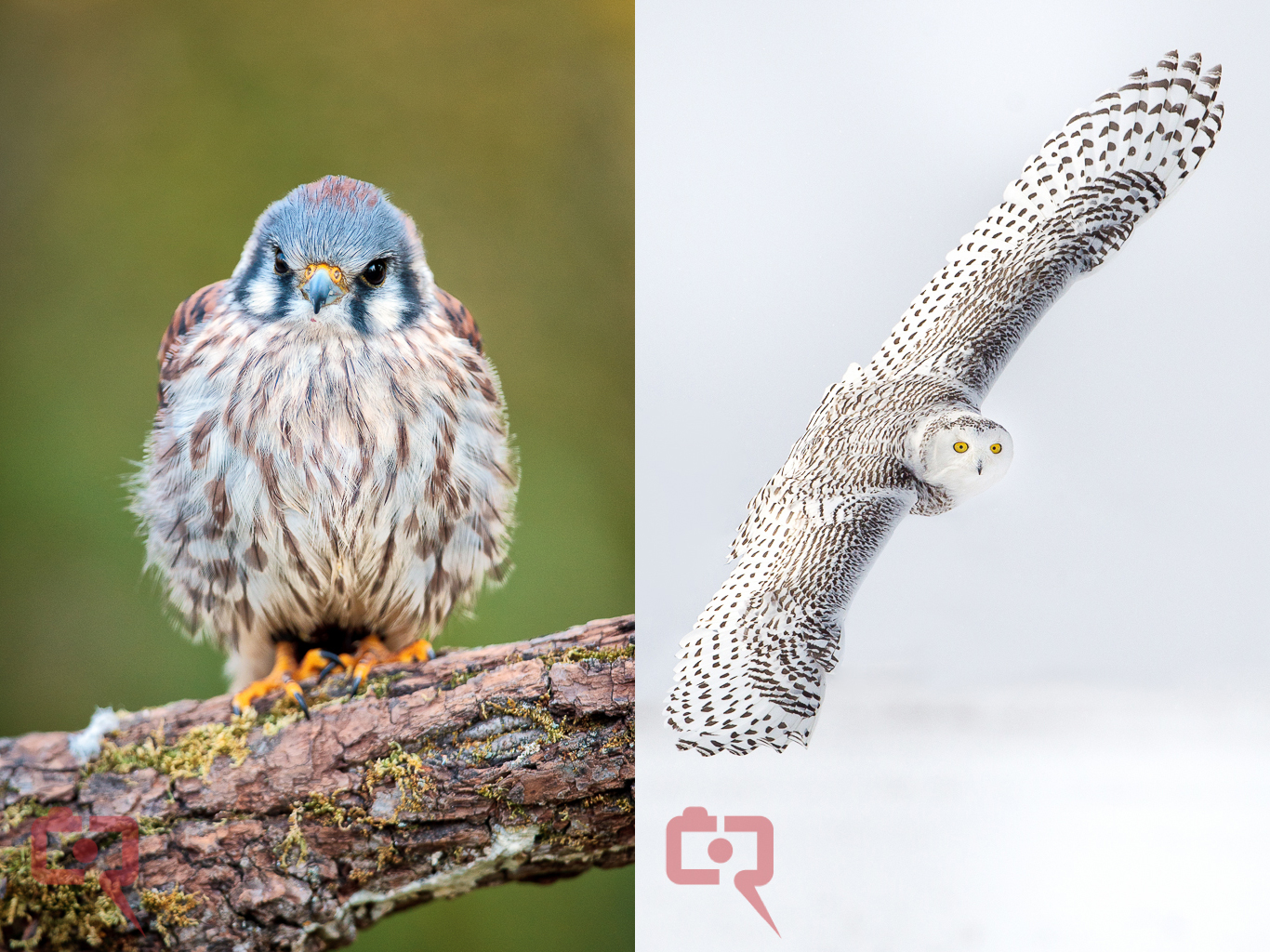
American Kestrel & Snowy Owl | Canon EF 300 f/2.8L IS II & EOS-1D Mark IV
Pros
  • Nigh-perfect image quality
  • Fast and accurate autofocus coupled with highly functional image stabilization.
  • Exceptional Build
  • Relatively inexpensive compared to the Canon 400mm f/2.8 L IS II
Cons
  • Weight can be an issue for some
  • Relatively expensive compared to some zooms in the same focal range (though not the same aperture)
  • Potential gateway lens leading to even longer lenses that cost even more crazy amounts of money

EOS 70D & EOS 7D Mark II

EOS 70D & EOS 7D Mark II
Not much buzz
There isn’t much information out there about Canon’s next APS-C cameras. Canon has alluded to the fact that both cameras are coming, we just don’t know when. We’ve been told previously by very good sources that only the EOS 70D will be available in 2013, though the EOS 7D Mark II could be announced in late 2013 for early 2014 availability.
We’re told a “surprise” announcement will be made by Canon in July, what that is we’re unsure. However, the source alluded to it being a camera body. I wouldn’t call the EOS 70D a “surprise”, but we’ll see. Could it be…….. something else?

When is the New 100-400 Coming?

When is the New 100-400 Coming?
A question I am asked daily
We were told ages ago that any replacement of the EF 100-400 f/4.5-5.6L IS would happen after the EF 200-400 f/4L IS 1.4x had begun shipping. That time is nearly upon us.
The new 100-400 does indeed exist and is being actively tested, however Canon is in no rush to announce the lens. We’re told that the current 100-400 still sells at an amazing clip and outpaces the 70-300L by a 4 to 1 margin.
Canon may also be waiting to see how the EF 200-400 f/4L IS 1.4x sells, would people really hold off buying it if a new 100-400 was available?
With Nikon announcing their new 80-400, 2013 will probably be the year we finally see the new 100-400 from Canon. Here’s a patent for the new 100-400 optical formula, notice that the new design starts at f/4 instead of f/4.5.

martedì 14 maggio 2013

Nissin MG8000 Extreme Wins TIPA Award

News image
The Nissin MG8000 Extreme flash has been named 'Best Portable Lighting System' in the 2013 Technical Image Press Association (TIPA) Awards. Offered in both Canon and Nikon fit, the Nissin MG8000 Extreme sparked mass interest amongst the industry when shown for the first time at Focus-on-Imaging in March 2012 due to its unique quartz-based flash tube which ensures the unit remains cool, even in extreme-use conditions. When tested, the Nissin MG8000 can produce over 1000 full flashes without any fear of overheating, the company claims. The Nissin MG8000 Extreme boasts a recycle time of just 3 seconds for the first 200 shots, and then 5 to 7 seconds for subsequent frames, maintaining its guide number throughout the burst. Other highlights include an included external diffuser, tilt-swivel head, guide number of 60 (in metres at ISO 100/21° with the head zoomed to the 105mm position), full support for Canon’s and Nikon’s wireless TTL flash control systems, high-speed synchronisation and a stroboscopic flash mode. Weighing in at 400g, the Nissin MG8000 Extreme has a guide price of £545.40.
Nissin Press Release
'Best Portable Lighting System' awarded to the Nissin MG 8000 at TIPA Awards
Kenro, the official UK distributors of Nissin Flash Guns, is delighted to announce that the Nissin MG 8000 Extreme Flash Gun has been named 'Best Portable Lighting System' in the 2013 Technical Image Press Association (TIPA) Awards.
The Flash features the world's highest "Machine Gun" strobe, capable of producing over 1000 full flashes without any fear of overheating; three times more than a general flash.  Boasting an impressive recycle time of just three seconds for the first 200 shots, the Gun then takes only five to seven more seconds for subsequent frames, making it the ideal choice for fashion, wedding and reportage shooters who need a flash they can rely on.
Weighing in at 400g, the Nissin MG8000 is compatible with the E-TTL, E-TTL II (Canon) and i-TTL (Nikon) and features flash capabilities. The MG8000 can also be connected to a Nissin Power Pack which can speed up the recycle time to achieve even higher power and frequency of flash photography.
Paul Kench, managing director of Kenro, made this comment: "The MG 8000 has been very well received since its launch at Focus-on-Imaging 2012, and we are delighted with this commendation from the TIPA board. Nissin are renowned for their ability to create innovative flash guns that rival those of a higher price-tag and this TIPA award is a great tribute to that innovation."
The Nissin MG8000 Extreme Flash gun has a guide price of £456.00 including VAT and is available now.

Lastolite Ezybox II Octa Quad Kit


News image
Manfrotto Lighting has released the new Lastolite Ezybox II Octa Quad Kit. The kit incorporates the Ezybox II Quad Bracket (previously known as the Ezybox Quad Bracket) and the new Ezybox II Octa softbox. Working in the same manner as its predecessor, it allows the photographer to attach up to four flashguns to the bracket along with one of the Lastolite Ezybox II Octa softboxes or umbrellas. The Ezybox II Octa Quad Kit includes 1x Ezybox II Quad Bracket, 1x Ezybox II Octa (Medium or Large), 1x Spigot Tilthead, 2x four to one sync cables (PC connection and 3.5 Jack connection. The medium sized version costs £240, the large size can be had for £265.
Manfrotto Press Release
Manfrotto Lighting Limited Announce Lastolite Ezybox II Octa Quad Kit
May 9th 2013, Manfrotto Lighting Limited, the world’s leading manufacturer of backgrounds and lighting control systems for the photo, video and cinema industry, announces the release of the new Lastolite Ezybox II Octa Quad Kit
The Ezybox II Octa Quad Kit incorporates the highly successful Ezybox II Quad Bracket (previously known as the Ezybox Quad Bracket) and the new Ezybox II Octa softbox. Working in the same manner as its predecessor, it allows the photographer to attach up to four flashguns to the bracket along with one of the Lastolite Ezybox II Octa softboxes or umbrellas (compatible with 8mm or 10mm shaft sizes). The Ezybox II Quad Bracket can be used in conjunction with various flashgun triggering systems utilising one of the accompanying PC cables that allow you to connect four flashguns with a sync socket to a single receiver (PC connection or 3.5 jack connection).
The Ezybox II Octa Quad Kits includes 1x Ezybox II Quad Bracket, 1x Ezybox II Octa (Medium or Large), 1x Spigot Tilthead, 2x four to one sync cables (PC connection and 3.5 Jack connection.
The Ezybox Quad Bracket is Nikon SB-900 compatible.
Please note: The naming convention for the previous Ezybox Quad Bracket has now changed to Ezybox II Quad Bracket. The technical specification is unchanged. It remains compatible with the now discontinued Ezybox Studio softboxes.
Pricing and Availability:
Ezybox II Octa Quad Kit Medium £240 inc Vat
Ezybox II Octa Quad Kit Large £265 inc Vat
All prices include VAT
For stockist information, please see: http://www.lastolite.com/distributors.php
Email:sales@lastolite.com 
Telephone: 01530 832570

Announcement: Canon EF 200-400 f/4L IS 1.4x

 News image
London, UK, 14 May 2013 – Canon today adds a new category to its range of high-performance super-telephoto lenses, with the introduction of the EF 200-400mm f/4L IS USM Extender 1.4x to Canon’s acclaimed L-series. The EF 200-400mm f/4L IS USM Extender 1.4x features a flexible 200-400mm focal range with a fixed f/4 aperture, 4-stop optical Image Stabilizer and for the first time in a commercially available lens, a built-in 1.4x extender. These features combine to provide an outstandingly versatile lens for professional sports or wildlife photographers. A robust magnesium alloy design, environmental protection and specialised lens coatings also make it ideal for mobile use, combining with the finest quality optics to deliver exceptional results, even in the harshest conditions.
Get closer to the action with superior image quality
The reach of the EF 200-400mm f/4L IS USM Extender 1.4x is boosted by its internal 1.4x extender, which is engaged or disengaged at the flick of a lever to provide an extended focal length of 280mm to 560mm – allowing photographers to get even closer to distant action. Ensuring the highest image performance, the optical design includes both fluorite and Ultra-low Dispersion (UD) lens elements, which help minimise chromatic aberration and eliminate colour blurring. Advanced anti-reflection SubWavelength Structure Coating (SWC) and Super Spectra Coating also reduce ghosting and flare. Thanks to the use of the latest optical technologies, image performance is unaffected when the integrated extender is used.
With a constant f/4 aperture the use of high shutter speeds to capture fast-paced action or a low-light scene is possible. A newly designed optical Image Stabilizer, which provides users with a four stop advantage, while IS ‘Mode 3’ applies image stabilisation only at the time of exposure – ensuring that photographers can pan with fast-paced action without IS overcompensating for movement. This feature is ideal for sports photographers, who typically have only a split-second to capture a subject in front of them.
Powerful, flexible focusing
The EF 200-400mm f/4L IS USM Extender 1.4x features Canon’s pioneering ring-type Ultrasonic Motor providing fast, silent autofocusing. For those who prefer to fine-tune focus themselves, full-time manual override allows photographers to manually focus at any moment when using AF. The Power Focus (PF) mode also increases versatility during movie shooting with the EOS-1D C or EOS-1D X, enabling photographers to achieve an accurate pull-focus effect at one of two speeds, simply by twisting the focus recall ring and stopping at a pre-set distance.
High-performance design for professional demands
Designed to answer professional demands for superior image quality and versatile zoom range, the EF 200-400mm f/4L IS USM Extender 1.4x a boasts a premium-quality design befitting Canon’s industry-renowned L-series lenses.
The tough magnesium alloy chassis ensures that, despite the inclusion of the 1.4x extender, the lens is a similar weight to lenses of comparable focal length. Fluorine coatings on the front and rear lens elements also reduce the ability of dirt to cling to the lens surface, while a dust and water-resistant construction allows photographers to shoot in challenging weather conditions. The combination of outstanding optical performance, versatility, weight and tough construction will make it an essential part of any professional sports or wildlife photographer’s kitbag.
EF 200-400mm f/4L IS USM Extender 1.4x key features
  • Built-in 1.4x extender, for extra magnification when you need it
  • Shoot in low light with four-stop Image Stabilizer
  • High image quality using Fluorite lens elements
  • Fast AF with USM technology
  • Robust design for use in the toughest environments
Focal Length & Maximum Aperture Built-in extender at 1x: 200-400mm, 1:4.0
Built-in extender at 1.4x: 280-560mm, 1:5.6
Lens Construction Built-in extender at 1x:
25 elements in 20 groups (incl. 1 rear filter)
Built-in extender at 1.4x:
33 elements in 24 groups (incl. 1 rear filter)
Diagonal Angle of View Built-in extender at 1x: 12°-6°10′
Built-in extender at 1.4x: 8°50′-4°25′
Focus Adjustment Inner focusing system
Closest Focusing Distance 6.6 ft. / 2m
Filter Size 52mm drop-In
Max. Diameter x Length, Weight 5.0 x 14.4 inches, 127.7 oz. / 128 x 366mm, 3620g

EF 200-400 f/4L IS 1.4x Announcement Tonight

 News image
Stay tuned……..
As previously mentioned, the EF 200-400 f/4L IS 1.4x will be announced tonight, stay tuned for full coverage. Get your $12 grand ready!
I’ve had a chance to use the lens and will give you my thoughts!
Below is an overview of the EF 200-400 f/4L IS 1.4x
Designed to satisfy the discriminating needs of sports and wildlife photographers, the EF 200–400mm f/4L IS USM Extender 1.4X is a high-performance super telephoto zoom lens with an optically matched built-in 1.4x extender for maximum versatility. With a simple flick of a switch, the zoom range can be quickly increased to 280–560mm (f/5.6). This capability is extremely useful in applications where it is not possible to change lenses quickly, while also protecting delicate equipment such as a digital SLR camera’s image sensor in environments with dust and high humidity. The EF 200–400mm f/4L IS USM Extender 1.4X incorporates one fluorite and four UD lens elements, which provide excellent correction of chromatic aberration throughout the entire zoom range for professional quality images with high resolution, contrast and color fidelity, while a 9-blade circular aperture helps deliver beautiful, soft backgrounds. It utilizes inner focusing, ring USM, a high-speed CPU and optimized AF algorithms for fast and accurate autofocusing. And, with Power Focus mode, focus shifts are quiet and smooth, which is essential for filmmaking. Image stabilization is effective up to four shutter speed steps, with three image stabilization modes (standard, panning, and during exposure only) providing excellent results for a wide range of subjects. Optimized lens placement and coatings deliver outstanding color balance, while helping to minimize ghosting and flare. The lens is highly resistant to dust and water, enabling shooting even in harsh conditions. A fluorine coating on front and rear lens surfaces repels dust particles and makes the lens easier to clean.

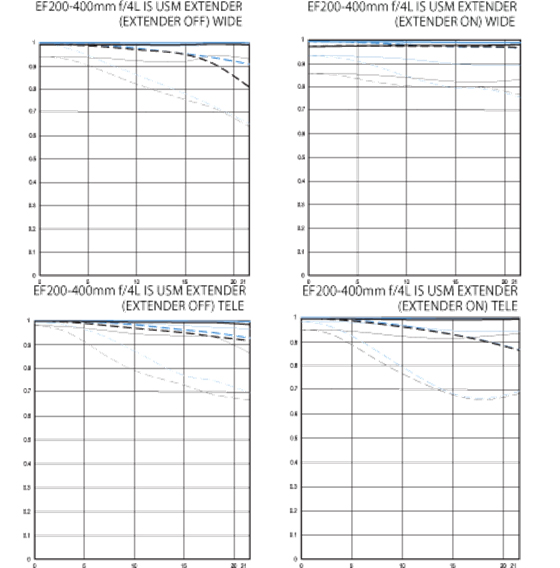
MTF Charts

EF 200-400 f/4L IS 1.4x MTF Charts
                                        EF 200-400 f/4L IS 1.4x MTF Charts

Canon 5D Mark III uncompressed HDMI sample footage


Is it any better? Rather than spoil the surprise please do go ahead and watch the short test video. You can download the original file at Vimeo here.
The test setup was -
  • Blackmagic HyperDeck Shuttle II external recorder
  • Small HD DP6 monitor
  • HDMI mode set to 24p
  • Internal recording is 1080/24p IPB mode not ALL I. This is because I feel IPB has the better image quality.
Workflow in post was the usual one I do for the 5D Mark III.
Added sharpen filter at 20 in Premiere CS6 and lifted shadows on the street shots (there’s also an ungraded HDMI shot in there).
Lens was Contax Zeiss 50mm F1.4.
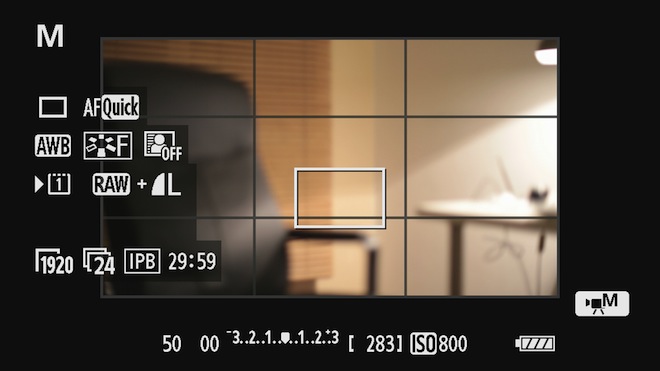
A nice bonus is that the focus magnification on the camera also outputs via the clean HDMI feed giving you a 3:2 (or maybe 4:3) 1080p crop mode. Detail in this mode is very good and it seems like roughly a 16mm crop of the full frame sensor. The aspect ratio makes it interesting for anamorphic lens users.
Capture0008
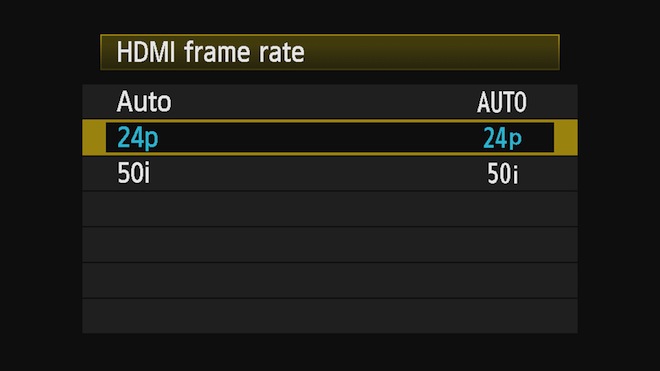
The HDMI output frame rates are 60i, 50i and 24p. There’s no 25p! The 50i is interlaced. That isn’t great news for PAL shooters. The actual frame rate in 24p mode is 23.976fps.
The HDMI output seems to have more of a green cast in the blacks than the internal recording.
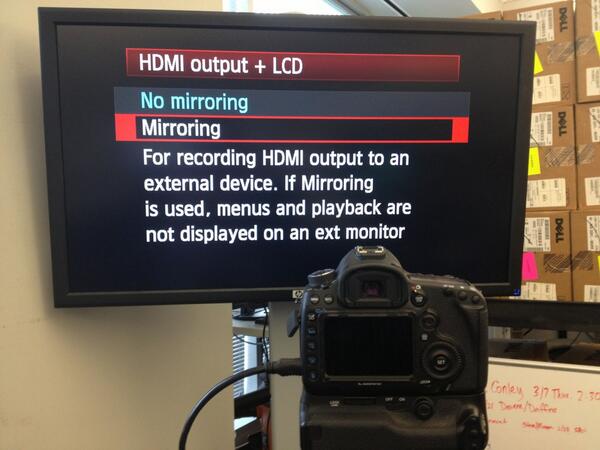
The camera can record to the card whilst also recording via HDMI. When the Mirroring option is enabled in the menus, the camera will not display any icons or menus via HDMI and the LCD will remain on whilst an external recorder is attached.
5D Mark III HDMI mirroring
Thanks Rod on the EOSHD Forum for this image
On the Zacuto EVF via the Blackmagic HyperDeck Shuttle, only a 1:1 mapping of the upper corner of the image was displayed and none of the presets or scaling options got me the full image. I swapped to the Small HD DP6 only to find that in 24p mode it has a tearing of motion in the upper part of the frame, and only works when the HDMI is set to Auto or 50i. But I need it to be set to 24p for the recorder! I need to do further research here to find out if it is a HyperDeck Shuttle output or monitor issue.
On whether it is really 4:2:2 colour sampled as Canon claim I have my doubts. I don’t see any difference to the internal recording to suggest 4:2:2 and I doubt the sensor is sampling 4:2:2 from high resolution in video mode like a C300.
For now think of it is as 4:2:0 wrapped in 4:2:2 ProRes, try keying it and see if it meets your expectations (it is still only 8bit of course).
Capture0000

5D Mark III with Continuous RAW Video Recording


Huge thanks go to A1ex, g3gg0, 1% and the whole Magic Lantern team.
I have no other words to describe it – this is huge news.
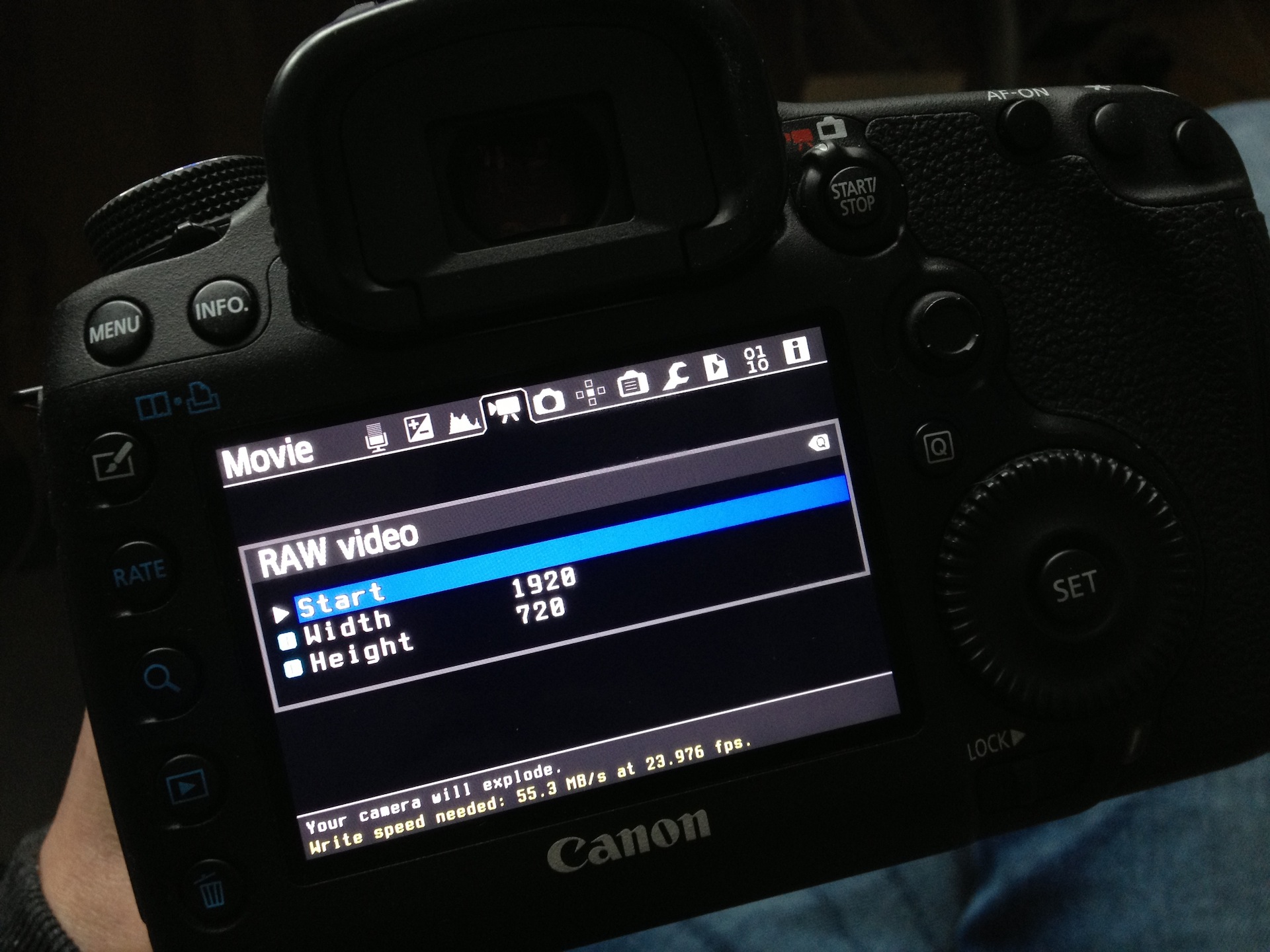
Magic Lantern have done the seemingly impossible and given us a continuous raw recording mode on the Canon 5D Mark III. Once activated in the menus the 5D Mark III becomes essentially a full frame Blackmagic Cinema Camera and amazingly mine has not yet exploded. No more short bursts of raw, this is the real thing.
The image is leaps and bounds ahead of any other DSLR. We’re talking Alexa / Red league here, yet full frame. The first ever raw video shooting full frame camera at that. I’m getting continuous recording at a data rate to the card of 90MB/s and the camera hardly breaks into a sweat.
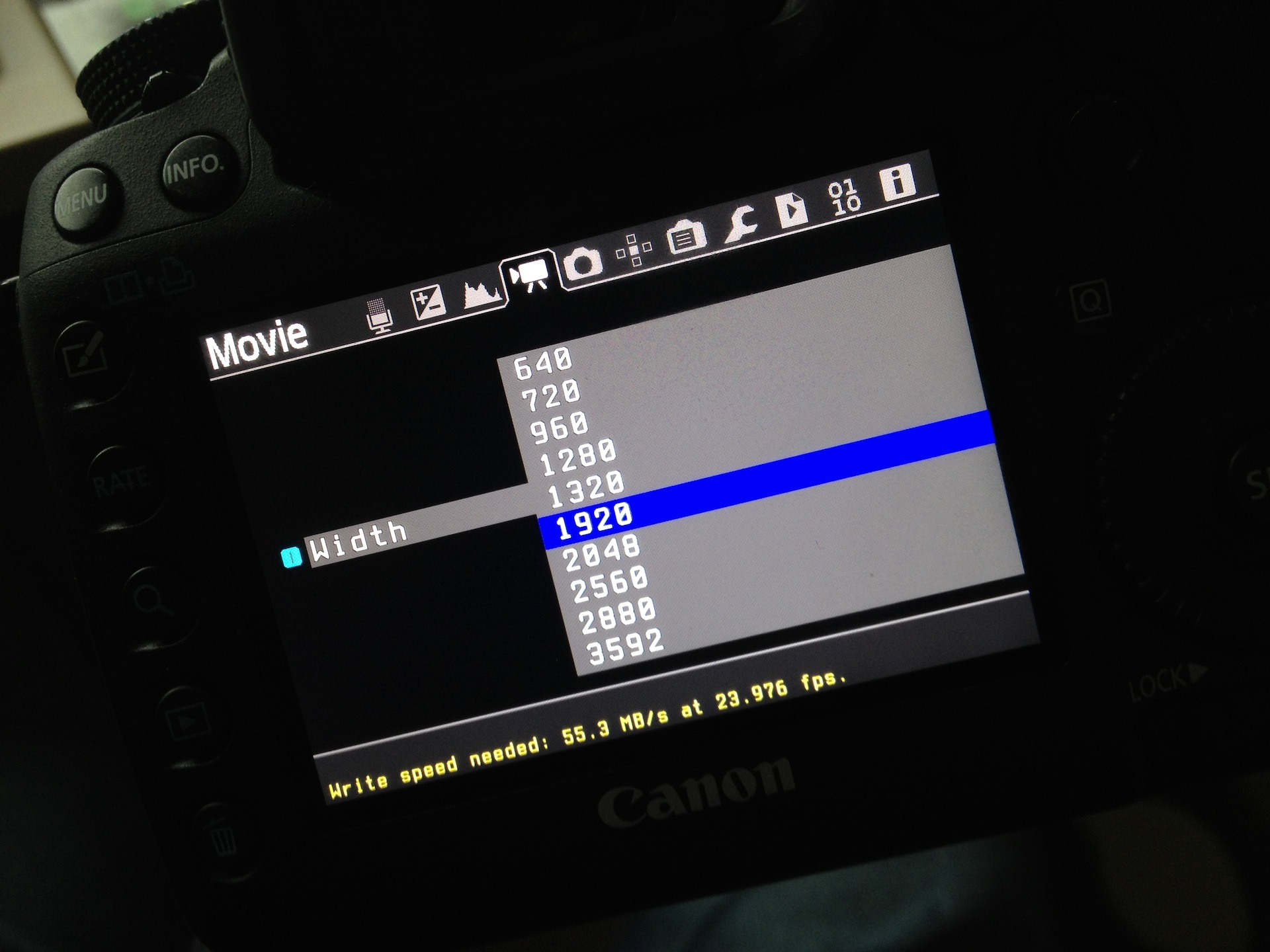
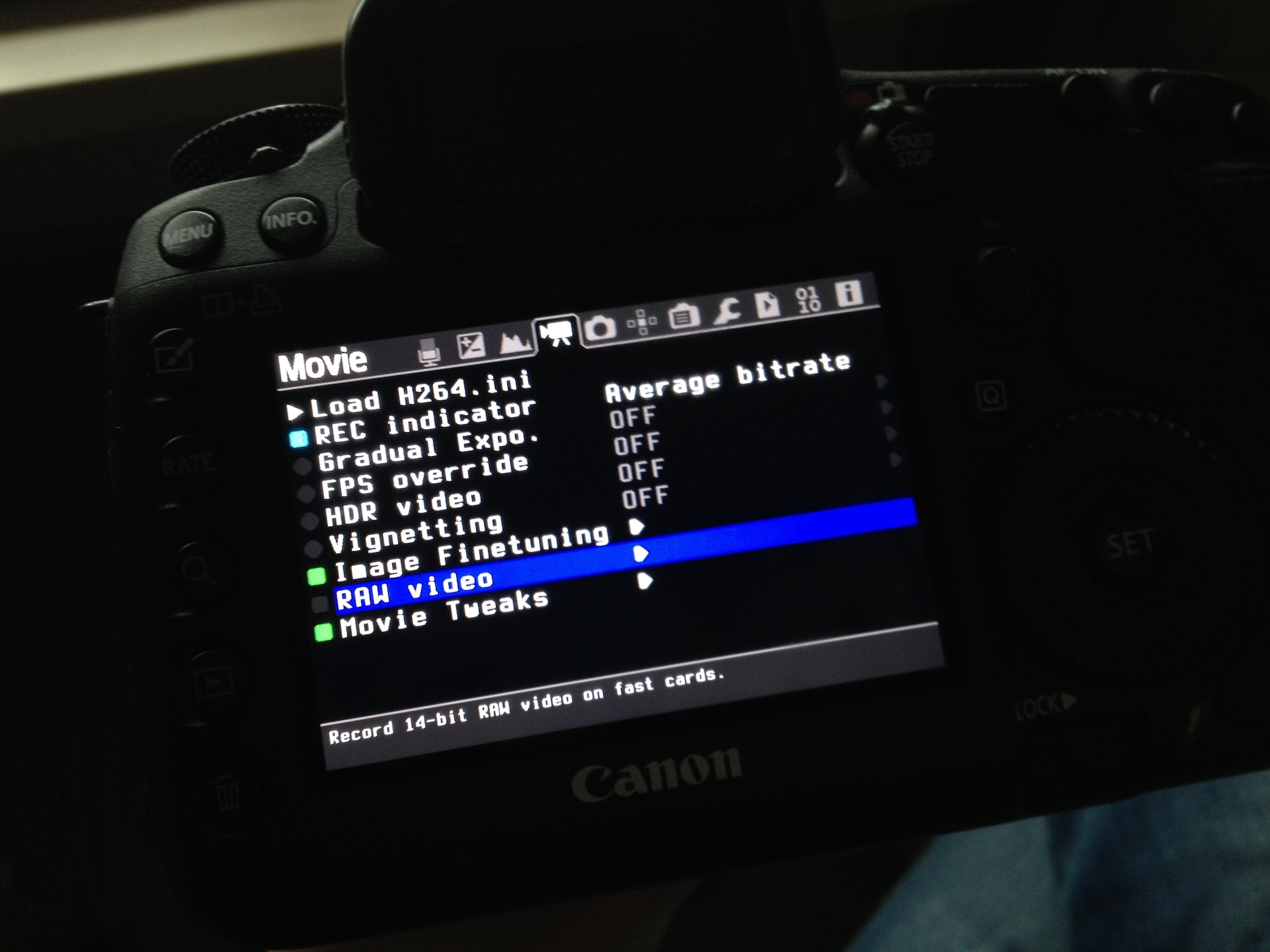
Here’s the option in Magic Lantern:
IMG_5267
IMG_5268
IMG_5266
I shot the clips in the video above in 1920×1280 mode. I also have some 3.6K clips (3592×1320) too unfortunately they are glitchy with some drop frames, but 3K or 2.5K might be doable, especially with a narrower vertical crop… 3000×1000 maybe. That is approximately Micro Four Thirds area of the sensor at 1:1. The quality is the same as a raw photo. 14 bit, 12 stops dynamic range.
The 1080p raw file sizes are similar to 2.5K on the Blackmagic Cinema Camera. Around 4MB per frame for 1920×1280 (great aspect ratio for anamorphic lenses, utilising a higher than full HD vertical res) or a much more space efficient 2MB for 1920×720 (2.66:1).
You can also record plain old boring 1920×1080!
Needless to say you will need to invest in plenty of 1000x 64GB or 128GB cards especially for higher resolutions such as 3.5K which is over 7MB per frame!
Currently most of the action is being done on the 5D Mark III, once a reference version is finalised it will likely be ported to the 6D, 5D Mark II and even 600D. This is development code not finalised, not even Alpha yet. This is experimental code, just written.
Is heat an issue? Well I don’t know yet – I haven’t shot with it for long enough or in a hot enough place. The card and camera are warmer than normal, but that is to be expected considering the huge data rates generated by raw. I don’t know what – if any – implications for camera life this hack will have, but the sensor is always doing a raw video output in live view mode so sensor heat shouldn’t be any more of an issue than it was with ALL-I H.264 video.
Here’s a full 1920×1280 frame grab from raw. No more soft mushy Canon DSLR quality!
raw6-000010
Click the image to enlarge
Breakthrough
As far as my belief goes the breakthrough involved a deeper understanding of the camera’s EDMAC (External DMA controller) and taking clean crops of the image buffer. Unlike in the burst mode, raw data is not converted to DNG format in-camera, you have to transcode it to DNG in post. This is good because you can do a very high quality debayer of the image on a powerful PC. To my eye the image looks better than with the previous nightly builds via DNG burst mode.
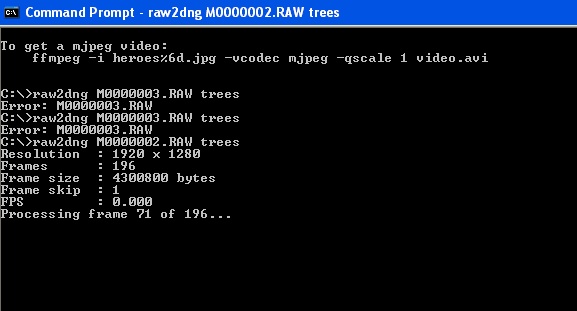
Developers can now write utilities to convert the 5D’s raw video files to Cinema DNG compatible with Resolve (not just standard DNG) and the camera can store raw clips in a single ‘.raw’ file. Magic Lantern themselves currently provide a converter for Windows (raw2dng.exe), hence the camera is freed up to just dump the data from the image sensor direct to the card.
The converter can also output to MJPEG if you want to avoid the workflow and get a project out of the door quicker. Even when converted to MJPEG it is a huge step up in image quality from the factory H.264. The camera now has a raw video menu where you can choose your resolution, and even a panning mode (like a digital dolly) in the 1:1 crop formats. The panning can move the sensor window around the frame whilst recording! Higher resolutions than 1920×1280 are a 1:1 crop of the sensor, up to 3592×1320. Here’s a partial list of the currently supported resolutions:
Full frame mode -
  • 1920 x 1280 (3:2) – great for anamorphic
  • 1920 x 1080 (16:9)
  • 1280 x 720 (16:9)
  • 1280 x 1280 (1:1)
1:1 crop modes -
  • 3592 x 1320 – I get some drop frames at this res
  • 2880 x 1320
  • 2560 x 1080
  • 1920 x 1080 (full HD crop mode like GH2)
  • 1280 x 720 (the lower the resolution the more telephoto the crop)
Custom resolutions can be added in the Magic Lantern code, so effectively the raw codec on the 5D Mark III is totally resolution independent and can record in any aspect ratio. 3:2 and 4:3 aspect ratios will be very useful for anamorphic shooters.
The raw format is 14bit linear uncompressed RGGB raw.
Workflow
Raw2dng.exe is currently very simple and runs at the command prompt in Windows, you specify the raw filename and away it goes. After that is done you simply import the DNGs as a sequence into After Effects, though there is a variety of other ways to do it not involving Adobe software. The good thing is that the camera records the raw data to ONE single file in-camera, making it easier to manage your clips on the card. There’s no playback of raw in-camera yet, but live view remains on whilst recording. I am sure a thumbnail reference can be created for clips later.
ml raw
This continuous raw recording mode came about from a separate development branch of Magic Lantern to the very cool DNG burst stills silent pics. It started off as a module to record raw YUV 422 image data to the card. The burst mode is still in there if you need DNG straight out of the camera and that will remain as a stills feature.
Alex of Magic Lantern rewrote an entire module (lv_rec) to make this happen and you can take a look at some of the source code for the raw recording module here.
The world just exploded
Yes the world just turned on its head and I have no idea what the implications for the market are going to be yet, other than that now Canon’s DSLRs, through no action at all from Canon themselves just became a whole lot more serious as cinema cameras.
There’s no doubt the raw images from the 5D Mark III exceed the quality you get from Canon’s much more expensive cameras, like the C300. The 1D C now also has some serious competition from much cheaper DSLRs. I feel Blackmagic could lose most from this though, and will be a shame if that happens. I’ve not yet tested them head to head but the sensor in the 5D Mark III is far more capable than the one in the Blackmagic Cinema Camera in many ways – generating clean moire free images especially in 1:1 crop mode and cleaner high ISO images from a much larger sensor. The BMCC is no longer as attractive to me.
The 5D Mark III is now top dog for video quality, far surpassing the GH2 and GH3. All this is rather tragic, because quite simply, Canon don’t deserve this success. It is entirely of Magic Lantern’s making, and they did it for us free.

mercoledì 8 maggio 2013

No 7D Mark II in 2013?

No 7D Mark II in 2013? [CR2]
Only one more body in 2013?
From a good source, we’re told that an EOS 7D Mark II will not be released in 2013. We could get an announcement sometime in this calendar year, but availability will be next year.
The only DSLR still to come in 2013 from Canon is the EOS 70D. The same source does say “several lenses will be coming in 2013″.
2014 will be the year for high-end DSLR cameras from Canon, consider this a down year for bodies.

Review – Canon EF 24-70mm f/4L IS

Review – Canon EF 24-70 f/4 L IS
By: Justin VanLeeuwen


Last year Canon released the 24-70 f/2.8 L II to much fanfare and praise, but there were a few who were lamenting the lack of what seems to be a staple in all new lenses: image stabilization. There were rumours of an IS version being tested in the wild, but what some were surprised to see when it was finally announced was that it was to be a 24-70 f/4 IS. Fast primes and wide-open zooms get most of the glory in photography. Dreamy, creamy shallow depth of field is nice, but sometimes an image calls for more depth and sharpness. Sometimes a photographer doesn’t need the financial and weight trade-off a faster lens gets you. Sometimes they need something that simply does the job. In my commercial work, I often find myself shooting at apertures of f/5.6 to f/11. Is a 2.8 lens really necessary on those jobs or does the f/4 serve the purpose?
Canon EF 24-70 f/4L IS
Build
When I first received the Canon 24-70mm f/4 L IS, I had just finished a few weeks of working with the Canon 24mm f/1.4 L II. I was shocked at how they were almost the same size and how the zoom weighed far less. Alone it may not be so obvious, but compared to the Canon 24-70 f/2.8 L (which I own) or the Canon 24-70 f/2.8 L II (which I reviewed), the Canon 24-70 f/4 L IS is drastically smaller and lighter. The body is of a mixed plastic and metal design, but don’t let that “plastic” turn you off, it feels incredibly robust and sturdy.
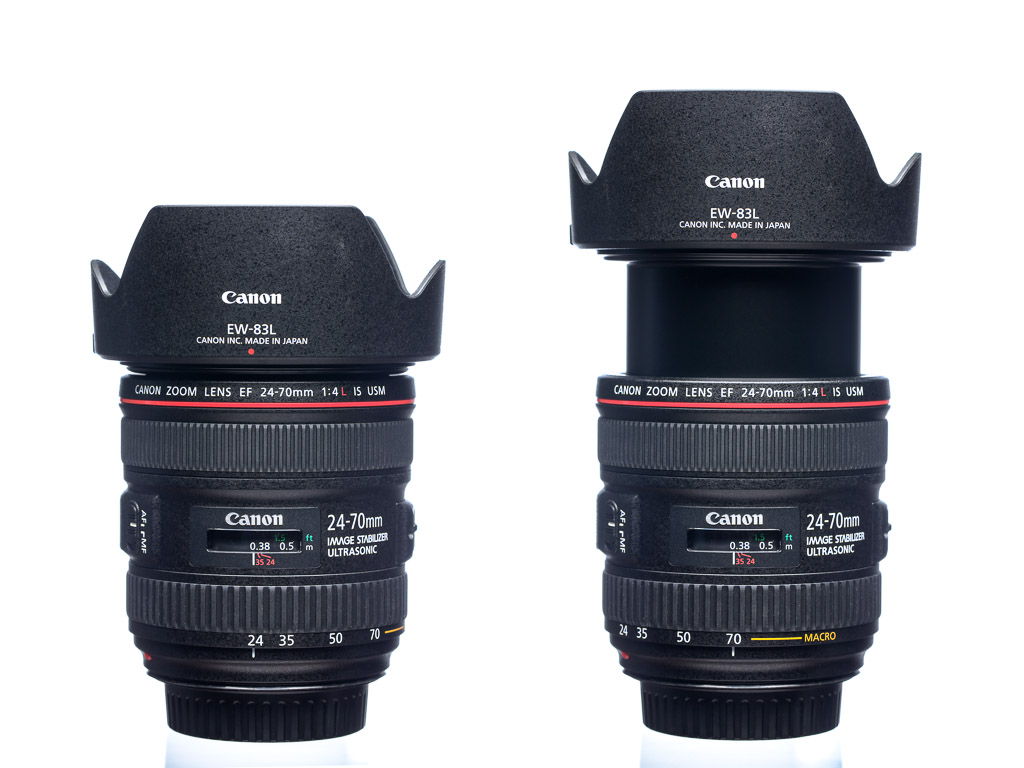
The lens’ body has the standard “AF/MF” switch, as well as the stabilizer’s “On/Off” switch (no explanation needed). However, opposite to these, there is a clever little “Macro/Lock” switch. The lock is pretty straightforward: by pulling the switch back towards the camera, you prevent the lens from accidentally extending. A nice touch to the lock is that the lens will break free with a soft “click” when you turn the zoom ring. No chance of ruining the lens by force if you’ve locked it and forgotten; not that it was loose when it wasn’t locked, but zooms do loosen with use and age. When you’re zoomed in at 70mm and want to get in closer to your subject, pressing that same switch forward will allow you to zoom into the “macro” range. I will note that, while handy in a pinch, the physical working distance to objects is incredibly close, so close as to block off light and bump the lens hood against anything you’re trying to photograph. Unlike locking at 24mm, you have to push the switch forward again to disengage from macro mode and resume shooting in your normal 0.38m-5m focus range. (an interesting note, exif data reads out Macro at “80mm”>
Macro Mode - Canon EF 24-70 f/4L IS
Macro Mode – Canon EF 24-70 f/4L IS
The focus and zoom rings are a good size, the rubber grip is relatively small at just over 1 cm wide compared to much larger lenses, but not so diminutive as to be unusable or even frustrating. I don’t know how this applies to video rigs that rely on focus shifts, but for stills they’re well placed and easy to use.
AF is fast and accurate. At no point did I have any issues with the AF, the noise, the speed or anything; it just works, and works well.
The front lens element has a familiar 77mm thread, so many of my filters already fit and work with it. Canon has also included their own version of the popular centre-pinch-lens cap. While this is a nice design, I didn’t exactly dislike the older lens caps except, perhaps, on telephoto lenses with their hoods attached which benefit from the centre-pinch style. In most cases I felt the caps were secure and held well. Maybe I just have to get used to it, but I sometimes found myself misplacing the cap on the front of the lens, and it popped off in my bag a few times.
Overall this is a true “L” series lens, from weather-sealing at the base to the high-quality front element, you can be sure this lens will withstand more than a few bumps and bruises.
Image
Let’s be honest, f/2.8 gets all the love. Why? The obvious arguments are for separation of your subject from the background with a shallow-depth of field, and low-light situations. I can shoot at 70mm f/4 and get a respectable amount of background blur, not to mention my subject is mostly in focus now. I can’t say the same for faster lenses. With every new generation of camera body, comes a significant advancement of low-light gathering abilities. The high ISO’s in todays camera allow you to easily stop your camera down for added clarity and depth in the scene. Like most (all?) lenses, the Canon 24-70 f/4 L IS vignettes wide-open at f/4 across the focal range, worse at the wider end, and it improves slightly as you stop down. Another issue is that at 24mm, the image is very distorted. This is also correctable in software, but combined with heavy vignetting even up to f/8, you’re looking at some significant compromise.
Light Test - Canon EF 24-70 f/4L IS
Light Test – Canon EF 24-70 f/4L IS
I don’t run any sharpness test, and neither do my clients when I submit work; you can find those all over the internet from people interested in that level of accuracy. I can see the lens is perfectly sharp for my needs, even wide-open. I think that at f/4 it’s better than my Canon 24-70 f/2.8 L, but can’t say that it’s the case for the 2.8 version II. That lens was ridiculously good, and it would be hard to improve on it, especially stopped down to its sweet-spot.
I was impressed with how well this lens handled chromatic aberration. I shot a on an overcast day with snow on the ground – perfect light to dark conditions that make it stand out – and there was some chroma, mostly at the lens edges, but it was hardly noticeable.
Image Stabilization
People make a big deal about IS, and I absolutely love it on telephoto lenses. Stabilization helps reduce the lowest usable shutter speed at a given focal length. So on a 200mm lens and a full-frame camera body, you would want a shutter speed of at least 1/200th of a second to get relatively sharp results and 1/80th at 70mm. That said, IS doesn’t stop action, or your subjects from moving – it helps lock up your own camera shake. It’s handy in tight situations, and if you need to shoot at 1/40th or 1/60th of a second it will certainly help. I’ve never been overly concerned about my ability to hand-hold 24mm at 1/25th of a second or less, but having it certainly won’t hurt. Clearly it’s even better suited for subjects that already don’t move in dark situations where the IS will effectively counter camera-shake.
Projector | 5D Mark III at 24mm, 1/40th f/7.1 | EF 24-70 f/4L IS
Who’s it for?
Lightweight, wide-angle to telephoto with macro capabilities (albeit not particularly useful) and image stabilization make this an ideal landscape photographer’s lens. 24 mm is very common for use in the field, and the versatility of a zoom just buys the photographer more options. As I mentioned, it’s as small as the 24mm prime, and weight is everything if you’re out trekking for a few days.
Commercial photographers working indoors but requiring totally in-focus and sharp portraits will welcome its slightly lower cost than the f/2.8 II’s, and will benefit from the versatility IS buys them at slower shutter speeds. Of course, if you’re working with a flash, you may want to choose something with a bit more output, as the smaller aperture requires more light.
While I never bring my 24-70 f/2.8 L to architectural shoots because of its weight, I might be more inclined to bring the 24-70 f/4 L IS along. It may not replace my 24mm f/3.5 L tilt-shift, but the other focal lengths could certainly come in handy, and it might be a good lens for someone looking to get into interior work. Vignetting at f/4 might be an issue, but much of that kind of work is shot well above that aperture.
Travel photographers or hobbyists who just like good images will welcome the light weight and popular zoom focal range. Travelling light and inconspicuously is an advantage and the lens is short enough to not draw too much attention to itself.
While 70mm still isn’t a particularly strong telephoto zoom, it will work well in a kit paired with some primes, or more obviously the Canon 70-200 f/4 L IS; these two lenses were made for each other. As of now, Canon has created a secondary f/4 “Trinity” of lenses if you include the 17-40 f/4L.
Quinn | 5D Mark III | 73mm, 1/60th, f/6.3 | EF 24-70 f/4L IS
Conclusion
If you’re a bokeh-loving wide-open lens kind of person, you’ve probably already dismissed this lens. F/4 isn’t in your vocabulary. Some of us appreciate a depth to our images that can reveal layers of detail and interest. Yes, the faster lenses, when stopped down, will likely be sharper at f/4. In the case of the 24-70 f/2.8 L II, it will also cost you significantly more. As far as cost is concerned, I do find the current SRP on the 24-70 f/4 L IS a bit high, higher than when I purchased my 24-70 f/2.8, but still lower than the version two release. These prices drop and settle over time, but like most things, there’s a price to owning the latest and greatest gear.
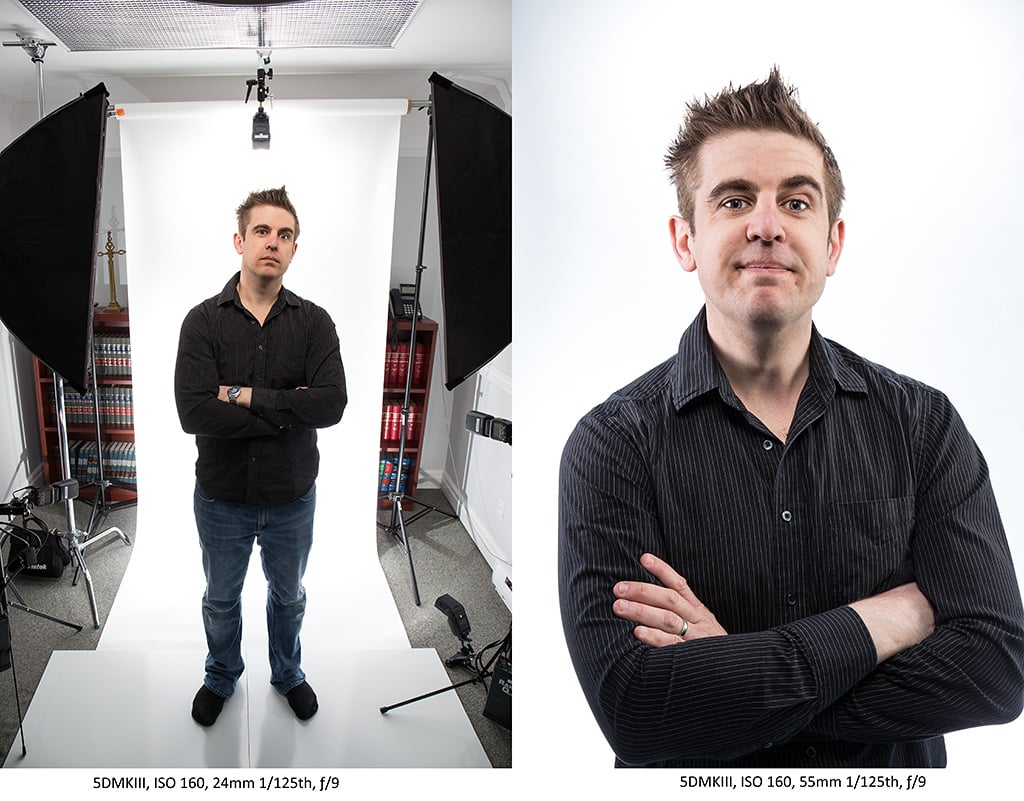
Zooms can replace a number of primes, allowing photographers to work faster without having to swap lenses to reach a different focal length, or achieve a certain level of telephoto compression. You can quickly switch from a 24mm environmental portrait to a 70mm headshot. The compact nature of the zoom saves even more space in your kit, giving you room in your bag, or the ability to travel smaller and lighter.
I’ve never found the 24-70 focal range particularly exciting. It’s not wide enough to create an interesting level of distortion, nor so telephoto as to create a special compressed and isolated “look” to your subjects. I never LOVED my 24-70 f/2.8 L, I just used it every day. Like that lens, the 24-70 f/4L IS is a tool; one that is more than capable of getting the job done.
Pros
  • Compact and light-weight
  • Image-stabilization for lower light/slower shutter speeds
  • Reliable and quick autofocus
Cons
  • Vignetting at f/4 where many faster lenses will have dispersed this
  • Distortion across the focal range, specifically at 24mm
  • Awkward macro mode
  • f/4 aperture may just not appeal to some

venerdì 3 maggio 2013

Canon 1D X Can Be Wirelessly Tethered Using a Sub-$50 Internet Adapter


Canon 1D X Can Be Wirelessly Tethered Using a Sub $50 Internet Adapter cheaptethering1
Wireless connectivity is one of the hot features in the camera world these days, and many (if not most) new cameras either have built-in wireless connectivity or an optional wireless adapter that provides the feature. Unfortunately, the wireless adapters are often quite pricey, especially for higher-end cameras.
Here’s something neat that you might be interested in knowing if you shoot with a Canon 1D X: you can connect a cheap WiFi adapter designed for homes and offices to give your camera wireless tethering!

The tip comes courtesy of photographer William Bennett, who tells us he was originally put off by the $600 price tag on Canon’s official 1D X adapter: the WFT-E6A.
As he was setting up a security camera in his house, he began wondering whether an Ethernet to WiFi adapter would work on his 1D X. The DSLR has an Ethernet port, after all.
Canon 1D X Can Be Wirelessly Tethered Using a Sub $50 Internet Adapter ethernet
The Ethernet port on the Canon 1D X
After doing some research, he purchased a Netgear WNCE2001 universal WiFi Internet adapter (a device that costs less than $50).
Canon 1D X Can Be Wirelessly Tethered Using a Sub $50 Internet Adapter adapter
The NETGEAR WNCE2001 Universal WiFi Internet Adapter
Bennett discovered that he could make his 1D X play nicely with this adapter, which meant he succeeded in adding wireless tethering abilities (e.g. wireless file transfers, remote shooting) to his camera for just tens of dollars rather than hundreds.
Furthermore, there isn’t any hacking required — all you need to do is buy the necessary components for the system and set them up to work together properly.
Canon 1D X Can Be Wirelessly Tethered Using a Sub $50 Internet Adapter screens
The adapter is designed to connect devices to a network — devices that are Internet-ready but lack WiFi connectivity (e.g. Blu-Ray players, game consoles). The downside to using a universal WiFi adapter rather than an official solution is that you’ll need a power source for the cheapo adapter (Bennett uses a large power pack hanging from his tripod to power it).
Here’s a video in which Bennett introduces and demonstrates his poor man’s wireless tethering:
Getting this system set up for your own Canon 1D X isn’t too difficult, but you’ll need to spend some time going through a semi-long list of instructions. Bennett has published the step-by-step guide on setting it up over on his website. Head on over to get started! Cheap Wireless Tethering for your 1DX with no Hacking [I Wanna Shoot Your Face]

Simulate Lighting in a Virtual Photo Studio with set.a.light 3D STUDIO

Simulate Lighting in a Virtual Photo Studio with set.a.light 3D STUDIO setalight
Want to plan out and test your studio lighting setups before setting up equipment and bringing subjects into the picture? German software development company Elixxier has been developing a software program designed to help you do just that. It’s called set.a.light 3D STUDIO, and is, according to Elixxier, the world’s first software dedicated to photo studio simulation.

The program is like a fancy 3D version of the online lighting diagram and lighting simulation apps we’ve featured in the past.
Simulate Lighting in a Virtual Photo Studio with set.a.light 3D STUDIO virtualstudio
It lets you move subjects and equipment around in 3D space, and can render physically correct light. The program even calculates light that reflects off of walls and objects in the scene. Elixxier says that he light you see in the program will be the same light you’ll see when you actually recreate the setup in the real world.
Simulate Lighting in a Virtual Photo Studio with set.a.light 3D STUDIO simulatedvsreal
A simulated virtual snap (left) and the real world photo that resulted (right)
Once you’ve set up your studio the way you’d like it in the program, you can simulate the photographs that would result by triggering a virtual camera.
Simulate Lighting in a Virtual Photo Studio with set.a.light 3D STUDIO camerasettings
The virtual camera has all the settings you’d find on a real world camera. You can choose the sensor size, the aspect ratio, the exposure settings (shutter, aperture, ISO), and the lens used. Depth of field is realistically simulated based on the settings you choose.
If you’re satisfied with the result, the program makes it easy to recreate the setup by providing options for exporting the set plans. The high-resolution rendered photograph and the detailed set plans can then be provided as guidelines for other people to turn the planned photo into a reality.
Simulate Lighting in a Virtual Photo Studio with set.a.light 3D STUDIO camera
In addition to cutting down on test shooting time for seasoned photographers, the program is also a nice lighting “sandbox” beginning photographers can use to learn about studio lighting without having to rent gear and/or space.
Here’s a short video demonstrating how the software works. It’s in German, but you’ll get the gist:
A copy of set.a.light 3D STUDIO will set you back €140 (~$184) through the Elixxier online store, but the company is also offering a feature-limited trial version that you can play with for 15 days. set.a.light 3D STUDIO [Elixxier]

Carl Zeiss Touit 2.8/12 for Fujifilm and Sony

News image

First showcased at Photokina 2012, the Carl ZeissTouit 2.8/12 is an 18mm equivalent ultra-wide angle lens for Sony NEX and Fujifilm X-series compact system cameras. Offering a 99°angle of view, the Carl Zeiss Touit 2.8/12 has an optical formula comprising 11 elements in 8 groups and a filter thread with a diameter of 67mm. Capable of focusing down to 18cm, the smallest area the Carl Zeiss Touit 2.8/12 can capture is 220x144mm. The main difference between the Sony and Fuji versions is that the latter features a traditional aperture ring. Availability and pricing details have yet to be communicated.
Zeiss Press Release
Touit 2.8/12
As far as the eye can see
With an angle of view of 99 degrees, the Touit 2.8/12 wide-angle lens will soon become a firm favourite, particularly for landscapes and architectural photography. Its unique T* multicoating guarantees maximum transmission and outstanding absorption of extraneous light. The result: breathtaking image quality from edge to edge and corner to corner of the entire image field. What’s more, all moving parts of the Touit 2.8/12, conceived specifically for Sony NEX and Fujifilm X Series cameras, are engineered for extreme precision and a long working life. And finally, its strong and rigid metal bayonet mount makes it an absolutely dependable companion for many years to come.
Technical specifications:
Focal length 12 mm
Aperture range f/2.8 – f/22
Focusing range 0,18 m (0.59 ft) – ∞
Number of elements/groups 11/8
Angular field, diag./horiz./vert. 99° / 89° / 66°
Coverage at close range 220 x 144 mm (8.66 x 5.67″)
Filter thread M67 x 0,75
Dimensions (with caps) E: 81 mm (3.19″), X: 86 mm (3.39″)
Diameter of focusing ring E, X: 65 mm (2.56″)
Weight E: 260 g (0.57 lbs), X: 270 g (0.60 lbs)
Camera mounts E-Mount, X-Mount

GigaPan Goes Mobile Friendly

News image

GigaPan's high-resolution images are now viewable on mobile devices, including iOS and Android. This includes all gigapan.com and embedded external website images, including GigaTag. “As the number of images on our website continues to grow into the hundreds of thousands, and GigaPan membership increases, it is imperative that our collection of amazing images are ubiquitous to access,” said Josh Friedman, CEO of GigaPan. “Our updated viewer presents an opportunity to provide mobile access to these unique images, increasing and enhancing image views for a larger audience.”
Gigapan Press Release
GigaPan High-Resolution Images Now Accessible on Mobile Devices

Updated Capabilities Enable Mobile Viewing for GigaPixel Images

Portland, Ore. – April 30, 2013 – GigaPan announced today that all GigaPan images are now viewable on mobile devices, including iOS and Android. This includes all gigapan.com and embedded external website images, including GigaTag. With a collection of over 100,000 high-resolution images on the GigaPan website, users will have an increased ability to view and explore gigapixel images.

A recent IDC study found that web access on mobile devices will surpass that of PCs by 2015, developing an urgent need for technologies to support users accessing the Internet on-the-go. As more visitors browse online through their smartphones or tablets, GigaPan viewers deliver interactive, high-definition images that reach a larger audience.

“As the number of images on our website continues to grow into the hundreds of thousands, and GigaPan membership increases, it is imperative that our collection of amazing images are ubiquitous to access,” said Josh Friedman, CEO of GigaPan. “Our updated viewer presents an opportunity to provide mobile access to these unique images, increasing and enhancing image views for a larger audience.”

The GigaPan viewer also allows users to enter fullscreen mode, which makes the experience of gigapixel imagery much more powerful.

About GigaPan
Founded in 2008, GigaPan offers an innovative technology system, spanning hardware, software and cloud-­based viewing, tagging and sharing solutions. The company’s solutions allow photographers, digital content designers and promoters to expand the limits of traditional photography. These interactive images and panoramas bring zoomable, multi­dimensional stories to life through a system of dynamic tools, which drive exploration and engagement for brands, events, research and education. Connect with GigaPan on Facebook and Twitter.

Sigma 60mm f/2.8 DN Gets a Price Tag

News image

Sigma has announced availability and pricing details for its 60mm f/2.8 DN lens in the US. First revealed at the CP+ Camera and Photo Imaging Show in Japan earlier this year, the 60mm F2.8 is a new focal length in the Sigma lineup for both Micro Four Thirds and Sony E-Mount camera systems. It joins Sigma’s other DN lenses for MILCs: the 19mm F2.8 DN and the 30mm F2.8 DN. Featuring Special Low Dispersion (SLD) glass, which helps minimise axial and transverse chromatic aberration, the Sigma 60mm f/2.8 DN offers a minimum focusing distance of 19.7 inches and a maximum reproduction ratio of 1:7.2. The new 60mm F2.8 DN Art lens will hit shelves mid-May at an estimated street price of $239.
Sigma Press Release
Sigma Corporation announces pricing and availability for new 60mm F2.8 DN
Newest lens for mirrorless interchangeable lens cameras to arrive in U.S. mid-May
RONKONKOMA, N.Y., — May 2, 2013— Sigma Corporation of America, a leading researcher, developer, manufacturer and service provider of some of the world’s most impressive lines of lenses, cameras and flashes, today announced that its new 60mm F2.8 DN Art lens for mirrorless interchangeable lens cameras (MILCs) will hit shelves in the United States mid-May for the street price of $239.
First revealed at the CP+ Camera and Photo Imaging Show in Japan earlier this year, the 60mm F2.8 is a new focal length in the Sigma lineup for both Micro Four Thirds and Sony E-Mount camera systems. It joins Sigma’s other DN lenses for MILCs: the 19mm F2.8 DN and the 30mm F2.8 DN.
“We’re constantly working to add new focal lengths to our lineup so photographers can have as many options as possible,” said Mark Amir-Hamzeh, president of Sigma Corporation of America. “This mid-range telephoto lens and its shallow depth of field will produce some very pleasing bokeh effects.”
As part of the company’s Global Vision category restructuring, the new 60mm F2.8 DN Art category lens has an angle of view equivalent to 120mm on the Micro Four Thirds system and 90mm on the E-mount system (35mm equivalent focal length). The minimum focusing distance is 19.7 inches; the maximum magnification is 1:7.2. This lens also contains Special Low Dispersion (SLD) glass, which helps minimize axial and transverse chromatic aberration.
This lens incorporates telecentric optical designs and a linear, auto focusing motor that ensures accurate and quiet focusing for video recording. Featuring a metal exterior and a simply-shaped focus ring, it has varying textures to distinguish each part of the lens. Under its new manufacturing process, Sigma’s DN users can also choose between a black or silver finish to match their favorite equipment.

Datacolor Announces Five Free Webinars

News image

Datacolor has announced its spring 2013 line-up of free colour management webinars. Each webinar includes step-by-step demonstrations using Datacolor’s line of Spyder color calibration devices, and in-depth discussions on how to effectively use the right tools to create images. These sessions, hosted by David Tobie, global product technology manager for Datacolor, and David Saffir, Datacolor expert, noted landscape and fine art photographer, and author of “Master Digital Color,” focus on managing colour using tools in both capture and processing stages. Click through / read on for the detailed schedule.
Datacolor Press Release
Datacolor Announces Spring 2013 Line-up of Free Color Management Webinars for the Photo and Video Industry

Datacolor Webinars Offer Ideas for Managing Digital Photography and Step-by-Step Techniques to Produce High Quality Images

Lawrenceville, NJ – April 30, 2013 –– Datacolor® (http://www.datacolor.com), a global leader in color management solutions, announced today its spring 2013 line-up of free color management webinars featuring co-sponsors. The popular webinar series continues with a variety of introductory and advanced webinars that discuss new techniques and offer insights and tips for photographers to enhance their skills. Datacolor is bringing dynamic topics to photographers with the help of notable photography related companies including Triggertrap, Phlearn.com, onOne Software and Lexar.

Each webinar includes step-by-step demonstrations using Datacolor’s line of Spyder color calibration devices, and in-depth discussions on how to effectively use the right tools to create images. The bi-monthly webinars, hosted by David Tobie, global product technology manager for Datacolor, and David Saffir, Datacolor expert, noted landscape and fine art photographer, and author of “Master Digital Color,” focus on managing color using tools in both capture and processing stages. Topics range in subject matter and focus on providing photographers with new methods of producing high quality results with their images.

“Photography continues to evolve and there are always new methods to master,” said David Tobie. “Datacolor has always been committed to helping photographers achieve the highest quality photos. By adding more partners to our webinar series, we continue our goal of providing photographers at any level with the methods, techniques, and recommendations on tools to produce incredible photos.”

Upcoming topics for the Datacolor color management webinar series to include:
May 8, 2013 3:00 – 4:00 p.m. EDT: Digital Workflow Process for the Capture Stage (Co-sponsor:  Hunt’s Photo & Video)
May 30, 2013 2:00 – 3:00 p.m. EDT: Remote Control Photography (Co-sponsor: Triggertrap)
June 12, 2013 3:00 – 4:00 p.m. EDT: Introduction to Color Management (Co-sponsor: Phlearn.com)
June 18, 2013 2:00 – 3:00 p.m. EDT: Focus Control: Before, During, and After the Shot (Co-Sponsor: onOne Software)
June 27, 2013 3:00 – 4:00 p.m. EDT: Digital Asset Management (Co-sponsor: Lexar)

Those interested in attending can register in advance for the free webinars. Attendees will be given discount codes for Spyder products and/or products from co-sponsors. They will also automatically be entered to win a Datacolor Spyder product and products from co-sponsors coinciding with the webinar topic. Guests will have the ability to interact with the speakers in a Q&A format, and get first-hand input on applying color management effectively in their workflow.

Register now at spyder.datacolor.com/freewebinars.

About Datacolor

Datacolor is a global leader in color management solutions and color communication technology. The world's leading brands, manufacturers, creative professionals and consumers have been choosing Datacolor's innovative technology and solutions to consistently achieve the right color for over 40 years.

A Swiss held company, Datacolor's global presence encompasses a sales, service and support network serving customers in more than 65 countries throughout Europe, the Americas and Asia, along with 13 worldwide operation and production facilities. Industries served include apparel and textile, paint and coatings, automotive, plastics, photography, home theatre and others. For more information about Datacolor and its products or services, visit http://www.datacolor.com

Wacom Cintiq 22HD Touch

News image

Wacom today announced that it is bringing touch control to its Cintiq 22HD interactive pen display. Combining multi-touch with Wacom’s renowned pen technology, the new Cintiq 22HD touch offers a 21.5" Full HD display, an ergonomic rotating stand and 16 customisable ExpressKeys. Multi-touch is supported in Windows 7/8 and Mac OS as well as in touch savvy applications such as Corel’s latest Painter 12.2 update and Autodesk’s Mudbox and Sketchbook Pro. The Cintiq 22HD touch is priced at £1899.99 including VAT.
Wacom Press Release
Wacom adds a touch more control to its 22-inch interactive pen display
New Cintiq 22HD touch extends the senses to deliver a natural and seamless on-screen experience for creative professionals
30th April 2013 - Wacom, the industry leader of pen tablets for professional designers, today announces that it is bringing touch control to its Cintiq 22HD interactive pen display. Combining multi-touch with Wacom’s renowned pen technology, the new Cintiq 22HD touch offers an immersive on-screen experience and a more intuitive and natural way to work. Additional features including a 21.5² full HD display, an ergonomic rotating stand and 16 customisable ExpressKeys, make the Cintiq 22HD touch ideal for creative professionals such as graphic designers, animators and game developers.
Extended use of the senses
Giving users the power to work with digital tools but in a completely natural and intuitive way, multi-touch supports gestures for rotating canvases, zooming images in and out, and moving work around. The Cintiq 22HD touch closely replicates the experience of working with two hands when using traditional materials such as paints and markers, while giving the artist powerful capabilities that only exist in today’s creative software applications. Multi-touch is supported in both Windows 7/8 and Mac OS as well as in touch savvy applications such as Corel®’s latest Painter™ 12.2 update and Autodesk’s Mudbox and Sketchbook Pro.
Superior HD screen
The Cintiq 22HD touch offers a wide-format, full HD LCD with 1920 x 1080 pixel resolution. Combined with it’s life-like colour quality which displays 16.7 million colours, the Cintiq 22HD touch is ideal for professionals with workflows such as graphic designers, animators, video and film editors or game developers.
Create in comfort
The Cintiq 22HD touch provides best-in-class ergonomics that professionals working long hours will appreciate. The adjustable stand allows for real display rotation, offering both landscape and portrait viewing angles as well as the option to set an incline between 10 – 65°, helping to increase comfort and productivity. It’s multi-touch capabilities also provide users the option to quickly and easily rotate canvases on screen using gestures, perfect for illustration, sketching and painting.

Improving workflow and creative output even further, the Cintiq 22HD touch offers 16 customisable, application-specific ExpressKeys in total located on each side of the display’s bezel. User-defined Touch Strips, conveniently placed on the back of the display can also be used for such functions as zoom, scroll, brush size and canvas rotation.

Sophisticated Cintiq Pen
Delivering virtually the same feel and feedback as traditional brushes and pens, the Cintiq 22HD touch features Wacom’s professional-level pen performance (2,048 levels of pressure and tilt sensitivity) to produce dazzling artistic effects within creative software applications from Adobe®, Corel®, Autodesk® and many more. The Cintiq 22HD touch supports the optionally available Art Pen and Airbrush to deliver natural brush effects within Adobe® Photoshop® and Illustrator® (CS3 and above) as well as Corel® Painter™ (10 and above).

With the existing 13HD, 22HD, 24HD and 24HD touch, there is a Cintiq interactive pen display to suit anyone’s workflow requirements and budget.
Availability and Pricing
The Cintiq 22HD touch is priced at £1899.99 including VAT and will be available in http://uk.shop.wacom.eu/detail/index/sArticle/551
.
For more details please visit the Wacom website at http://www.wacom.eu/cintiq-22hd-touch or have a look at the product video on Wacom Europe’s YouTube’s Channel at http://youtu.be/aqm7Feu5Hwg
.
Inspiration from the ‘Pioneers of Now’
For further information on what can be achieved with a Wacom Cintiq, check out Wacom’s ‘Pioneers of Now’. The ‘Pioneers’ are inspiring because they have vision, talent, perseverance and stamina. But above all, they have the tools to make their new worlds a reality.

More about the Pioneers of Now: http://pioneersofnow.wacom.com/

Transcend Ultimate 1000x CF Memory Cards

News image

Transcend has unveiled its next-generation 1000x Compact Flash cards designed specifically to meet the demands of professional photographers and video DSLR filmmakers. Transcend’s “Ultimate” series 1000x Compact Flash cards implement the CompactFlash revision 6.0 specification and operate in UDMA transfer mode 7, the fastest interface speed available for CF cards. Fully compliant with the Video Performance Guarantee (VPG-20) and boasting read/write transfer rates of up to 160MB/120MB per second, these cards are ideal for fast-action burst mode shooting. Transcend’s 1000x Compact Flash cards are now available in 16GB (US$99), 32GB (US$199), 64GB (US$379) and 128GB (US$699) capacities.
Transcend Press Release
Capture Stunning Cinematic Experiences with Transcend’s 1000x CompactFlash Card
April 30, 2013
Transcend Information, Inc. (Transcend), a worldwide leader in storage and multimedia products, is proud to showcase the extraordinary performance capabilities of its next generation 1000x CompactFlash card designed specifically to meet the rigorous demands of professional photographers and creative DSLR filmmakers. When used with today’s high-end digital SLR cameras and camcorders, including the Nikon D4, the Sony Alpha 700, the Olympus E-5, and the Canon EOS C500 and EOS-1D C Cinema EOS series DSLR cameras, Transcend's 1000x CompactFlash cards are perfect for capturing extremely high-resolution image data and recording up to 4k Ultra High Definition video content.
There is growing interest from independent filmmakers in using midrange to professional-series DSLR cameras for shooting movies due to their excellent recording capabilities, compact size, straightforward operation, and affordability. These top quality digital devices usually feature a powerful image processor, which requires a high-speed memory card to optimize shooting performance.
Transcend’s “Ultimate” series 1000x CompactFlash cards implement the CompactFlash revision 6.0 specification and operate in Ultra DMA (UDMA) transfer mode 7, the fastest interface speed available for CF cards. Fully compliant with the Video Performance Guarantee (VPG-20) and boasting blazing fast read/write transfer rates of up to 160MB/120MB per second, these cards are ideal for fast-action burst mode shooting and professional-quality video capture.
In addition to fast transfer rates, the 1000x CompactFlash cards are available up to an enormous 128GB, eliminating the need to pause and switch memory cards during extended video recording sessions. To assure robust, long-life durability and guaranteed performance, Transcend’s 1000x CF cards are manufactured using premium quality toggle mode NAND Flash memory chips. Moreover, each card contains built-in BCH ECC (Error Correction Code) technology with read-retry for detecting and correcting errors during data transfer.
For further peace of mind, all Transcend CF cards are comprehensively tested for compatibility, speed and reliability, and backed by Transcend`s Limited Lifetime Warranty. Offering excellent support for serious cinematographers equipped with the latest cutting-edge digital camera equipment, Transcend’s 1000x CompactFlash cards are the ultimate class-leading storage for ultra-high resolution Full-HD, 3D, and 4K UHDTV (2160p) video recording. Transcend’s 1000x CompactFlash cards are now available in 16GB (US$99), 32GB (US$199), 64GB (US$379) and 128GB (US$699) capacities.

PNY SSD, SDHC Card and HDMI Cable Winner

News image

PNY Technologies is offering one lucky person the chance to win a number of prizes to inject some speed into your workflow: a XLR8 Pro 120Go SSD, Pro Elite Plus 16GB SDHC and a 3in1 HDMI Cable.
The lucky winner is Justin Roush. Congratulations!
PNY manufactures imaging solutions, and its XLR8 Pro SSD range is built especially for multimedia enthusiasts and semi-pro photographers. SSDs allow seriously quick data transfers and therefore an optimised workflow. The XLR8 Pro SSD series boasts a 2.5” SATA III, 6Gbps interface, supports 128-bit AES encryption and is powered by the SandForce 2281 controller, offering up to 550MB/s sequential read speeds, 520MB/s sequential write speeds and 85,000 random read/write IOPS.
The PNY Pro Elite Plus offers read speeds of 95 MB/s and write speeds of 90 MB/s - perfect for photographers who take full advantage of their camera’s burst mode. Certified Class 10 and UHS-1 (Ultra High Speed), the cards are also ideal for full-HD video; even in the most extreme conditions.
Terms and conditions
1. This competition closed on 8th April 2013.
2. By entering this competition you will also be opting in to Photography Blog’s monthly e-newsletter, but you have the option to unsubscribe at any time.
3. Only one entry per person only.
4. No entries accepted from employees of Photography Blog or PNY.
5. The winner will be announced on the Photography Blog website following the closing date and contacted via email only so a valid email address required.
6. The featured prize is a XLR8 Pro 120Go SSD, Pro Elite Plus 16GB SDHC and a 3in1 HDMI Cable.