Review – Canon EF 300mm f/2.8L IS II
By: Justin VanLeeuwen | Twitter
Discuss the Canon EF 300 f/2.8L IS II
There’s a certain threshold you can pass in your lens acquisitions
where usefulness, desire, and expanded needs meet. Perhaps in no place
is this more true than when entering the super-telephoto range;
extending 300mm and beyond. With the exception of a few choice zoom
lenses, the Canon Super-Telephoto range enters a niche market of primes
that serve a very specific purpose beyond what most photographers will
encounter in a day (depending, of course, on what you do). I had always
been curious about Canon’s 300mm f/2.8 L, and when the 300mm f/2.8 L II
was released I was eager to give it a try. Not much longer in range than
my Canon 70-200mm f/2.8 L IS II, I thought it could be *handy* to have
in situations where a bit of extra reach was needed. But at a retail
price in the multiple thousands, “handy” may not cut it as that kind of
purchase needs to be justified beyond a desire to fill a focal range
gap. The Canon 300mm f/2.8 L IS II is the first in a range of lenses
that, in my opinion, serve the purpose to get you closer to your
subjects when your movement is otherwise restricted.
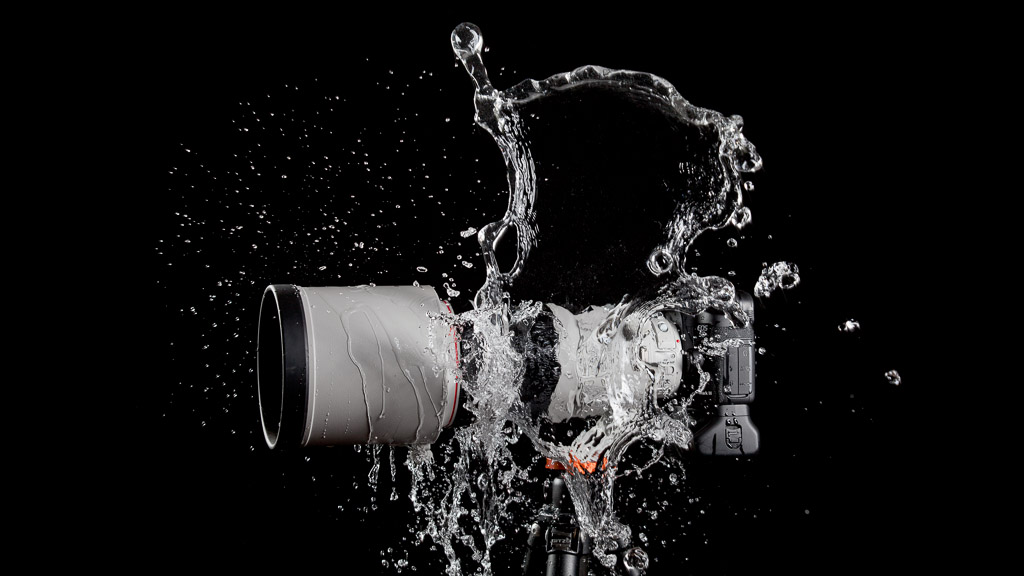
The Canon EF 300 f/2.8L IS II has very good weather sealing!
Build
We’re clearly looking at a more or less $6,500 “pro” lens here; there’s
very little to fault in the sturdy metal construction of the body. While
I found handholding it to be completely possible (especially with image
stabilization engaged), I don’t recommend spending a full day trying to
shoot it without some level of support as the weight will get to you. A
sturdy tripod or monopod will go a long way to help you get the shots
you want (many of the images I captured here were using a monopod). The
large rubber focus ring is incredibly smooth and easy to move as,
obviously, a larger lens will accommodate this design feature.
Weather sealing is a must, as many photographers using it will be in
unshielded outdoor venues or even near water. As you can see from the
image above, I tested its capabilities and I’m happy to report
everything still works as it should.
The lens comes with a very large hood which, as always, I do
recommend you use not just to protect the front element since there are
no screw-on filters of this size, but also to prevent light from
entering and flaring-out your images. It may significantly increase the
length of the lens, but you’re not buying it to be discreet. The
standard longer focal length switches adorn the side include a focus
limiter, stabilization ON/OFF, stabilization mode 1/2/3, focus preset
modes & the set button, and AF/PF/MF.
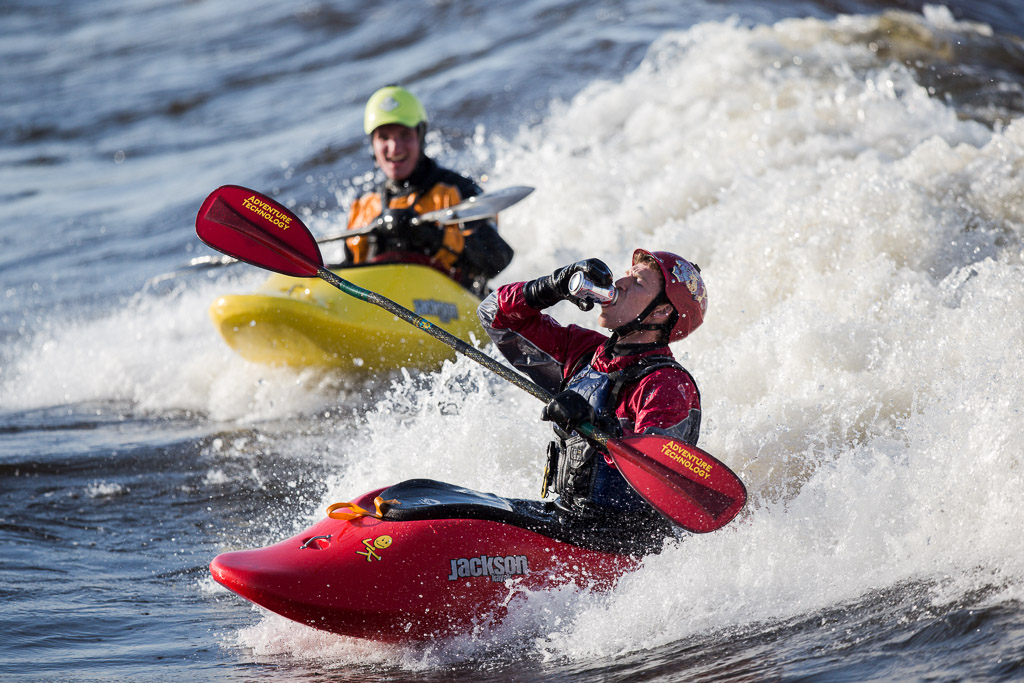
Boating in Canada | Canon EF 300 f/2.8L IS II & EOS 5D Mark III
A bit on Image Stabilization
“Optical Image Stabilizer technology makes hand-held photography more
practical at slow shutter speeds*” (*Canon USA). IS helps free the
camera and photographer from the tripod and gives you a bit more
latitude to how and where you shoot. As a guide, it’s suggested that
photographers’ shutter speeds should match the apparent focal length of
the lens. So ideal shutter speeds on a full frame camera like the 1DX,
5DMKIII, or 6D, would be about 1/300th of a second at 300mm – of course
this has no bearing on stopping motion or action. On a crop body like
the Rebel series, 60D, or 7D you’d be looking to multiply that by the
crop factor of the camera (1.6x) so 300mm would be 1/480th of a second,
this make sense as the apparent focal length is magnified, so are any
potential shakes. The IS advantage, then, is to allow yourself a bit
more working room to achieve sharp images. The stabilization compensates
for movement and shake, effectively correcting the slight changes the
photographer introduces into the image through movement. 4 stops
*technically* brings the 1/300th rating down to 1/50th of a second,
though excellent technique is still recommended and, again, this won’t’
stop your subject from moving. Obvious advantages to this are people
working indoors, where lighting is limited and you don’t need
sports-level action stopping shutter speeds.
The mode switch allows for two types of stabilization: 1 is for
“regular” use which corrects for vibrations in all direction, while 2
compensates for moving subjects or panning where there is a bit of
fluidity and motion already being introduced to the lens to capture an
image. Mode three “Corrects vibration only during exposure. During
panning shots, corrects vibration during exposure only in one direction
the same as MODE 2*.” [Canon USA].
There’s a focus preset button so you can set a specific focusing
distance and return to it at any time by rotating the “Playback Ring” (a
grooved metal ring between the focus ring and the front rubber grip).
The front rubber grip also has four equally placed AF stop buttons which
temporarily pause autofocus.

Rally | Canon EF 300 f/2.8L IS II & EOS 5D Mark III | ISO 1600 1/8000 f/2.8
Focus
The principal use of a long range telephoto is sports photography. Often
you’ll be facing fast-moving subjects in dynamic environments. While
your camera has a lot to do with AF performance and it will ultimately
impact how well the lens works, the lens itself needs to be able to
perform to high standards. I’m happy to report this lens meets and
exceeds any expectations you may have of it. Focus was incredibly fast,
quiet, and accurate to a point that any error was likely mine and/or a
combination of the auto-focus settings I had enabled on the camera. New
to this lens in version 2 is the “PF” focus mode:
“Helping moviemakers achieve smoother and more appealing focus shifts
when filming on EOS DSLR cameras, Canon has included a new Power Focus
(PF) mode on the company’s two new super telephoto lenses. This mode
allows manual rack focusing to be operated smoothly by turning a
playback ring that is normally used for the focus preset function. Both
low and high speed focus shifting is available” [Canon USA].

Ugly shirt :-), nice portrait. | Canon EF 300 f/2.8L IS II & EOS 5D Mark III | ISO 400, 1/100th f/2.8
Image
When I first started using the Canon 300mm f/2.8 L IS II, someone I knew
mentioned “It doesn’t suck, eh?” and were they right. Rarely did I stop
down from f/2.8 – after-all, a fast wide-open aperture to create lovely
out of focus backgrounds is part of the appeal – and rarely did I need
to. The lens is sharp wide-open, from what I can tell corner to corner.
It does vignette slightly, which improves as you stop down but I’m tired
of writing about fast lenses and vignetting. THEY ALL VIGNETTE; this
isn’t news. I often find the vignette pleasing as it helps to further
focus the viewers’ eyes on the subject of your photograph.
I was hard pressed to find any noticeable flaws in the optics either.
Chromatic Aberration and fringing were nearly non-existent. Since I
used the lens’ hood whenever I was shooting I didn’t encounter any
flare, and honestly forgot to shoot into the light to try and challenge
the lens itself (also, I find the idea of a 300mm magnification of the
sun slightly scary for my camera sensor). At 300mm f/2.8 you’re also
looking at incredibly smooth and out of focus backgrounds, an
interesting phenomenon is that at a close distance you can introduce
minor obstructions like branches and fences and they won’t appear in
your final image (though they will influence image quality as they’re
just blurred out).
Compression is another great reason to use a telephoto lens, as it
helps bring background elements “closer” in a two-dimensional image.
Coupled with a particularly close minimum focus distance of 2 meters,
there are some unique opportunities but I implore you, please do not use
this knowledge for evil. Focusing closely at someone’s face at 300mm
will “flatten” the perspective of their entire head, bringing their
rear-most features like ears, and top/back of their head closer to the
frame, a flattening but not a flattering look. A strange phenomenon I
ran into was when the lens blurs out more detailed backgrounds, like
shrubs without leaves. The pattern and lines left, while still very much
out of focus, were still a bit distracting, though not as distracting
as in-focus twigs.
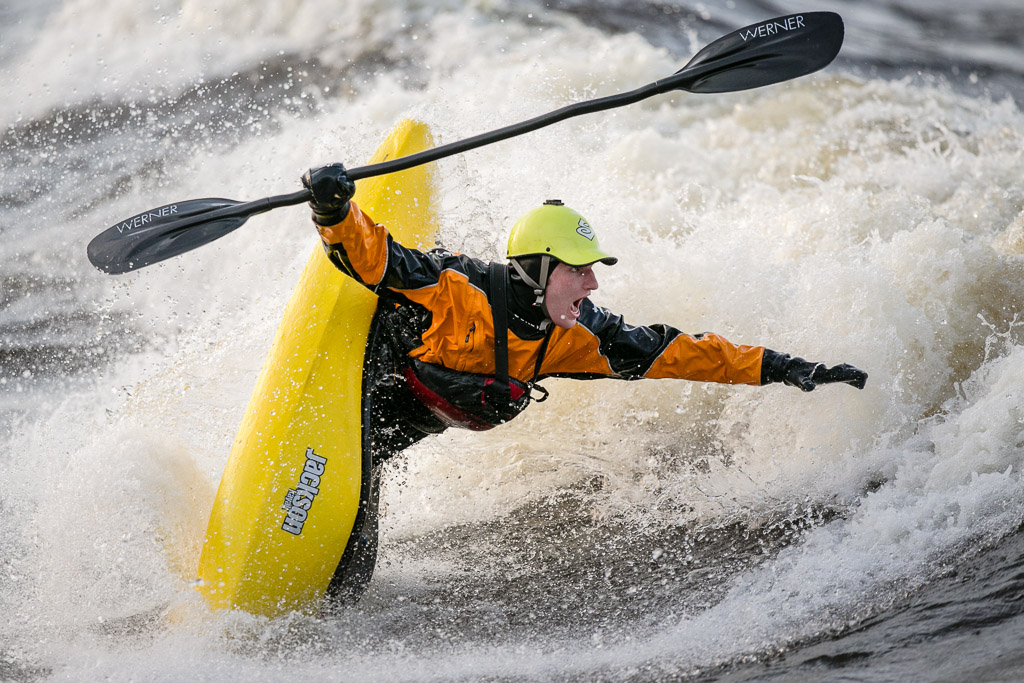
Kayaking | Canon EF 300 f/2.8L IS II & EOS 5D Mark III | ISO 1600, 1/3200 f/2.8
Who’s it for
Sports and events, as mentioned, are a clear use for the lens where a
fast f/2.8 aperture will help frame full-body subjects with a
wonderfully blurred out background. But don’t think you’ll be capturing
subjects too far away, after all, this is only 300mm and you may find
yourself wanting a bit more reach as I did photographing kayakers on the
Ottawa River. Most of these shots were cropped down to better frame the
subject. The Canon 300mm f/2.8 L IS II is fully compatible with Canon
extenders, which will cost you a bit of your aperture speed as well as a
notable degradation of image quality.
I imagine some wild-life photographers would be interested in this
lens, but I found the lens too short to reach smaller creatures, I think
the 300 is best suited for larger (non-violent) animals within a good
20 metre range. Horses, dogs and cattle come to mind, perhaps because
they’re domesticated and you can get closer to them by their nature. I
just don’t like the idea of approaching a grizzly bear with only 300mm…
Maybe 400mm buys you some safe space. If you took this on Safari, I’d
definitely suggest you invest in an extender.
I’m sure many people are interested in the lens for some unique
portrait opportunities, but having used the slightly lighter Canon 200mm
f/2.0 L IS I can’t see anyone using the 300mm over it. Again, if reach
and range isn’t an issue you’ll get similar looking, if not better,
images using something that gives you a bit of a tighter working
distance. Of course, if range is a factor and you’re unable to get
closer to your subjects, photojournalists working on a high-profile
story may find the lens very useful, though its price may seem
restrictive.

Hoops | Canon EF 300 f/2.8L IS II & EOS 5D Mark III | ISO 100, 1/1000th f/2.8
Conclusion
I’m thankful that I was able to use this lens as long as I did, since it
made me realize how seldom I’d use it in my day-to-day work if I owned
it. I’m not involved in sports, or wildlife, and many of my editorial
assignments actually put me in a restrictive space. Rentals on this
focal range are readily available and certainly an option for me
otherwise. This wasn’t a lens I took out with me every day; I had to
seek out events and situations to put it to. It abated my own curiosity,
and helped confirm that one does not indeed need everything.
You’re not me, though, and you may find 300mm is exactly the range
you require. The lens is superb, no doubt, and I don’t think anyone who
already knew this was something they needed ever thought otherwise.
That’s why I wrote this piece completely from my perspective, from the
curious photographer, wondering if I need just a little more reach. More
practical for my use, I think, will be getting a 1.4 extender, and
dropping it onto my 70-200 f/2.8 L IS II to get 280mm f/4. Sure, it’s
not as nice as 300mm f/2.8 but it’s a lot lighter and more practical for
my use.
Of course none of the images I shot above would have been achieved
without the 300 f/2.8, though I think many of them would have been
possible with a 400mm f/2.8… And while my curiosity was piqued, I think
for the more specialized super-telephoto focal lengths, I should step
aside and let someone else handle those reviews.
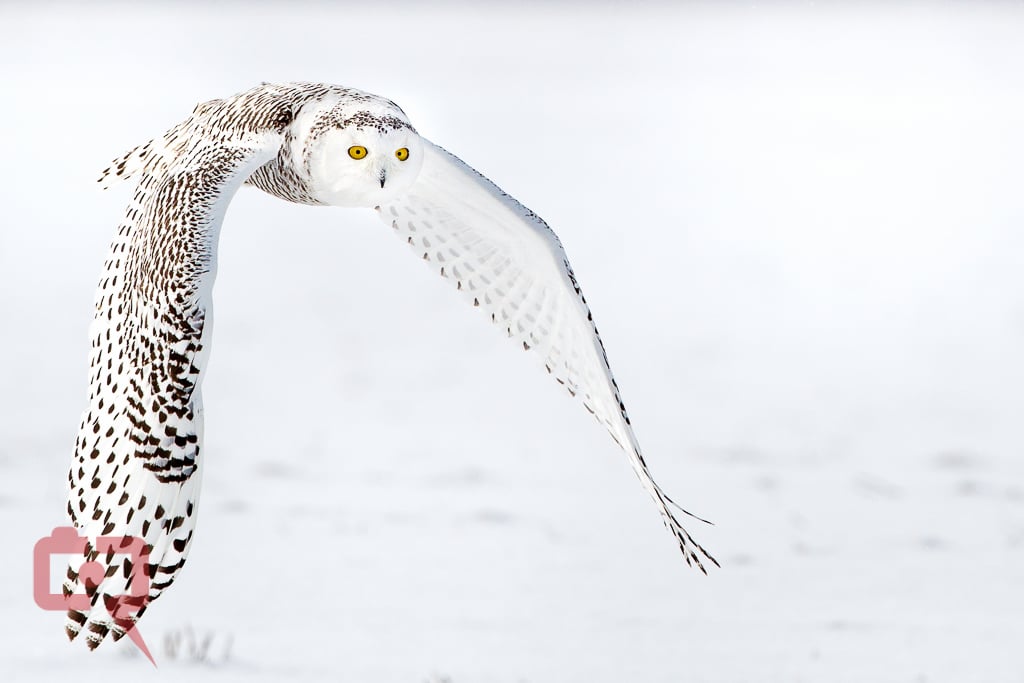
Snowy Owl | Canon EF 300 f/2.8L IS II & EOS-1D Mark IV | ISO 400 f/5.6 1/8000
CR’s Take
I’ve used the EF 300 f/2.8L IS II a few times and found it to be a
delight to use. It’s actually a lot more versatile of a focal length
than people tend to realize. I’ve found myself using it for wildlife,
portraits, landscape and anything else where I want compression,
isolation or moderate reach. The lens is well balanced and is easy to
use for long periods of time. The autofocus and image quality are second
to none. It’s hard to believe they made the 300 f/2.8L IS II even
better than its predecessor.
As a rental item, we’ve never had any issues with this lens. It gets used hard and is built to take it.
There’s really nothing else to write, the lens is awesome and if
you’re in the market for something in the 300mm-400mm range, you will
not be disappointed. Most people that rent it, or write reviews about
it, don’t want to give it back.
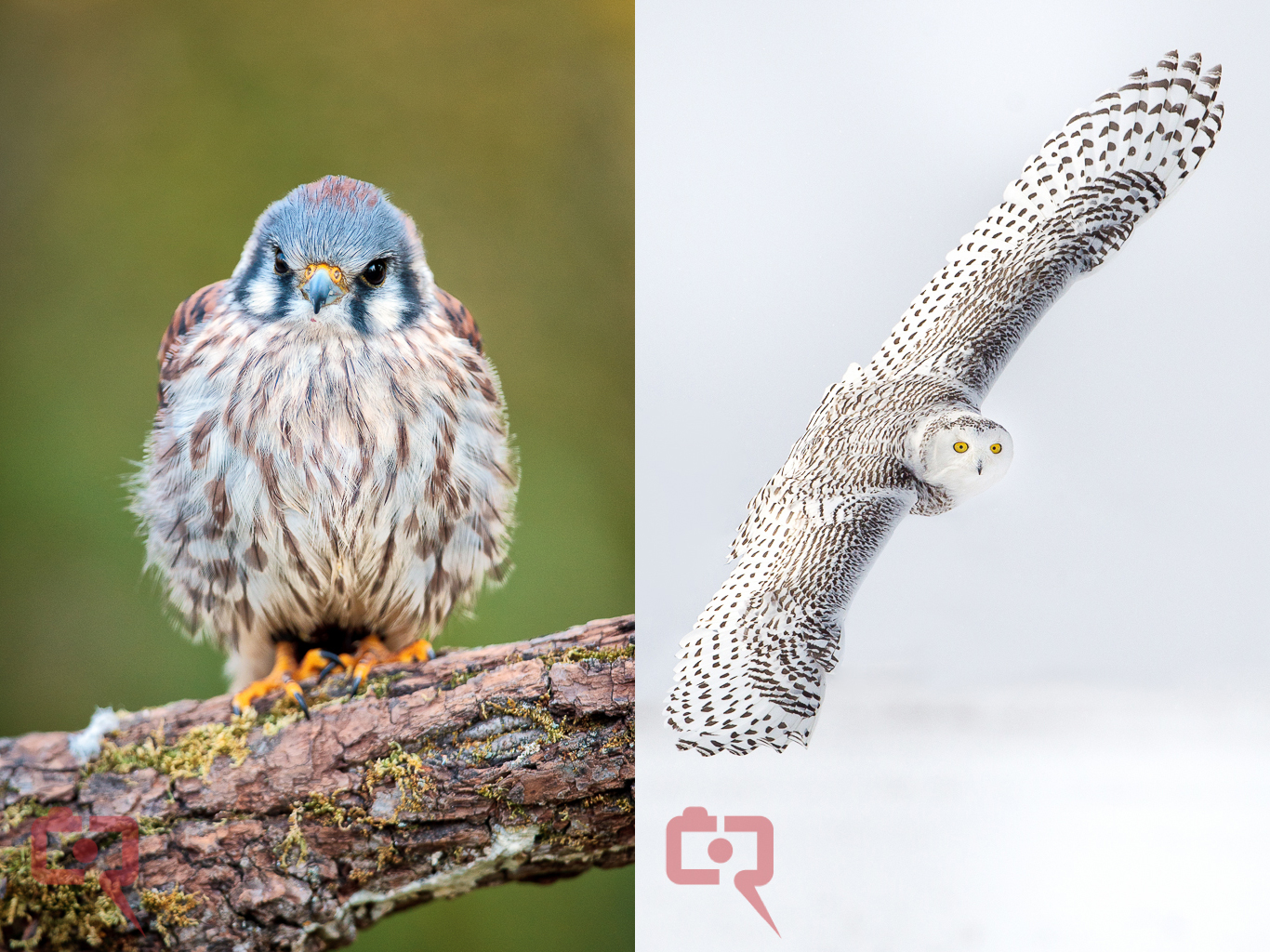
American Kestrel & Snowy Owl | Canon EF 300 f/2.8L IS II & EOS-1D Mark IV
Pros
- Nigh-perfect image quality
- Fast and accurate autofocus coupled with highly functional image stabilization.
- Exceptional Build
- Relatively inexpensive compared to the Canon 400mm f/2.8 L IS II
Cons
- Weight can be an issue for some
- Relatively expensive compared to some zooms in the same focal range (though not the same aperture)
- Potential gateway lens leading to even longer lenses that cost even more crazy amounts of money